Pope Francis’s aversion to air conditioning may be red hot, but he himself is comfortably cool.
In his encyclical Laudato Si’, published today, the pope lambasts wasteful consumerism and unchecked human economic activity as a root of climate change, singling out one product in particular for censure: the air conditioner.
“A simple example [of harmful habits of consumption] is the increasing use and power of air-conditioning,” Francis writes. “The markets, which immediately benefit from sales, stimulate ever greater demand. An outsider looking at our world would be amazed at such behavior, which at times appears self-destructive.”
But ironically, Francis probably penned his disapproval in a well-ventilated corner of his residence, Domus Sanctae Marthae, which has air conditioning.
RELATED: The Pope’s Encyclical, at Heart, Is About Us, Not Trees and Snail Darters
Two years ago, Francis broke with tradition when he became the first pope since 1903 to forgo the papal apartments for newer, more modest accommodations in Domus Sanctae Marthae, an adjacent building erected in 1996 to house cardinals during papal conclaves. In line with Francis’s image as the “people’s pope,” a Vatican spokesman said the pope wanted a more “simple living arrangement.” Simple, yes, but air-conditioned.
The pope isn’t just being a tad hypocritical here – he’s being short-sighted.
Air conditioning is an exemplar of modern ingenuity, but it’s also a mechanical thermoregulatory product that’s often put to conservative ends — for instance to preserve important artifacts of the past. In fact, right next to the air-conditioned Domus Sanctae Marthae is the Vatican Secret Archives, which conserves invaluable documents spanning millennia by controlling the microclimate in which they are housed.
EDITORIAL: Laudato No: Praise Not Pope Francis’s Crude Economics
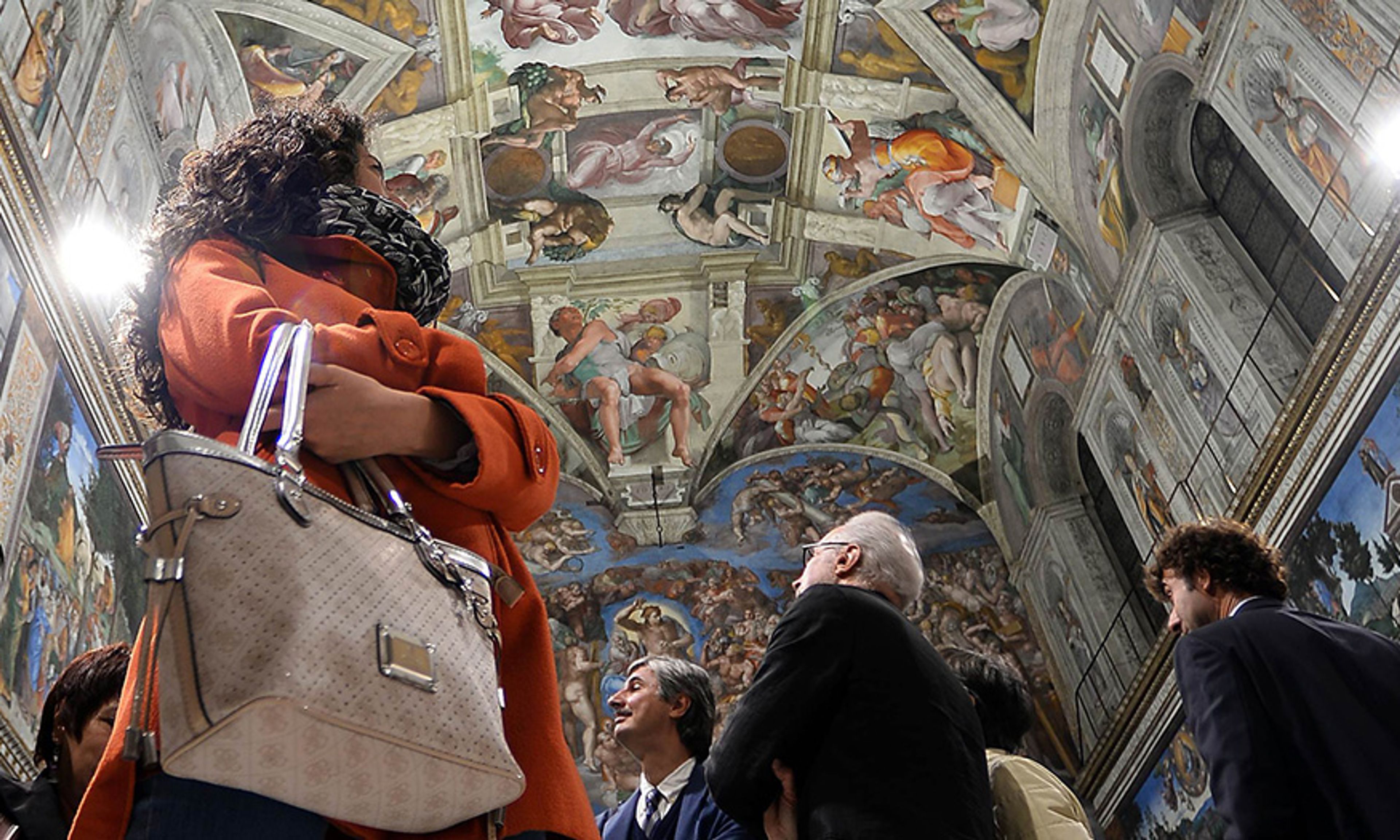
And next door to the Archives is the Sistine Chapel, where just a year ago the Vatican installed a new air-conditioning system to preserve the deteriorating, centuries-old frescoes while accommodating existing tourist traffic. Director of Vatican Museums Antonio Paolucci wrote in the Vatican newspaper L’Osservatore Romano that officials had to either limit access to the chapel in order to reduce the amount of dust and carbon dioxide brought in from the outside or find a technological solution. The Vatican’s decision to do the latter, according to Paolucci, allowed the Sistine Chapel “to breathe again.”
#related#More valuable than a tool to preserve objects, of course, air conditioning is a tool to preserve lives. Two years ago, the National Bureau of Economic Research published a study concluding that air conditioning reduced heat-related deaths in the United States by 80 percent and could save even more lives in hotter, often poorer countries. A/C is an especially promising life-saving technology given the potential effects of climate change, the authors contend. “The typical Indian experiences 33 days annually where the temperature exceeds 90 degrees fahrenheit and this is projected to increase by as much as 100 days by the end of the century.”
Air conditioning also increases labor productivity and preserves capital stock, which has crucial implications for developing economies — and sweltering NR interns (@JackFowler). Jokes aside, another study published by the National Bureau of Economic Research found that labor productivity peaks at 65 degrees fahrenheit and decreases by around 15 percent every time the temperature rises by 10 degrees. Climate-control technology is also needed, the authors argue, to preserve textile threads, paper, and machinery.
Pope Francis’s words carry moral weight. If he’d like to help industrializing populations that benefit the most from air conditioning, he should find a different crusade.




Comments