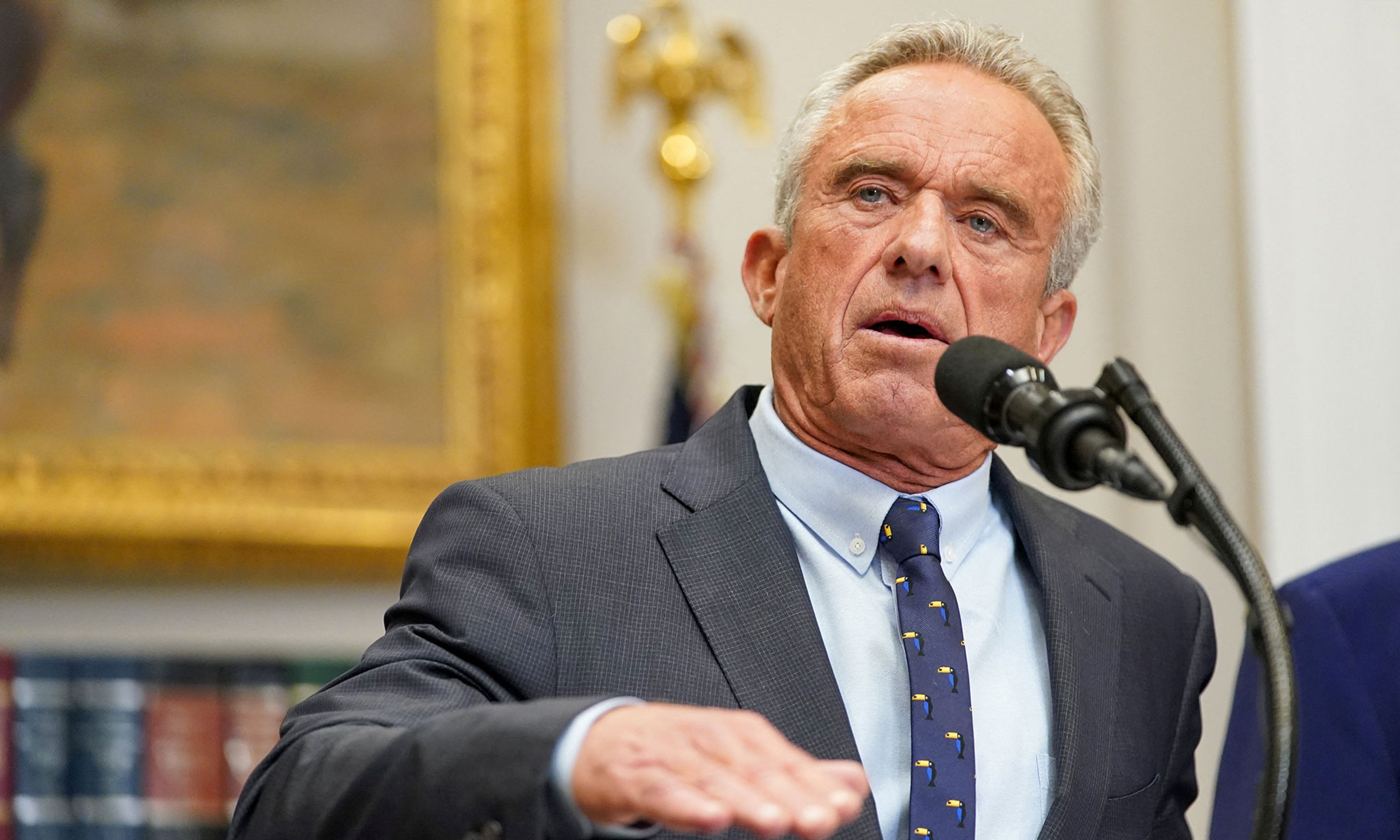
Health and Human Services Secretary Robert F. Kennedy Jr., at a White House event to announce President Trump’s new prescription-drug-pricing executive order, said he had a “couple of kids who are Democrats, big Bernie Sanders fans,” who had “tears in their eyes” when they heard about the plan.
Under the order, the federal government would establish price targets on prescription drugs. Kennedy as secretary of HHS would set a “mechanism” by which Americans would directly purchase drugs from manufacturers at a “Most-Favored-Nation” price for prescription drugs. Effectively, this would force drug manufacturers to charge the U.S. the lowest price of any country.
Kennedy would be tasked with proposing new rules to impose the pricing and to “take other aggressive measures to significantly reduce the cost of prescription drugs to the American consumer and end anticompetitive practices.”
Such a sweeping assertion of executive power is sure to face a robust legal challenge, so it’s questionable whether it would ever go into effect. In 2020, when Trump issued a similar rule toward the end of his presidency, it was enjoined by a district court judge.
Trump is not entirely wrong that under the current system, the U.S. effectively is subsidizing the drug purchases of other countries. The reason is that other countries with socialized health care systems impose price controls and the U.S. does not. This means that manufacturers could make their money in the American market to pay for their research and development costs and, at that point, the marginal cost of manufacturing new drugs is lower, and thus they are able to still profit by selling drugs at a lower cost overseas.
It’s also worth pointing out that pharmaceutical companies are no consistent champions of the free market. The Pharmaceutical Research and Manufacturers of America (PhRMA) trade group lobbied in favor of expanding Medicare to cover prescription drugs and backed Obamacare after the White House agreed to prevent the reimportation of prescription drugs from Canada and to stave off efforts to have the government directly negotiate drug prices. The fact that they supported government expansions that funneled hundreds of billions of dollars into the industry puts them in a weaker position to make a principled case against Trump’s proposed intervention. And even in the statement PhRMA issued opposing the executive order, the organization advocated government intervention to cut out the “middlemen” of pharmaceutical benefit managers, insurers, and hospitals.
That said, Trump’s approach, even if it weren’t legally suspect, would be destructive on the merits. Breaking down barriers to fair pricing overseas as part of ongoing trade negotiations is one thing. But if the current proposal were ever to be implemented as written, instead of making it so that other countries pay a fairer market price so that drug companies can charge U.S. consumers less, the U.S. would essentially be importing the price controls imposed by other countries with socialized health care systems.
At that point, neither of the options available to drug manufacturers is likely to be good for U.S. consumers. One option would be to simply suspend sales of drugs overseas, allowing them to continue to charge Americans high prices. Another would be to save expenses by pausing the development of new drugs.
It’s no surprise that imposing foreign price controls is appealing to Kennedy’s socialist children. But, to quote Don Barzini, “After all, we are not communists.”


Comments