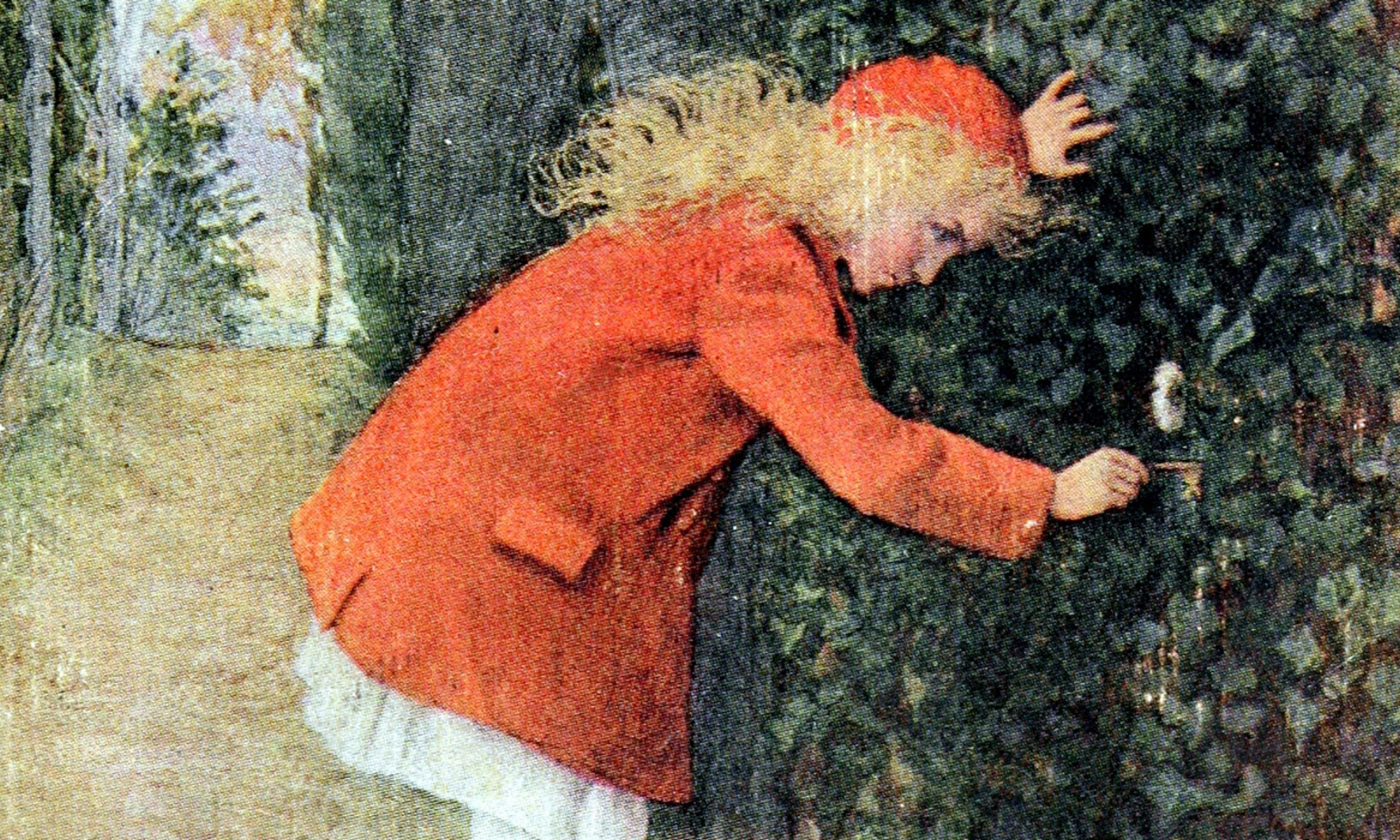
Every spring, I take great delight in watching the woods behind my parents’ home transform from bare grey to lush greenery. The very beginning of that transformation, though, always stumped me. How could I describe the faint hues and tints I saw spreading across the underbrush and lawn? Frances Hodgson Burnett’s The Secret Garden gave me the exact phrase I wanted: “Perhaps the leaves are beginning to break out and uncurl—and perhaps — the gray is changing and a green gauze veil is creeping — and creeping over — everything.”
If you read The Secret Garden as a child, you might not have found Mary Lennox a particularly likeable heroine. Her initial sour looks, rude ways, and unkind thoughts don’t immediately endear her to readers, but hidden beneath this unfriendly exterior is a small girl longing for companionship and purpose. Born in India, Mary is the unwanted daughter of a busy military man and his pleasure-seeking wife. The little girl is handed over to servants who are instructed to keep her quiet and out of the way — an arrangement that leaves her spoiled, selfish, and unloved. When her parents die in a cholera epidemic, nine-year-old Mary is sent to England to live with Archibald Craven, an uncle she’s never met, at his home, Misselthwaite Manor.




Comments