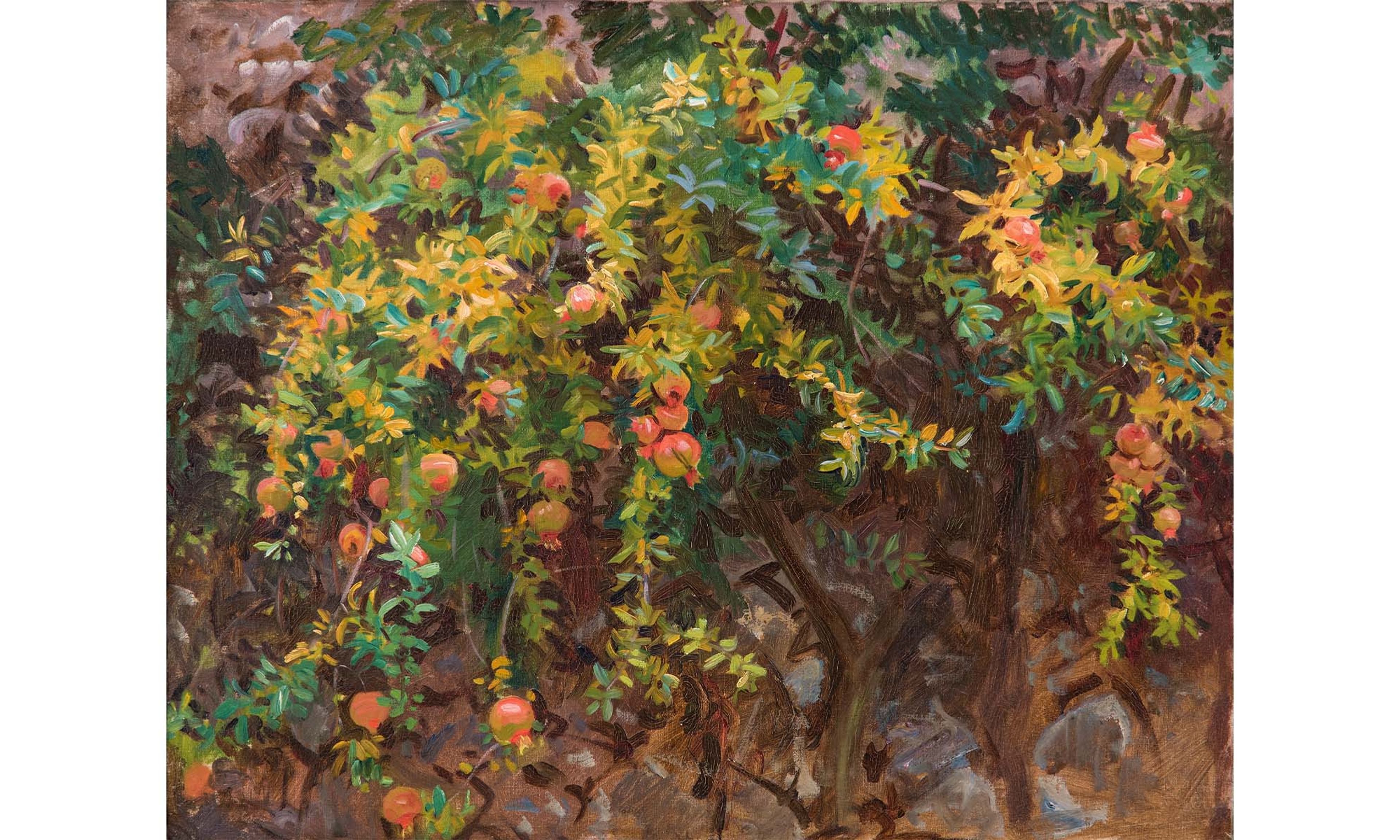
Sargent and Spain, at the National Gallery in Washington, D.C., is the luscious, revelatory new exhibition looking for the first time at John Singer Sargent’s love affair with Spain and Spanish cultures. It’s luscious in that Sargent conveyed Spain’s hot exoticism. Sargent’s Spain has lots of trappings of Europe, but Sargent saw it as its own thing, or bundle of things: gypsies, now called the Roma, flamenco, potentate kings, ripening pomegranates on trees, Moorish architecture, and Moorish weather. Over 30 years, he made seven extended trips to Spain as well as about 220 paintings, drawings, and watercolors about Spain. Aside from Venice, no other place held his interest for so long and with so tight a grip.
It’s revelatory in that Sargent’s Spanish work has never been so well represented. Sargent and Spain shows about 120 works, mostly Sargents but also photographs of Spain and books about Spain that he collected. And the curators could not be more distinguished. Sarah Cash from the National Gallery has worked on Sargent for years, most impressively doing Sargent and the Sea years ago. Richard Ormond, Sargent’s great-nephew and a British art historian, and Elaine Kilmurray produced the magisterial, nine-volume catalogue raisonné of Sargent’s career. Visitors to the exhibition are in good hands. They’ve made a great show.





Comments