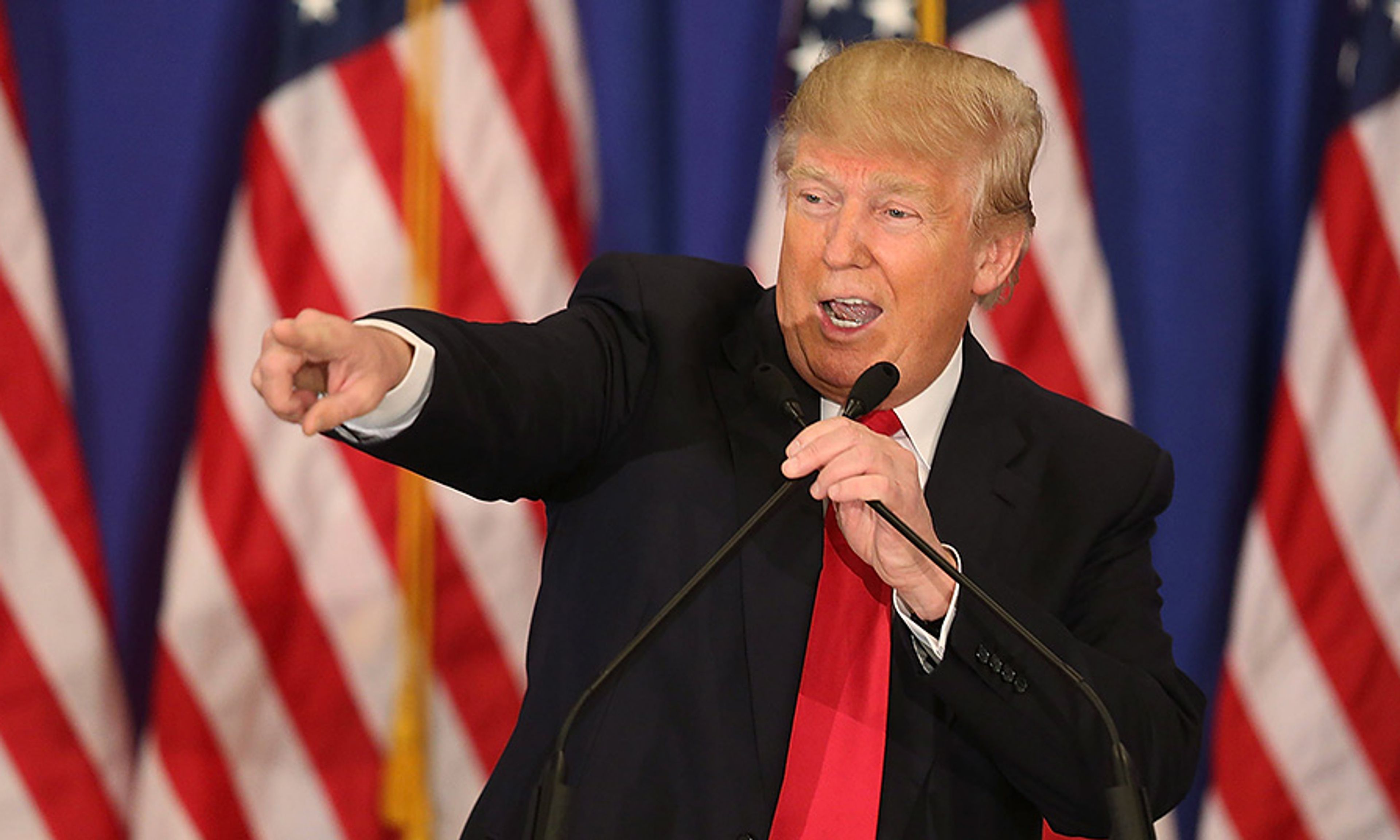
It was a terrible night for the forces that have come collectively to be known as #NeverTrump, the diverse array of people, campaigns, and historically important institutions united only by a desire to deny Donald Trump the Republican presidential nomination.
Going into Tuesday’s primaries, the last elections before the race enters its final and determinative phase when Ohio and Florida award 165 delegates on a winner-take-all basis next week, Trump’s enemies had hoped to stall his momentum. In particular, they hoped that Ted Cruz, whose campaign is based in large part on his appeal to Evangelical voters, could throw up a roadblock in Mississippi, and that John Kasich could arrest Trump’s momentum in Michigan.
Both Cruz and Kasich failed. And as they did, the slow death of the Republican party ground onward. Hope of preserving the conservative movement that has sustained it for nearly four decades diminished further.
In the Magnolia State, Trump came dangerously close to 50 percent of the vote, routing Cruz, who had the endorsement of the state’s governor, 48 to 36 percent. His easy victory put to bed the idea that he is starting to struggle with the South’s conservative voters, or that Cruz is gaining enough momentum to overtake him. Exit polls suggest that Trump continues to best Cruz among all but the most conservative voters, and continues to defeat him among the Evangelicals who were supposed to be the heart of his electoral coalition. Trump handily won the 84 percent of Mississippi primary voters who identified themselves as born-again or evangelical Christians: He took 49 percent of that group to Cruz’s 37 percent. And though Cruz continued to best Trump among self-described “very conservative” voters, that group once again proved too small to carry the day.
Trump’s victory in the Wolverine State looked familiar in some ways but also demonstrated that his coalition may be broadening.
Michigan, the largest prize of the evening with 59 delegates at stake, was another rout for Trump, who finished with 37 percent of the vote and bested his nearest competitor by a dozen points. Behind him were Ted Cruz and John Kasich, who ran neck and neck for most of the evening. In the end, Cruz edged out Kasich for second place by just 4,500 votes. It was a boon for Cruz, who has for weeks now pushed to become Trump’s sole remaining opponent, and a setback for Kasich, who has staked much of his campaign on his ability to compete in the Midwest. Ohio’s governor is just one week away from a life-or-death primary in his home state, where most polls show him within striking distance of Trump, and a strong second-place finish in Michigan would have provided him some much-needed momentum.
Trump’s victory in the Wolverine State looked familiar in some ways — he dominated among those without a college degree, for example — but also demonstrated that his coalition may be broadening. He won a plurality of voters at the lower end of the income scale and a plurality of those at the higher end, taking 34 percent of those making between $100,000 and $200,000 a year. He also won a plurality of the 75 percent of voters who described themselves as conservatives and a plurality of those who said their first priority in a candidate is electability.
There were bright spots for Trump’s opponents in Tuesday’s results. Cruz easily beat Trump in Idaho, and despite a fractured field the businessman was still unable to crack the 50 percent ceiling in Mississippi. (The polls in Hawaii, which had 19 delegates at stake Tuesday, did not close until the wee hours of the morning.) Exit polls also showed that late-deciding voters once again broke against the front-runner. In Mississippi, those who decided in the past month split evenly between Trump and Cruz, while a whopping 64 percent of those who decided over a month ago said they pulled the lever for Trump. The same was true in Michigan, where Trump won 50 percent of voters who made up their minds before the final week, but Kasich took 42 percent of the others.
In the race for delegates, Trump’s opposition had been optimistic that after Saturday— when he sustained defeats in Maine and Kansas and won only about 31 percent of the delegates doled out — he could be slowed further. He wasn’t, but to win the nomination outright, he’ll have to start picking up more than 50 percent of the delegates allotted in these contests, and he failed to do that on Tuesday.
#share#As bad as the night was for the anti-Trump coalition, it was worse for Marco Rubio. In Michigan, where his campaign and allied groups outspent all other campaigns on the airwaves, he ran in the single digits and finished fourth. He failed to meet the minimum threshold to take home delegates in both Michigan and Mississippi, and as of midnight Wednesday, he had yet to win any of the 150 delegates at stake on the evening. “He’s got a tough decision to make as to whether he wants to stay in the race,” Republican strategist Steve Schmidt told MSNBC. Kasich, who has hardly been an attack dog in this race — and who, unlike Rubio, has yet to win a single state — essentially wrote the senator off ahead of next Tuesday’s Florida primary, referring in his own remarks to “the three” candidates left competing for the Republican nomination.
Trump proclaimed himself the head of a new political movement of ‘people who want to be heard.’
Trump, too, made “Little Marco” a punching bag in his meandering, hour-long victory speech and the press conference that followed. “See, hostility works for some people, it doesn’t work for everybody,” Trump said, referring to Rubio’s sudden decision to excoriate him on the campaign trail. “It doesn’t work for him. He would’ve been better off had he kept the original pitter patter going.”
Addressing reporters from Trump National Golf Club in Jupiter, Fla., Trump stacked the first several rows of his event with club members. On display at the side of the room was a butcher’s block piled with raw Trump steaks and surrounded by dozens of bottles of Trump wine. During the course of his press conference, Trump recognized the retired New York Yankee Paul O’Neill in the audience — a winner — and noted gleefully that O’Neill is originally from Ohio. John Kasich, call your office.
#related#More importantly, Trump proclaimed himself the head of a new political movement of “people who want to be heard.” And he assured his doubters that, despite his occasional impolitic statements, he “can be more presidential than anybody” save “the great Abraham Lincoln.” While Cruz claims “he’s the only one who can beat Donald Trump,” the businessman told reporters, “He never beats me. He never beats me. Meaning, he rarely beats me. . . . He won like four, and I won like, 12 or 13. He forgets the other part!”
Trump may often take liberties with the truth — even the so-called Trump steaks on display bore the telltale packaging of a different brand, his own mail-order meat business having long-since ceased to exist — but unfortunately for the opposition forces, he was correct about the scope of his victories thus far.
“There’s only one person who did well tonight,” he said. “Donald Trump.”
— Eliana Johnson is Washington editor of National Review. Alexis Levinson is the senior political reporter for National Review.







Comments