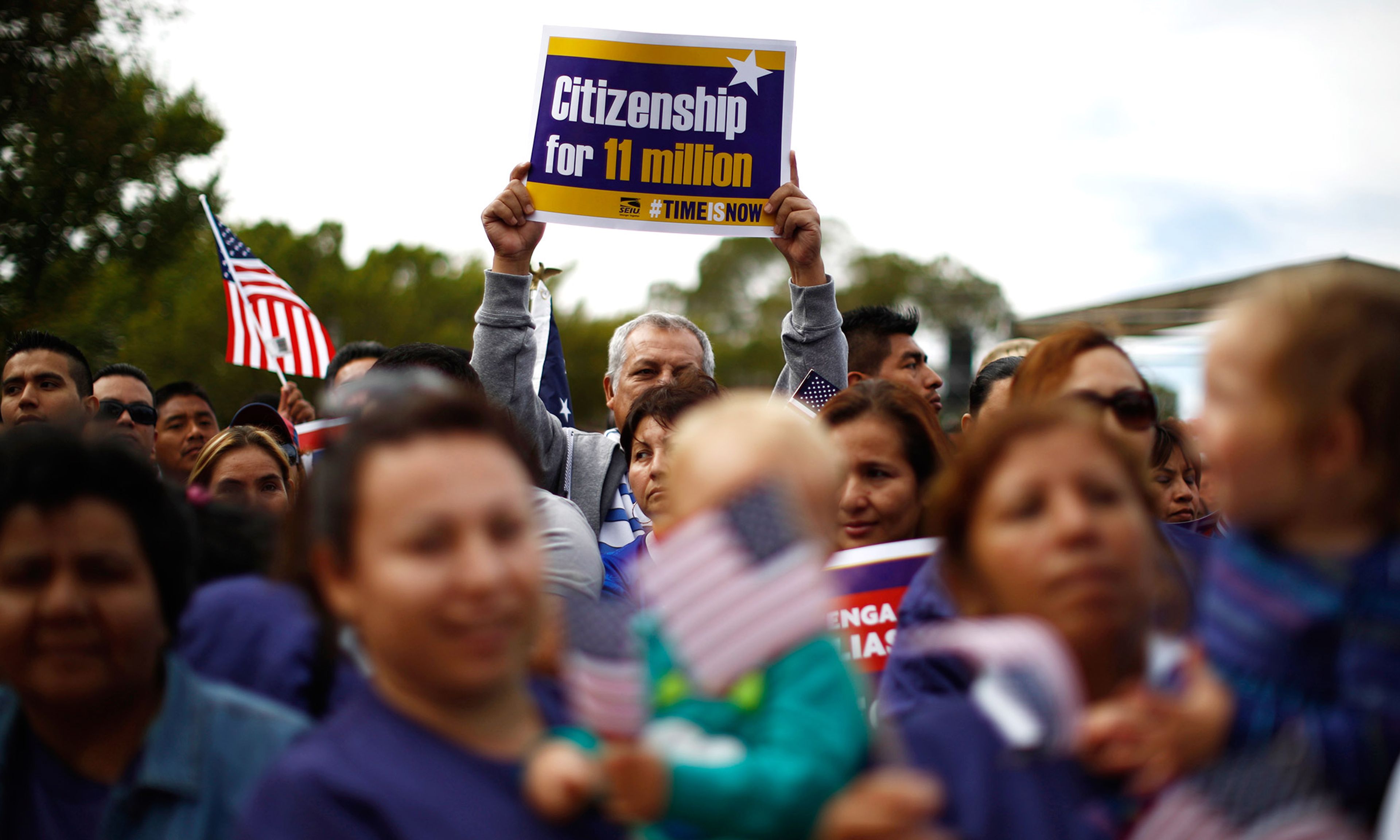
For years, elite conventional wisdom held that Republicans needed to liberalize on immigration to make inroads with Hispanic voters. This theory enjoyed bipartisan support: On the left, John B. Judis and Ruy Teixeira’s “emerging Democratic majority” thesis — which Teixeira has since retracted — posited that the growing Hispanic share of the electorate would result in a permanent leftward shift in the nation’s politics. On the right, the RNC’s famous post-2012 “autopsy” called for a softening of the party’s stance on cultural issues to adapt to the country’s changing demographics, particularly with regard to immigration. “Among the steps Republicans take in the Hispanic community and beyond we must embrace and champion comprehensive immigration reform,” the autopsy urged. “If we do not, our Party’s appeal will continue to shrink to its core constituencies only.”
Going a step further, the RNC autopsy argued that “comprehensive immigration reform is consistent with Republican economic policies that promote job growth and opportunity for all.” Given the context in which the 100-page document was written, that thesis seemed logical: A commitment to more permissive immigration policies not only looked like the right call in the face of the “emerging Democratic majority”–style political framework that Republican consultants and strategists had implicitly accepted, but it also conveniently coincided with the preexisting policy preferences of the Republican donor class and powerful business interests, for whom mass low-skill immigration was a way to maximize economic productivity. In other words, from where most of the Acela Corridor was sitting, immigration liberalism just made sense. There was a time not so long ago when I even subscribed to a version of this theory myself.





Comments