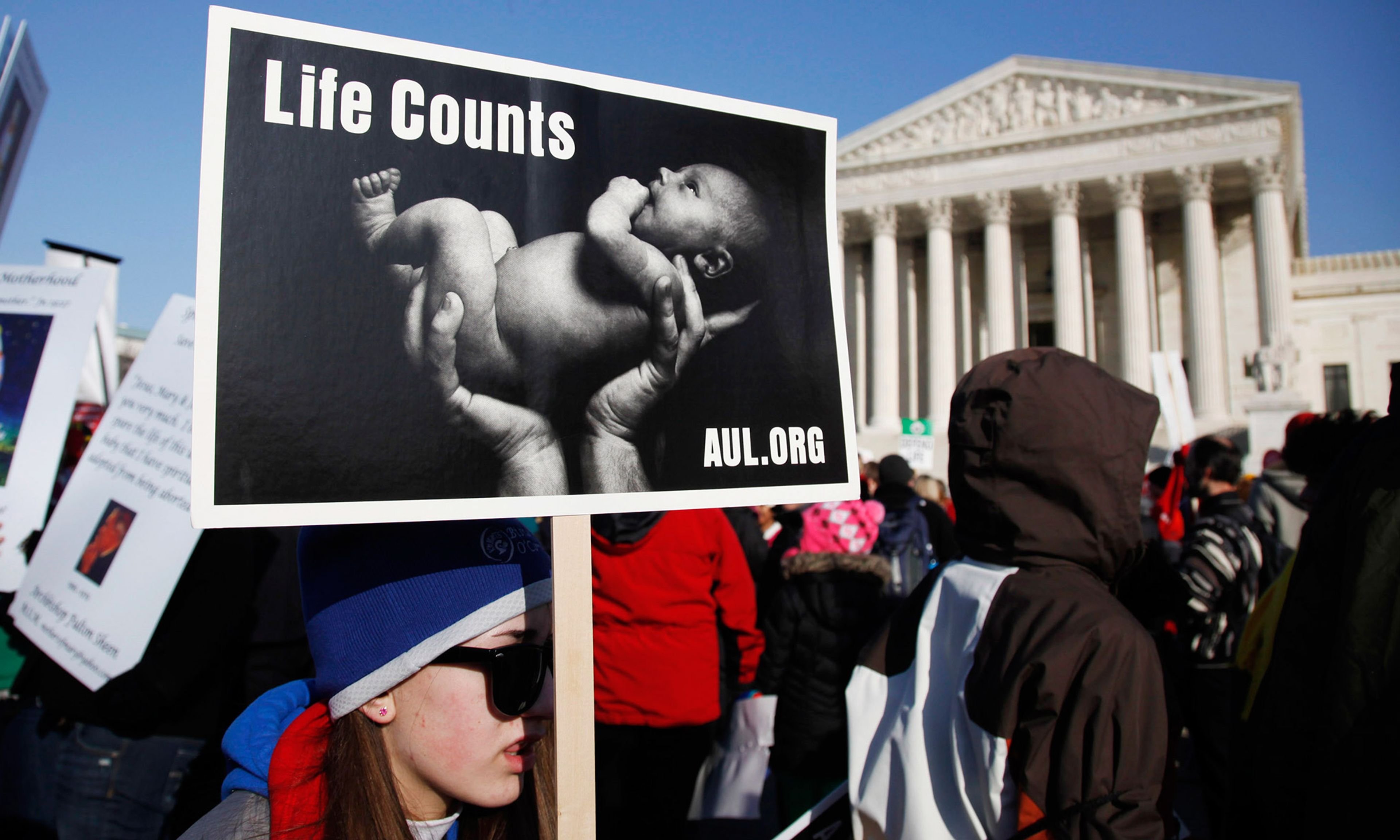
Two hundred–plus members of Congress, all but two of them Republicans, have signed a brief to the Supreme Court regarding June Medical Services v. Gee. The case involves a Louisiana law requiring abortion doctors to have admitting privileges at a nearby hospital, a policy similar to a Texas one the Court struck down in 2016. The Court might address the situation with a scalpel, or it might take the opportunity to reconsider its abortion jurisprudence more broadly.
A lot of the brief consists of the boring legal argumentation you’d probably expect. It encourages the Court to find that the plaintiffs lack standing or, failing that, to uphold the Louisiana law as “distinguishable” from the invalidated Texas one. But then it suggests the Court give some thought to reworking or overruling the decisions, most prominently Roe v. Wade and Planned Parenthood v. Casey, that treat abortion as a constitutional right to begin with. Why? The answer is a little unexpected: The right to abortion just isn’t “workable,” as evidenced by the courts’ failure to create a stable and logical system for determining which abortion restrictions are constitutional and which are not.





Comments