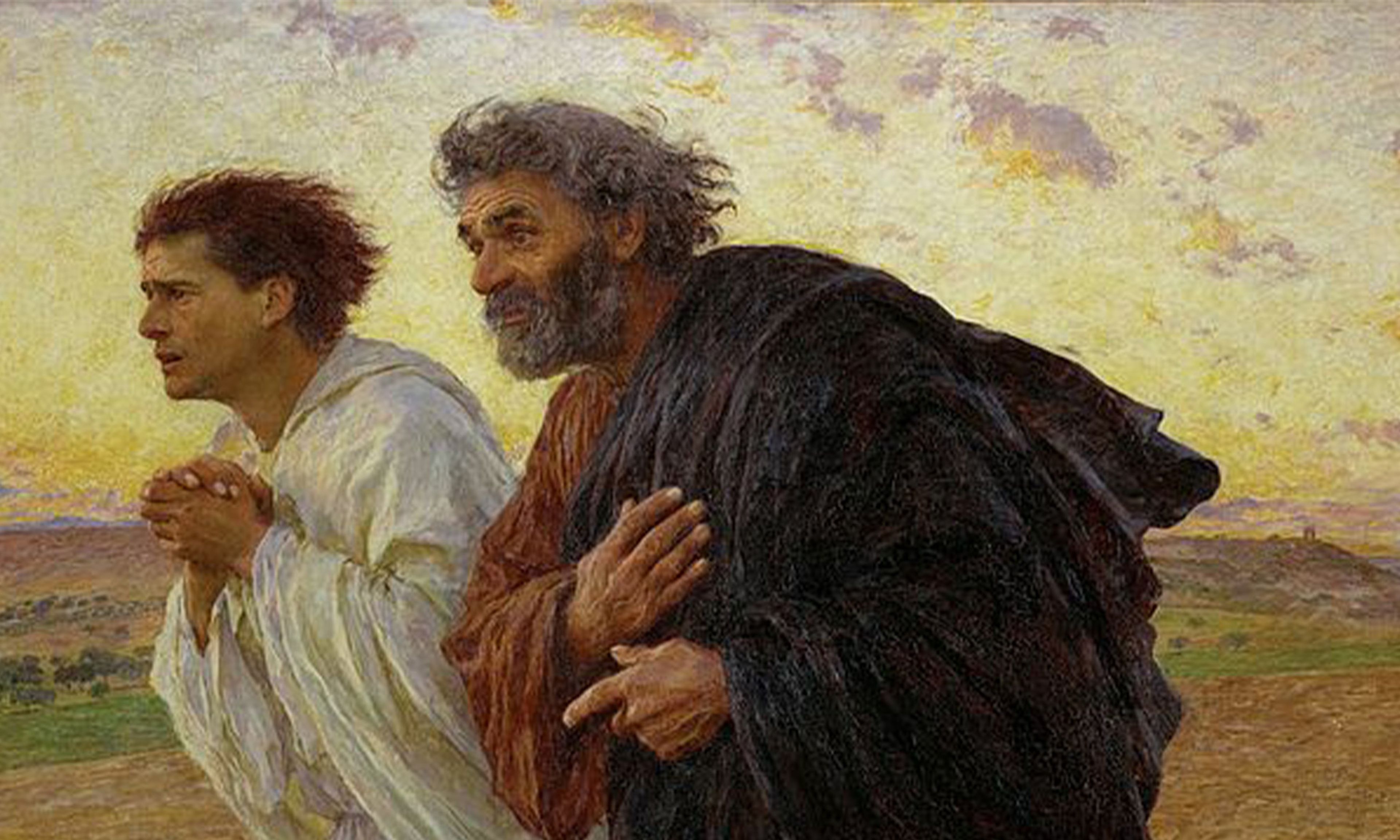
The Gospel of John contains an amusing detail about Jesus’s Resurrection not found in the other gospels. Informed by Mary Magdalene that His tomb was empty following His crucifixion, Peter and “the other disciple whom Jesus loved” (John himself) rushed to the scene. “They both ran,” John recounts, “but the other disciple ran faster than Peter and arrived at the tomb first.”
Perhaps, like Eric Liddell in Chariots of Fire, John believed that God made him for a purpose, but also made him fast, and wanted posterity to remember that. Regardless, neither he nor Peter could at first make sense of what they saw. “For they did not understand the scripture that he had to rise from the dead.” Comprehension came later, when the resurrected Lord appeared to the disciples (sans Thomas).





Comments