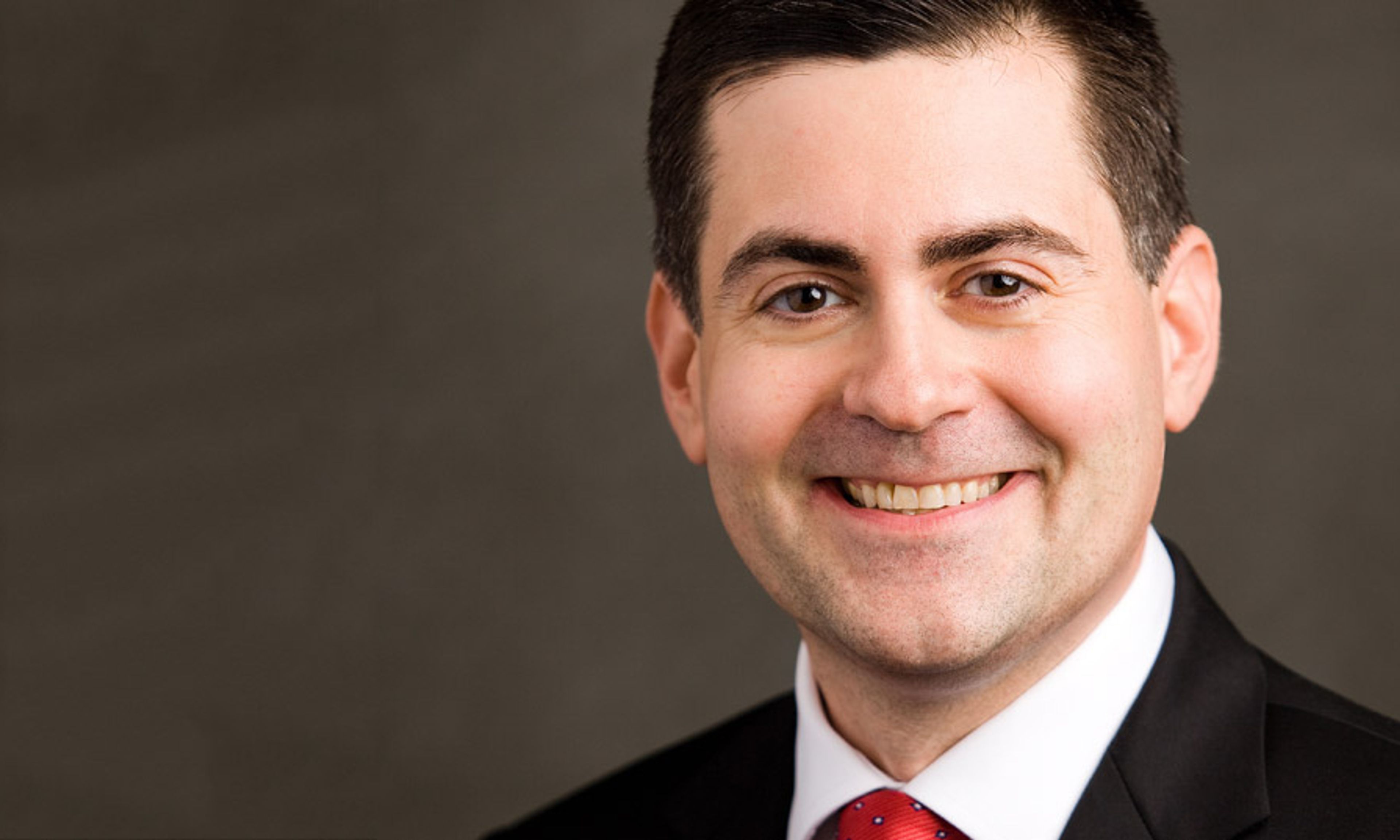
‘Over the past half-century, many Christians have mobilized around the pro-life movement in response to the legalization of abortion by Supreme Court action in 1973,” Russell Moore, head of the Ethics and Religious Liberty Commission of the Southern Baptist Convention, writes in Onward: Engaging the Culture without Losing the Gospel. He continues:
The pro-life movement, however, was not merely a reactionary posture, fueled by culture wars. Abortion was not simply a “wedge issue” to distinguish social conservatives from the sexual revolution. The pro-life movement was connected intrinsically to the church’s witness to human dignity going back all the way to the church’s emergence in Jerusalem in the first century. Christians who object to the violence of abortion are in continuity with a long tradition of Christian teaching against the oppression of the vulnerable and against the disposability of human life.
As a first national Evangelicals for Life conference gathers in Washington, D.C., in advance of the March for Life, Moore talks about human life and more. –KJL
Kathryn Jean Lopez: In your book Onward, you write that “a Christianity that doesn’t prophetically speak for human dignity is a Christianity that has lost anything distinctive to say.” That’s about more than abortion, isn’t it? But why is abortion such a fundamentally critical issue?
Russell Moore: Human dignity is certainly about more than abortion. We are called to speak up for all of those who are in jeopardy, all of the vulnerable. Our vision of human dignity informs how we view the elderly, the disabled, the immigrant, the orphan, the widow, the persecuted, and the poor. Abortion is fundamentally critical because, right now in our society, the unborn are dehumanized by both the culture and the law. This is true even in the language used to describe the unborn: “embryos,” “fetal tissue,” “products of conception.” Clinical, distancing language enables us to avert our eyes from the fact that the fragile child in the womb is our neighbor.
Lopez: What does that aforementioned statement of yours mean for Christians who consider themselves pro-choice?
Moore: Christians who consider themselves “pro-choice” are doing precisely what the lawyer did when Jesus confronted him with the command to love his neighbor: “And who then is my neighbor?” To deny the basic right to life to imperiled children is to sear over the conscience, and to turn away from the face of Christ himself.
Lopez: “We must repent of the way that we, sometimes without even knowing it, have prized the powerful over the powerless.” Why is this kind of reparation important? How can we do it?
Moore: One of the ways we do that is seeing to it that our churches reflect the power of the kingdom of God, not the power respected in the world as it is now. The child with Down syndrome is not a “charity project.” He is a future ruler of the universe, a joint heir with Christ, and should be prized and respected accordingly. The poor are not projects; the believers among them are “heirs of the kingdom” (James 2).
Lopez: You are clearly concerned in your writing and speaking that churches be equipped to help women and families who face decisions about and the consequences of abortion in excruciating circumstances. How might the Evangelicals for Life event you’ve helped organize with Focus on the Family this week help?
Moore: The Scriptures, both Old and New Testaments, repeatedly call us to care for the widow and the fatherless. A widow in biblical times was a vulnerable woman, cut off from the resources and support she needed. In that sense, one of the most important aspects of “widow care” is ministry to pregnant women in crisis as well as to single mothers. And no one is more “fatherless” than vulnerable unborn children who cannot count on the protection of family or state. Evangelicals all over the country are doing excellent work ministering to women in crisis, and to children in need of homes or families or support. This gathering hopes to spur on the rest of the Body, as we gain wisdom from one another.
Lopez: Why not Evangelicals and Catholics together here?
Evangelicals, with our emphasis on the gospel, biblical authority, and conversion, bring needed resources to the broader pro-life movement.
Moore: It is, of course, Evangelicals and Catholics together, in the sense that we are all joining together for the March. Evangelicals, tragically, were late to the pro-life movement (with some blessed exceptions) largely because Evangelical churches were not as prepared as Catholics for the culture of death. Thankfully, Catholics had (and have) a developed, well-thought-through understanding of human dignity that served (and serves) us all. Evangelicals, thankfully, are solidly pro-life, but we must be prepared for whatever challenges may come in the future against human dignity. Evangelicals, with our emphasis on the gospel, biblical authority, and conversion, bring needed resources to the broader pro-life movement.
Lopez: Why is it so important to say this again and again: “The repentant woman who had an abortion, the repentant man who empowered an abortion, and indeed the repentant abortionist who committed the abortion, are not beyond the grace of God.”
Moore: It is important to say this over and over because one of the casualties of abortion is the conscience. Many are laboring under accusation, somehow believing that their past abortion cuts them off from the possibility of God’s love. In the cross, though, God has fully judged sin for those who are in Christ. And in Christ, the believing sinner is “hidden” in the life of Jesus. God then sees us exactly as he sees Jesus. One of the most liberating words imaginable, for those who’ve experienced abortion as well as for all the rest of us, is this: “There is therefore now no condemnation for those who are in Christ” (Romans 8:1).
Lopez: Why do you talk about spiritual warfare on this issue? Could such talk turn people away? Why is it important to recognize?
Moore: As you know, I am not embarrassed about those aspects of Christianity the world would consider strange or freakish. The gospel’s power is in its strangeness (1 Corinthians 1:18). Seeing the spiritual realities involved helps us keep perspective. The will-to-power we see in the culture of death isn’t new and isn’t easily overcome. At the same time, this perspective enables us to show kindness to our opponents. After all, we do not, ultimately, wrestle against flesh and blood, as the Bible tells us (Ephesians 6:12).
Lopez: Why are you having an Evangelicals for Life event? What’s different about it from any other March for Life–related event?
Moore: The event will enable Evangelicals all over the country to receive, via livestream, training both on a gospel-focused way of thinking about human life and with practical wisdom on helping the unborn, their mothers, orphans, and the vulnerable in their local churches and ministries.
Lopez: What are you most hoping to convey and to whom?
Moore: The gospel means that we are people who care about life, not just about those who are deemed useful. The gospel speaks both of justice for those who are being harmed and of justification for those under accusation for such harming.
Lopez: You have a panel on social justice. How and why is abortion a social-justice issue and why is it worthwhile to make that case?
Moore: Some Evangelicals speak boldly on abortion but go mute when it comes to justice issues that don’t fit neatly into their political framework. Other Evangelicals do the reverse. We need a pro-life, whole-life ethic that enables us to stand up for life, regardless of how it affects our favorite politicians and causes, of the present or of the future.
Lopez: You’ve got David Daleiden on deck. What’s been most significant about his Planned Parenthood videos?
Moore: The videos showed us the horror of what happens when money becomes more important than life. The aftermath showed us that much of America wishes to avert their eyes and their consciences from what the abortion industry is and does.
Lopez: What’s your prayer about the lawsuit that’s been filed against the Center for Medical Progress over the videos?
Moore: My prayer is that what comes out in discovery pricks the consciences of an American public grown complacent to the dignity of every human life.
Lopez: You have said that this is about more than politics. So how should people approach the issue, particularly in such a political year?
Moore: Life is more than a political issue, but it is not less than a political issue. Candidates for public office who will not care for vulnerable human lives do not meet the minimal threshold of those who will uphold justice.
Lopez: How can your “procreation is pro-creation” mantra have a civil hearing in such a polarized environment on abortion and the planet? Is there a danger the latter might dilute the importance of the former?
Moore: The life issue is, in one sense, a matter of ecology. We are told that unborn children forfeit their right to life when they are not “viable” and cannot survive outside the womb. We are all then not “viable.” None of us lives autonomously. We exist within the “womb” of the world around us, utterly dependent on air and water outside of us.
Lopez: You tweeted the other day that “trading in the gospel of Jesus Christ for political power is not liberty but slavery.” How can one know if one is doing such a thing?
Moore: One can see that when what animates our passions most is politics rather than the mission of the kingdom. One can see that we are doing such a thing when we see ourselves first as Republicans or Democrats or Americans rather than as the global people of Christ. One can see that when we dismiss character matters or issue questions when it applies to “our” politicians, and magnify those things when they apply to the other side’s politicians.
Lopez: Why have you decided to be so outspoken on Donald Trump? Surely he’s not beyond the grace of God.
What disturbs me is when Christian leaders pronounce Donald Trump to be a Christian or a man of character, when Donald Trump has openly boasted of his vice and says he has nothing for which to repent.
Moore: Donald Trump is certainly not beyond the grace of God. What disturbs me is when Christian leaders pronounce Donald Trump to be a Christian or a man of character, when Donald Trump has openly boasted of his vice and says he has nothing for which to repent. For any Christian to gloss over this and suggest that he is a Christian because of his job creation is a scandal. We are not justified by job creation but by faith in Jesus Christ. To suggest that one can be saved without repentance is to give a vision of the gospel to possibly millions of onlookers that is utterly other than the gospel of Jesus Christ. When it comes to the issues, Evangelical Christians cannot with any consistency say that we hold to “family values” or “biblical principles” when we flock behind a seriallyn monogamous casino magnate with a social-Darwinist view of human dignity, seen, most recently, in the way he speaks of African Americans, immigrants, women, and others. We also cannot say that we are defending religious freedom when we don’t speak out when a candidate for high office dismisses the most basic principles of religious liberty. Religious liberty is not a matter of who has the most votes. Religious liberty is a natural right bestowed by God.
Lopez: Would you hope the news of the Supreme Court taking up that immigration case could lead to a better public conversation on the issue? How might that begin or happen?
Moore: I have almost given up on a civil and productive conversation on immigration and immigrants during this election cycle. I can only hope that we can have this conversation at a later time, when those on the far left and far right are not so intent on using immigrants for their political advantage.
Lopez: Why are you simulcasting the Evangelicals for Life conference? How do you hope — and pray — people might make use of it?
Moore: We simulcast because only a small slice of our constituency is able to be here in the room. They can be equipped via the Internet. I also hope that some will watch who are contemplating abortion or who are plagued with guilt over past abortions. I pray that they will hear a message of a God who loves the little children and a God who forgives.
— Kathryn Jean Lopez is senior fellow at the National Review Institute and editor-at-large of National Review Online. She is co-author of the new revised and updated edition of How to Defend the Faith without Raising Your Voice (available from Our Sunday Visitor and Amazon.com). Sign up for her weekly newsletter here.




Comments