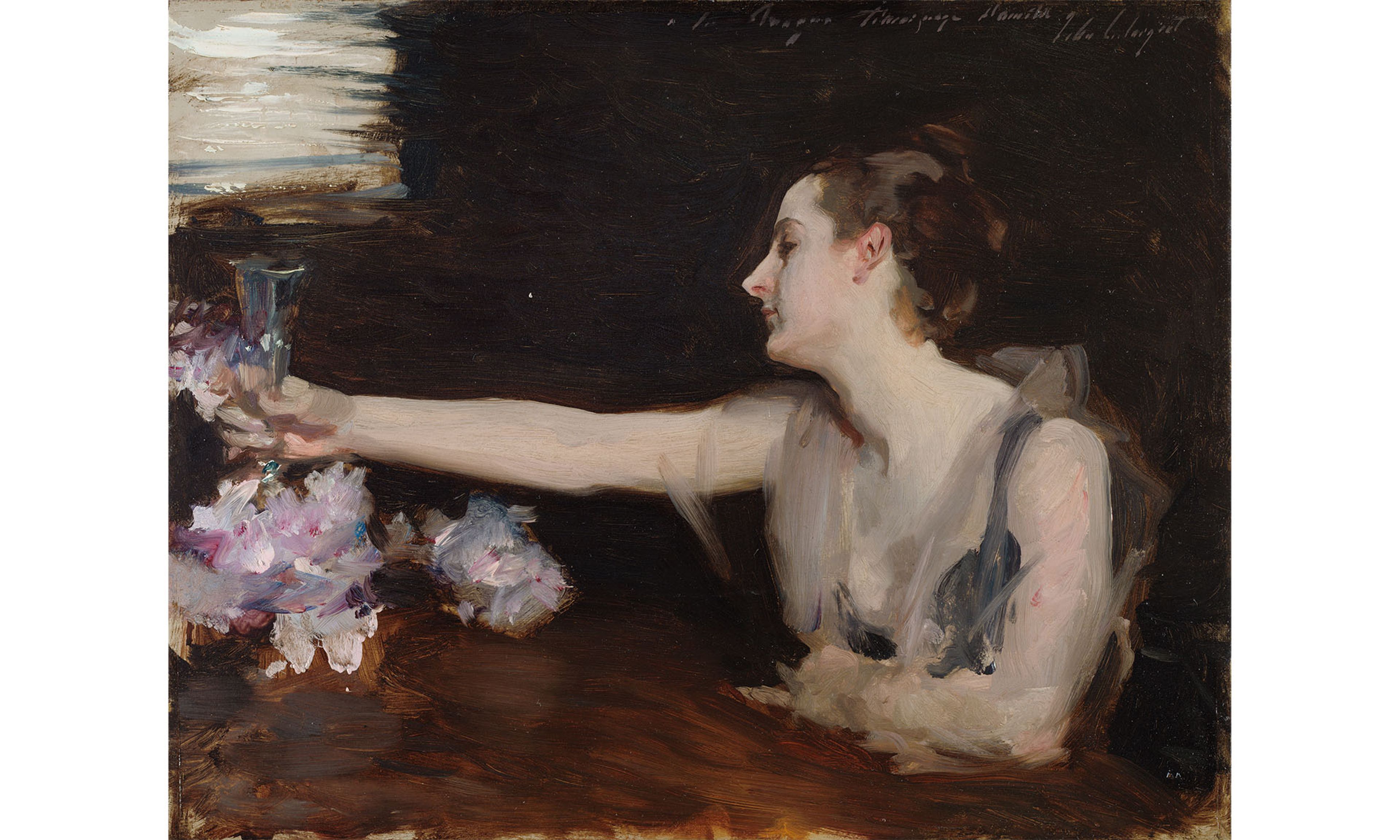
On Thursday I wrote about the first half of Sargent and Paris, the Met’s gorgeous and incisive exhibition about the lifelong spell the City of Light cast on John Singer Sargent, the nominally American artist who, coincidentally, died a hundred years ago last month. Not a touristical or romantic spell — no “we’ll always have Paris” bonbons here — but a foundational one. Sargent (1856–1925) studied in Paris, learned to look there, became famous there, and crafted his distinctly French, and modern, style there. His London and Boston portraits, his hundreds of scenes of everyday life, his biblical and mythological murals, even his work as a war artist — all have French panache.
Today I’ll look mostly at Madame X, Sargent’s notorious, engrossing portrait of Virginie Amélie Avegno Gautreau from 1884. The Met is doing the exhibition, along with the Musée d’Orsay, so I expected it to foreground Madame X, its prize Sargent, and I expected this to be yet another case of the Met touting what it owns at the expense of what it doesn’t own but ought to tout. I was wrong, since Madame X is indeed extraordinary and a pivot for Sargent. I ended on Thursday with Dr. Pozzi at Home, from 1881, which is Madame X’s precursor — or omen — and deserves a few more words.





Comments