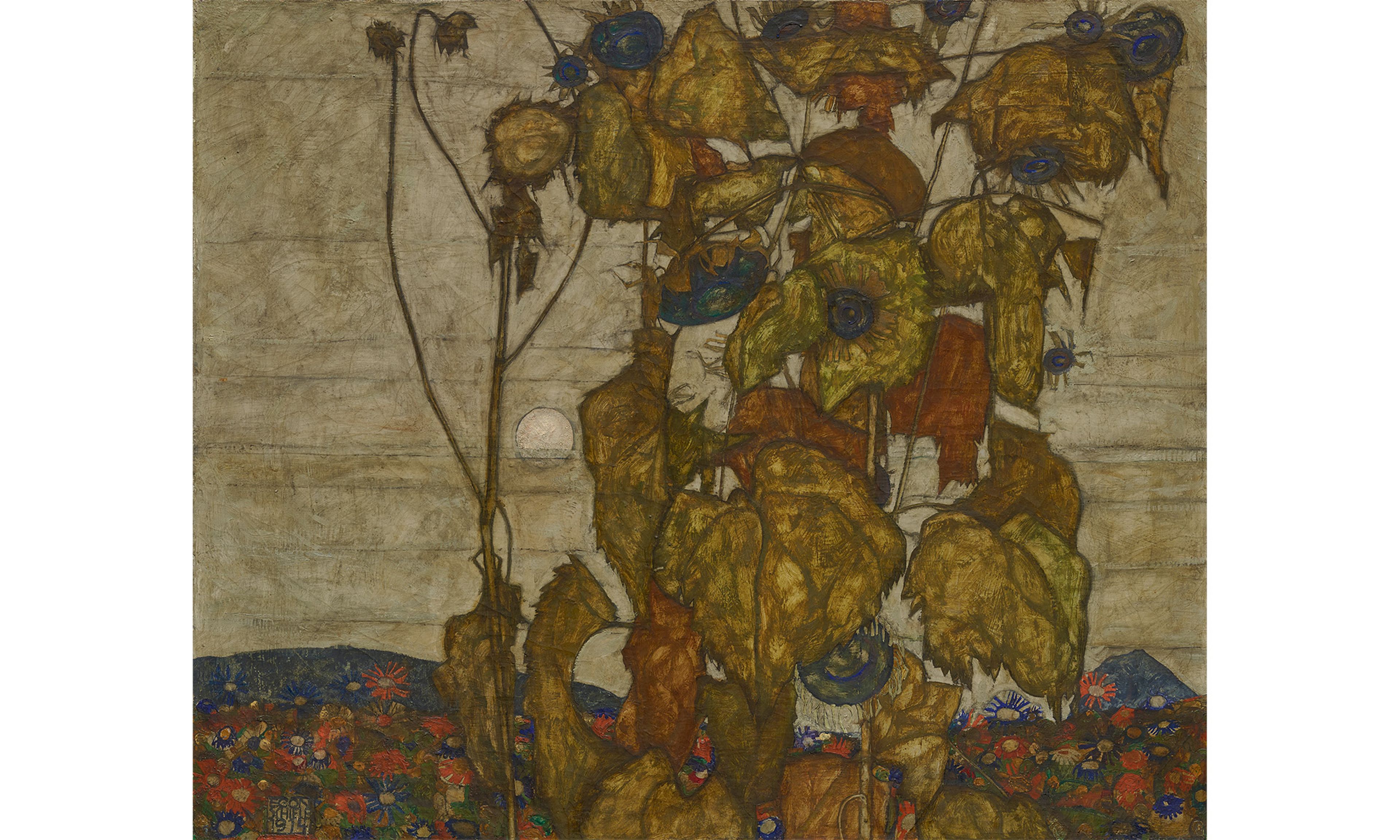
Egon Schiele: Living Landscapes, at the Neue Galerie in New York, is the gratifying and weightier bookend to last year’s Klimt’s Landscapes exhibition, also at the Neue Galerie. Neither Schiele (1890–1918) nor Gustav Klimt (1862–1918) was well known for landscapes. Klimt was Schiele’s mentor. Both are Austrian, and both are icons of an age when Vienna was cutting-edge and last-gasp, a hub of so much creativity and the center of an empire in extremis.
The Neue Galerie couldn’t get the loans needed for its Klimt show. There wasn’t a profound need for it, either, since a Klimt landscape survey in 2002 at the Galerie Belvedere in Vienna and the Clark Art Institute covered much of what was to be said about these very pretty things. In Living Landscapes, the museum had better luck with loans. There’s so much to say about Schiele, too. Though he died at only 28, he’s a gift that keeps giving. It’s a very good exhibition as well, with a beautiful, balanced book. Schiele always intrigues, and not only because his work is so eerie, even weird. Of the two artists, Klimt is far more famous and likable for his dazzling color and fin-de-siècle elegance, seasoned here and there with a hint of turpitude. He looks back. Schiele seems to look forward.


Comments