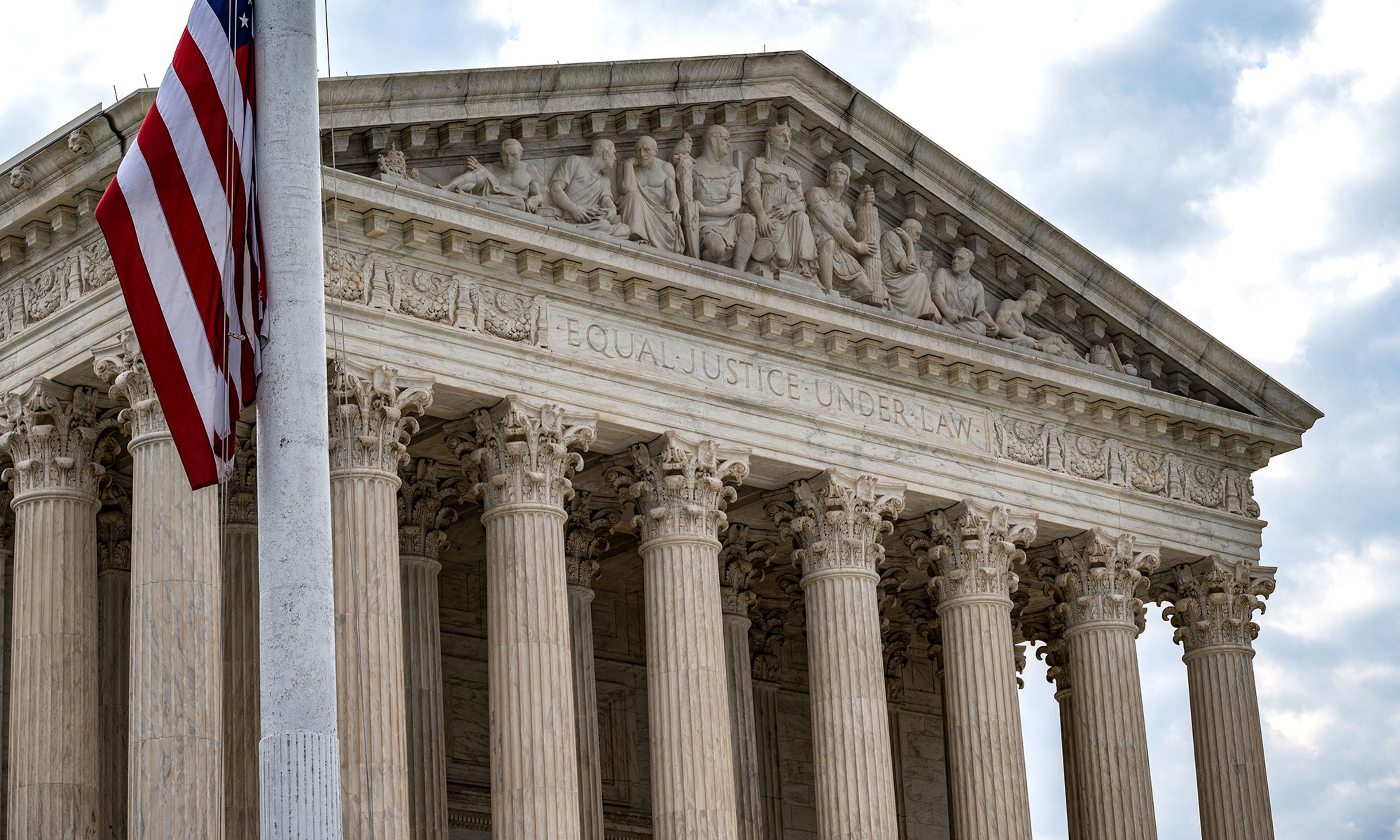
The Biden administration has exacerbated problems at the border by adopting immigration-enforcement policies that reduce the number of migrants who are arrested and deported for being here illegally. Texas and Louisiana fought all the way to the Supreme Court to challenge those policies, but this morning, in United States v. Texas, the Supreme Court ruled that the states could not bring their claim in federal court. Justice Brett Kavanaugh, writing for a majority that included Chief Justice John Roberts and the Court’s three liberals, concluded that the states lacked standing to sue. Justices Neil Gorsuch, Amy Coney Barrett, and Clarence Thomas concurred in the outcome, arguing that the courts lack the power to redress any injury because they cannot supervise the enforcement of the law. Only Justice Samuel Alito, in dissent, argued that the Court should rule on whether the administration’s policy violated the law.
Unfortunate as the outcome may be for immigration enforcement, this is the right decision — although the concurring justices have the better argument for why. Faithful enforcement of the law is the duty of the executive branch. Only in unusual cases can courts step in and compel the executive to do his job. Kavanaugh’s opinion does not close the courthouse door to granting such relief under different circumstances, and lays out five types of situations where the courts have the right, power, and duty to act. But it reiterates the general rule: This is the president’s job, and the courts can’t and shouldn’t supervise his doing of it. Unless Congress can use its leverage to force a change in presidential policy, or unless it has the votes to impeach officials for failing to do their jobs, it is typically up to the voters to ensure that the president carries out his constitutional oath to take care that the laws be faithfully executed.





Comments