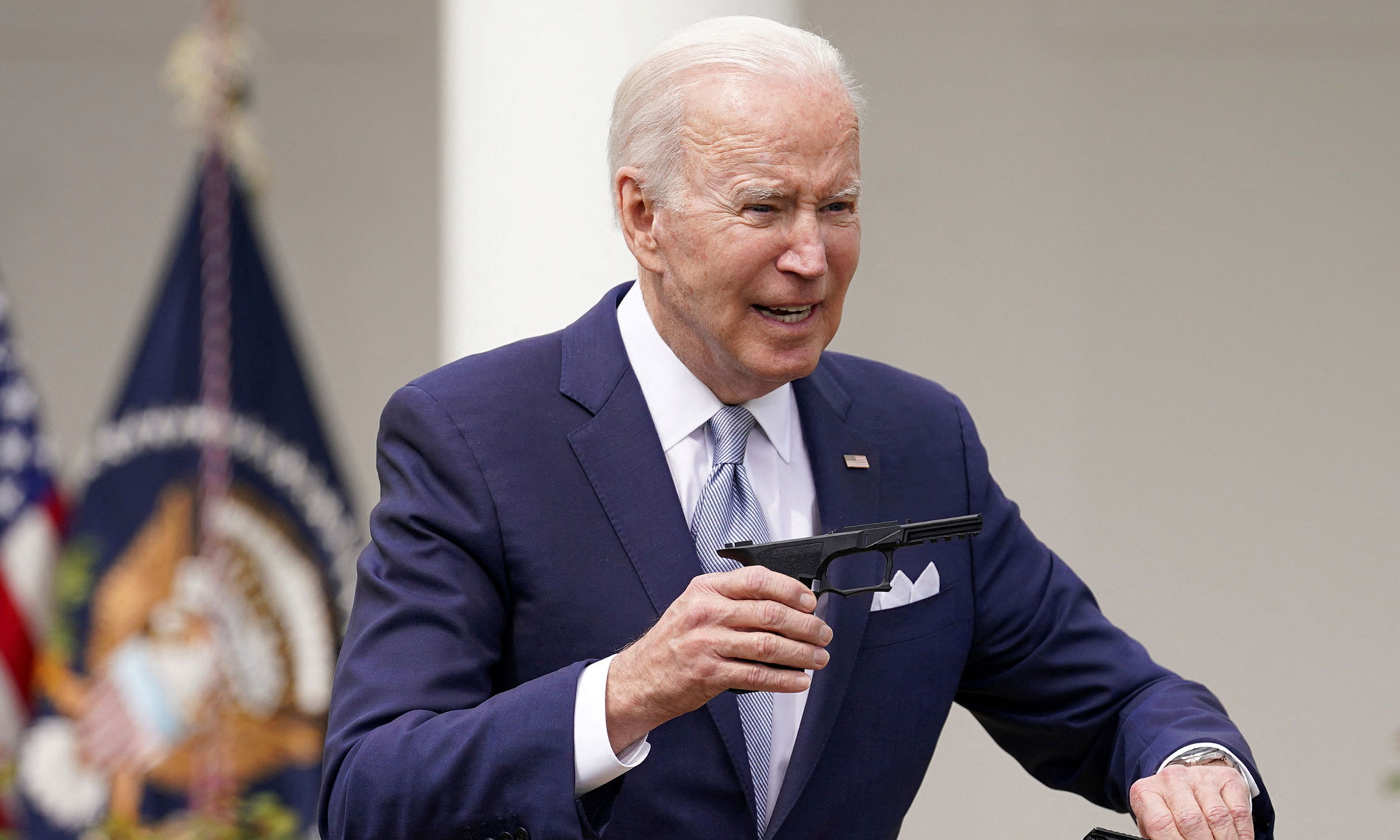
One must wonder if, at this late stage in Joe Biden’s imperial presidency, the assorted courts of the United States have asked their I.T. mavens to install a keyboard shortcut on their computers that, if pressed in anger, outputs a reminder that Article I vests all legislative power in Congress rather than in the presidency. In theory, such a tactic could save a great deal of time. In the controversy would come, and, as might a worker on a production line, the judge could simply press Ctrl + Fn + 1 to issue forth yet another admonition that, however passionate he might be about a given topic, the American president is still not a king.
Tomorrow, the Supreme Court will convene to hear oral arguments in Garland v. VanDerStok. Nominally, that case resolves around so-called ghost guns — firearms that, because they lack serial numbers, are more difficult for the state to trace. And yet, at root, VanDerStok is but one more in a seemingly interminable line of judicially mediated disputes that are testing the integrity of our constitutional separation of powers. Once again, the Biden administration has issued a rule that redefines a longstanding provision within federal law. And, once again, the people on the wrong end of that redefinition have had the temerity to notice. As is customary, the media’s coverage of the resulting argument has focused primarily on the policy consequences that are at stake, with those who support the rule insisting that it is necessary for the maintenance of public safety and those who oppose it warning that it represents an attempt to destroy the firearms industry. But these analyses, while interesting per se, are irrelevant to the question under consideration, which is whether the executive branch possesses the authority to order such a change in the first instance. Clearly, it does not.




Comments