In the beginning, television wasn’t so great. Quality flickered match-like in an endless void. Then in 1999 God said “Let there be Tony Soprano.” And for the first time in 50 years, we saw: TV could be really good. In a few weeks The Sopranos will be gone. It’s fitting, then, to look back and ask why network TV was (and most of it still is) so profoundly, relentlessly mediocre. The TV Set, a lampoon of the television industry’s annual production rite—pilot season—and all its glorious, inevitable shmuckery, is a witty answer.
Mike Klein (David Duchovny) is one of the thousands of writer/producer/director/creator-types who have brilliant ideas for the next Friends meets Two and a Half Men meets Deadwood hit. Each spring, the networks buy hundreds of these concepts, tweak them a little for marketability (thus squeezing out any extant originality), spend millions making pilot episodes, then throw 90 percent of them away and pick up a handful for their regular schedule. Mike’s project is The Wexler Chronicles, a loveable, half-hour quirk-comedy he based on his brother’s suicide. And the PDN Network loves the show. Absolutely loves it. They just need a few small changes.
Writer/director Jake Kasdan knows what for he mocks. Having worked on critically lauded primetime flops Freaks and Geeks and Undeclared, he has a laudably un-bitter perspective on the industry’s self-assured vapidity and an ear for its inflections. He also wants to find more message in them than there is.
“I know it’s not The Sopranos,” Mike blandly anguishes at the network’s suggestions, implausibly suggesting such a character could be so naive, “but it’s my show.”
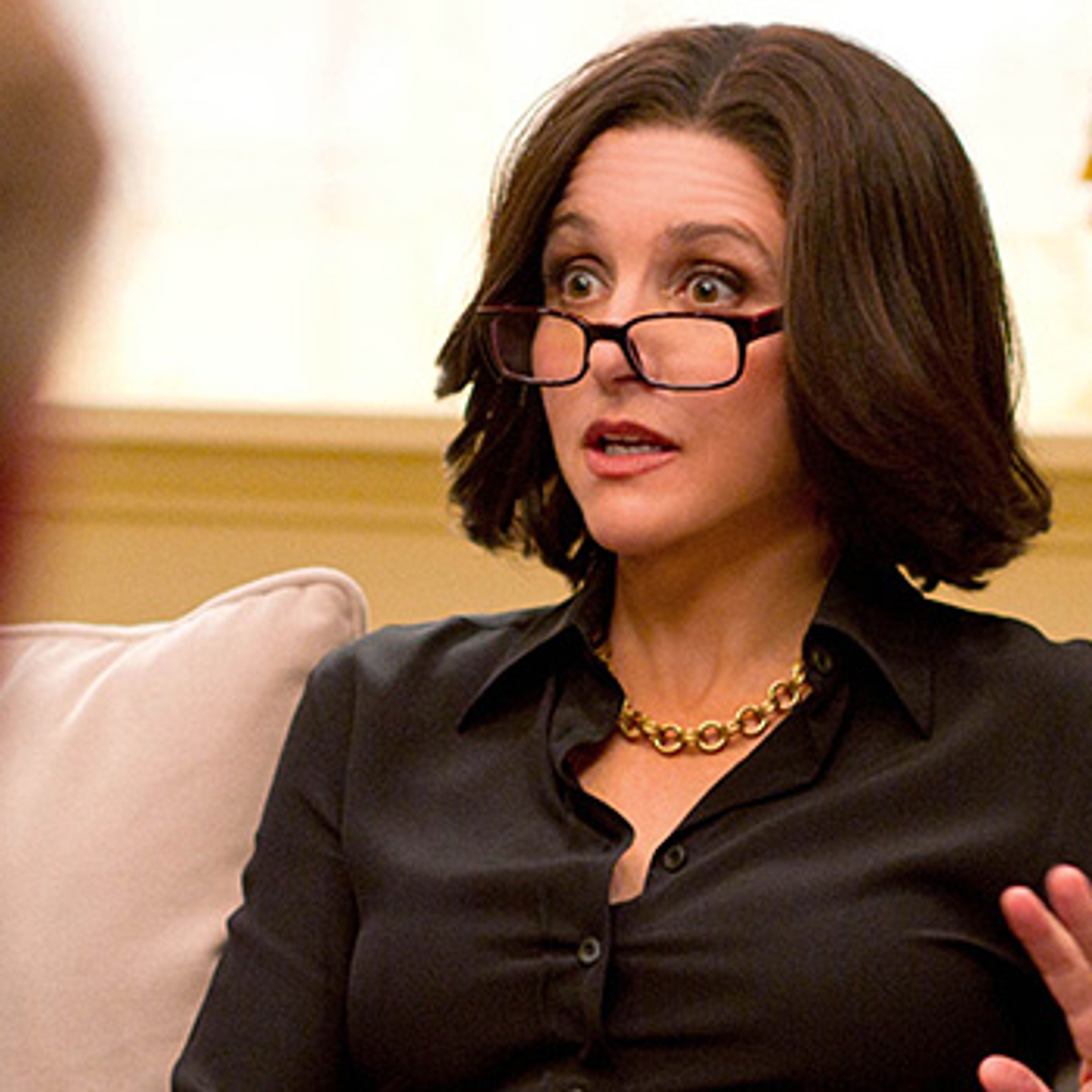
No. It’s the network’s show. And the network is Lenny (Sigourney Weaver), PDN’s top programming exec, a woman whose near death experience a few years back convinced her that life is too short for PDN not to field a competitive lineup on Thursday nights. Weaver has a ball with Lenny’s brilliant dimness. She’s the pitch-perfect acme of everything you’ve ever imagined someone who uses the verb “greenlight” unselfconsciously could be.
“She doesn’t let her cuteness get in the way of her hotness,” Lenny says of a prospective female lead she’s casually forcing down Mike’s throat at a casting session. “And that’s what makes her special to me.” She really means special. And a dozen executives behind her are nodding sincerely.
Mike plods on, his manager Alice (Judy Greer, just one peppiness-level short of screwball) at his side, trying to make The Wexler Chronicles his way. Lenny drops in and out, yet The TV Set goes beyond her. Fundamentally a comedy of manners, the film inhabits a surpassingly absurd world. Funnier than what any one of the characters does or says are the absurd rules that govern them. In TV, the rules require any given program to reach the widest possible audience through the lowest common denominator and that all shows must appeal to teenagers. So every night Lenny takes PDN’s pilot tapes home to her 14 year-old daughter and sets the network’s schedule based on who she thinks is sexy. The best of this ambiance material needs no developing. Passing references to the network’s latest hit reality series, Slut Wars, say it all.
The moment The TV Set steps away from its world, though, everything turns to dust. Lenny counsels her pointless lieutenant Richard (Ioan Gruffudd), whose workaholism is destroying his family, with what should be a decently-funny line. “I’m between marriages myself,” she says, just as vacantly certain as she is about cuteness and hotness, adding that, “spouses aren’t necessarily a fixture of the schedule.” But she’s not talking about TV, and it lands as awkwardly as a Frisbee made of ham. Kasdan never stops insisting that his characters are meaningful and that this all has a point: that behind every watery primetime miss on the schedule, there’s some dreamer who it once belonged to wincing in the background. A plausible message, perhaps, but not when you’re trying to make me laugh. Give me some more Slut Wars.
The peek behind the network curtain doesn’t deliver the surprise factor Kasdan probably hoped for. Between Curb Your Enthusiasm and Studio 60, the TV production process isn’t much of a secret. Still, The TV Set is a fun, punchy jab at an industry we love to believe deserves it and raises an interesting critical possibility too.
Watching TV is such a dissatisfying an experience in part because it’s so passive. We watch House M.D.; we laugh and think that Dr. House is a funny character. There’s nothing more to really think about, because we’re not really thinking about the process by which the show came into existence. If you keep in mind, however, how many real-life Lennys must have stuck their thumbs in House’s pilot script, and how many must be hovering over the show’s producers every episode, pushing their notes, then a good character starts becomes a technical puzzle to figure out. Dr. House is a funny character. Compared to other medical dramas, though, his humorous references are quite erudite. This has got to turn off the under-16 demographic. The executives couldn’t have liked that. How does House’s creative team get around it? Hmmm.
This sort of deeper engagement with television won’t improve it. Pablum has 50 years of momentum behind it. It may just kill some time, though, until something as good as The Sopranos comes on again.
–Louis Wittig is a writer in New York.

Comments