Since the earliest days of the Arab Spring, U.S. policy has been waylaid by deep confusion on the vital question of state sovereignty — when we may violate it, and when we should recognize it. Answering that question will help us understand both how to handle decrepit Arab regimes on their way out, and how to shape the emergence of a new order in the Arab world.
The Obama administration’s initial response to the demonstrations at Tahrir Square in Cairo was an early signal of confusion in the government. Was the U.S. position that President Hosni Mubarak had violated an otherwise legitimate constitution? Or was it that the constitution of Egypt, such as it was, was illegitimate?
If the former, what had Mubarak done to violate Egypt’s constitution? If the latter, what was it about the constitution that made it illegitimate — and in that case, why had we recognized its legitimacy until a mob showed up? The Obama administration never articulated a principled position on the question of why Mubarak’s rule was illegitimate. In the end, little beyond the clamor of a mob in the streets seemed to justify the administration’s position that Mubarak had “lost legitimacy” and should step down. The policy of aligning Obama with the mob was referred to in administration circles as “being on the right side of history,” quite a fancy way to describe a president with his finger in the wind.
Bereft of clear principles, the administration has charted a highly inconsistent course throughout the Arab Spring — staying silent when protesters were shot by U.S.-backed security forces in Bahrain, intervening militarily in Libya on the basis of a U.N. Security Council resolution that authorized no such action, and taking an indefensibly long time even to speak out against the murderous repression of Basher Assad in Syria.
Nearly a year after the uprising began, as Assad’s security forces rain destruction down on whole cities, indiscriminately killing thousands of civilians, the administration focused its urgent action on a useless demonstration in the Security Council, which has served only to unify Russia and China against Syria’s protesters, and to drive Russia into a central position in the Syria crisis.
Now, we will be switching the focus to a “Friends of Syria” working group. Any such working group should start with a precise articulation of the right of humanitarian intervention. If it only does that, it will have done a great thing. The months between NATO’s 1999 Kosovo intervention and September 11, 2011, were busy ones in diplomatic circles. Writing in The Economist in 1999, then–U.N. secretary-general Kofi Annan put his finger on the issue with surprising clarity, insisting that regional action must remain a viable alternative when the Security Council fails to act.
The Russians, however, have continued to insist that forcible humanitarian interventions be authorized by the Security Council — and because Russia is one of the veto-wielding members, that means all humanitarian interventions need either the permission of the host government or the permission of the Russians.
That is nonsense, of course, but alas the Russians appear to have the text of the U.N. Charter on their side. Because we’re pretending still to be operating under the Charter’s rules, our diplomatic effort is driven from the careful consideration of effective options with a coalition of the willing, into the Security Council — a forum ideally suited for grandstanding and wasting time while nothing effective gets done.
In the form in which it was originally proposed (the “Dumbarton Oaks Proposals”), the Charter would have been a fine treaty, because it clearly left states free to act in accordance with the principles of the Charter. But after a series of ill-considered amendments during the San Francisco conference of 1945, which adopted the Charter’s final text, what emerged was a deeply flawed treaty that appeared to make many uses of force illegal regardless of their inherent merit.
For example, during the Cuban Missile Crisis, the Soviets quite rightly protested that the U.S. quarantine was illegal according to the letter of the Charter. But nobody cared, because there was so much world support for President Kennedy at the time. The warning here was that if we could not find support for our action in the Charter’s text, we would have to seek legitimacy in global political support — which might or might not be forthcoming depending on the vicissitudes of fashion.
The State Department’s legal justification for the “Cuba Quarantine” was based on the Charter text — the only problem was that, in terms of the Charter, the justification was invalid on its face. No Security Council authorization was possible because of Soviet opposition, and the Soviets had not committed an “armed attack” (nor was any imminent); therefore, Article 51 was not available. Consequently, both of our possible justifications for threatening the use of force against Soviet vessels on the high seas seemed to be foreclosed under a strict reading of the Charter. The State Department got around that with an argument in the following form: 2+2=5, everyone agrees, and that’s that.
Strategically speaking, the Cuba Quarantine was an absolutely vital action. But the State Department justification was embarrassing and ill-advised. Besides being undignified for a nation that prides itself on reverence for the rule of law, the attempt to base our justification the Charter’s text seemed to reaffirm the validity of the very “rule” we had been forced to violate in the course of the Crisis, and which we could expect to have to violate again and again. If we find ourselves operating under flawed rules, isn’t it better to argue the case for new ones, rather than pretending to obey the old ones when everyone can see that we’re not?
In the arena of humanitarian intervention, U.S. diplomacy should abandon the language of the Charter and get back to basics. Article 2(7) of the Charter enshrines the principle of non-interference “in matters which are essentially within the domestic jurisdiction of any state.” If the text of the Charter is strictly followed, there are only two exceptions for this rule: (1) enforcement action by the Council under Chapter VII, on threats to the peace, and (2) collective or individual self-defense under Article 51, if an armed attack occurs.
That rule is silly in practice, and wrong in principle. Among other things, it implies that diplomatic recognition for the representatives of a given regime — which requires only that the regime control its territory — automatically triggers the full rights of sovereignty. It can’t, and it shouldn’t.
Our founding documents had a lot to say on this topic. The Declaration of Independence argued that the British King and Parliament had lost their claim to sovereignty over the American colonies because in the place of self-government, they had orchestrated a tyranny. The Declaration of Independence in particular was obviously and self-consciously derived from John Locke’s Two Treatises on Government, written a century before, following England’s own Glorious Revolution.
Locke’s Second Treatise argued that only institutions of self-government could constitute a government properly so-called. Most explosively, Locke argued that where there was foreign occupation or tyranny (the two were equivalent in his thinking), there was no government properly so-called, and the people then had the right to establish a government, by force of arms if necessary. The right of rebellion claimed in the Declaration of Independence was straight out of John Locke.
So is the right of humanitarian intervention. The sovereignty of a tyrant is no greater than that of a foreign occupier. If that tyrant also happens to be an enemy of ours, and has already given us casus belli, our right of intervention should be asserted forcefully and explicitly.
In Syria, even more than in Libya, Tunisia, or Egypt, the intrinsic illegitimacy and criminality of the regime has been manifest for decades. Despite his touching friendship with Senator John Kerry, Syrian dictator Basher Assad is a sponsor of international terrorism, facilitates the extension of Iranian military support for terrorists in Lebanon and the Palestinian territories, facilitated the transit of thousands and perhaps tens of thousands of Arab insurgents into Iraq to kill Americans, and is up to his neck in clandestine WMD, including nuclear-weapons technologies. The justifications for ending that regime, to make no mention of stopping a massive humanitarian disaster, have been present for years.
The other side of the coin is this: What if the regime falls tomorrow? How do we know that the regime which replaces it is any more legitimate? Should we try to be “on the right side of history” by recognizing the new regime simply because it is acclaimed by a mob in the street and has some diplomatic support among non-democratic governments? That’s how we got into this whole situation to begin with.
U.S. diplomacy needs to become much more focused on basic constitutional issues. The full rights of sovereignty should be recognized only when a government constitutes “self-government” in the Lockean sense. When the Soviet Union broke up, the Bush administration conditioned recognition of the newly emerging states on criteria that came close to the Lockean mark, but which still relied too much on a given regime’s behavior and not enough on its essential structure and inherent nature. A better starting point would be our own state corporation laws, which require observance of corporate form in order for management’s transactions to be considered “duly authorized.”
Insisting that multinational action in Syria be based on principles that explain the inherent illegitimacy of the Assad regime will run into opposition from the Arab kingdoms, but that is not an insurmountable obstacle. The Assad regime is not illegitimate because it is killing civilians en masse. Any government engaged in a civil war against an insurgency could find itself doing that. It is the tyrannical nature of the Syrian regime that transforms its civil war into a crime against humanity — and an urgent call for humanitarian intervention.
The Syria crisis doesn’t belong in the Security Council, because the interests of its permanent members are not aligned on the issue. That is neither good nor bad, because a divided Council tells you absolutely nothing about the merits of a given course of action. But that is also why Council “authorization” should never be treated as indispensable.
In Syria today we are witnessing a humanitarian catastrophe of the highest order. While we twiddle our thumbs wondering what to do, as hundreds die, it might be a good idea to make it clear what we have the right to do.
U.S. intervention would have risks, and broad international support will be important to the ultimate success of any strategy. But that has no bearing on whether we have a right to intervene, with others if possible and alone if necessary. We do, and we should state explicitly and in advance the reasons why we do.
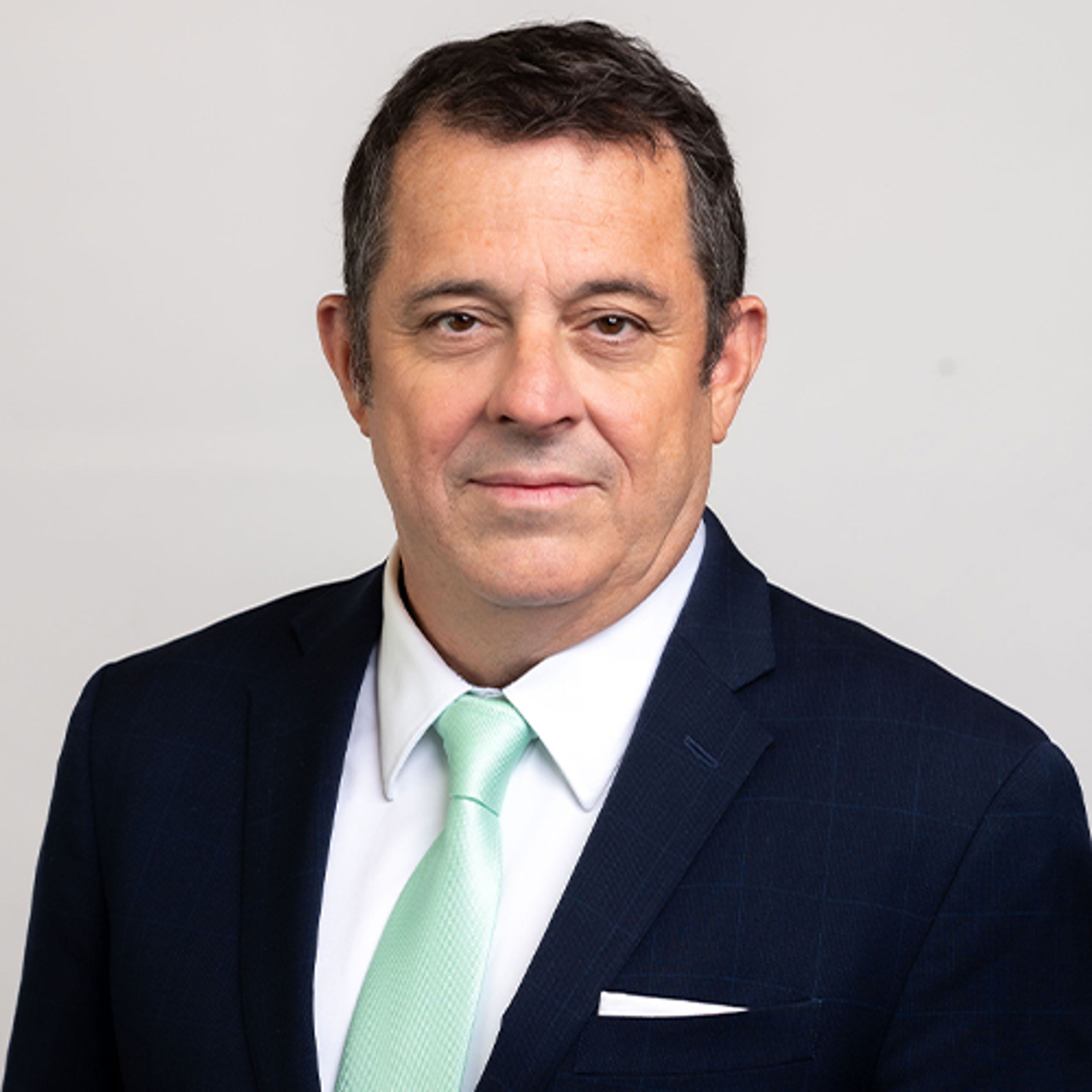
— Mario Loyola is former counsel for foreign and defense policy to the U.S. Senate Republican Policy Committee.





Comments