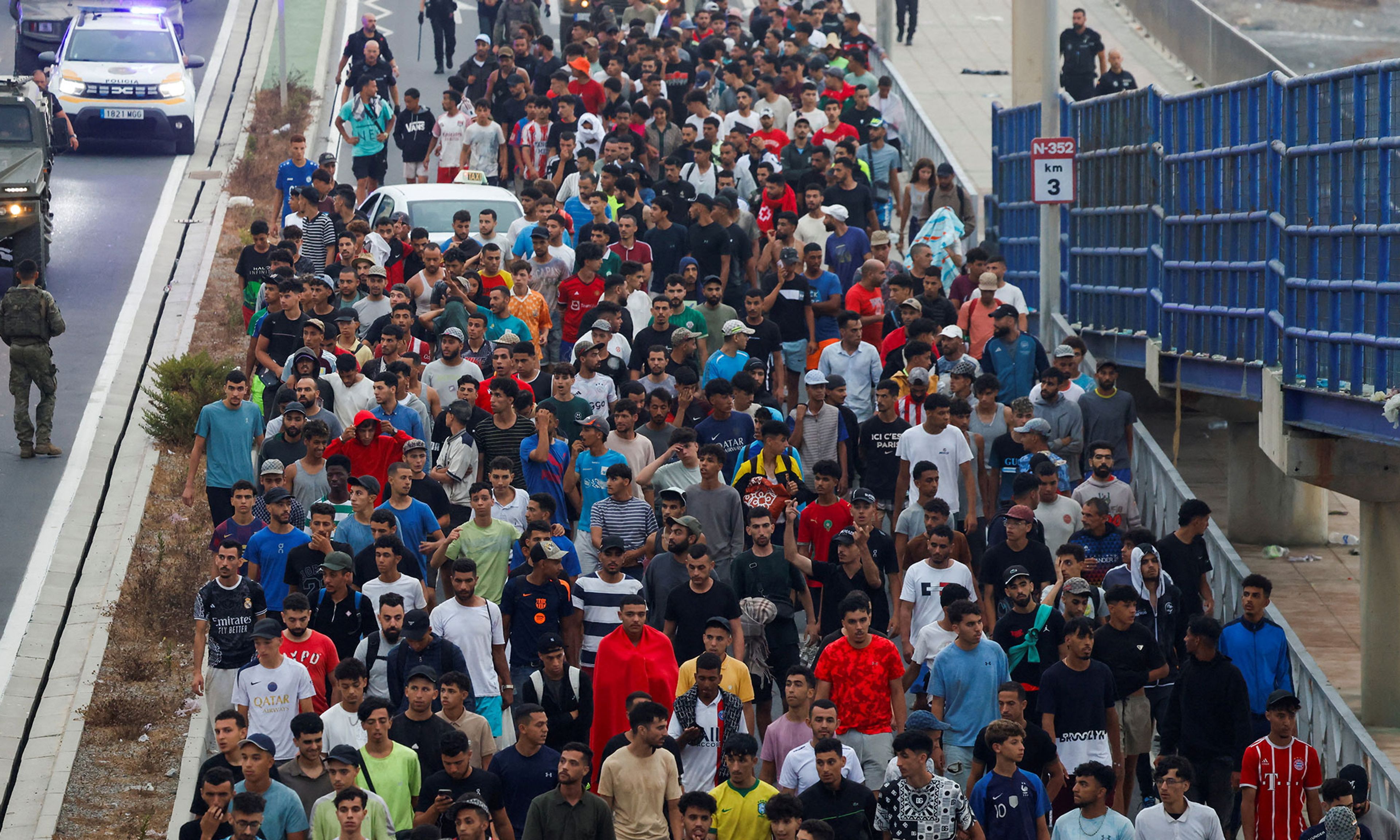
The immediate Ceuta crisis may have receded, with most of the 60,000 invaders having returned to Morocco, but it leaves in its wake a series of follow-on crises for Spain, Europe, and America alike.
The Spanish predicament engages problems both foreign and domestic. The Moroccan state, having demonstrated its ability to overrun Spanish territory at will, has experienced neither counter nor penalty and is unlikely to do so. At the strategic level, Spanish defense confronts a problem long-known and also long-ignored, in the imperative to keep the difficult-to-defend Plazas de Soberanía strewn upon the North African coast secured: a challenge that becomes acute when Morocco leverages hybrid warfare. That level of warfare, exploiting “civilian” means and targeting systemic non-military vulnerabilities, is uniquely effective when its targets will not recognize it as warfare, and therefore do not bring the full array of capabilities to bear against it. Spanish governance is therefore confronted with three interrelated imperatives: to maintain a qualitative superiority versus Moroccan means, to recognize hybrid warfare as such, and to use the full spectrum of state power against it. This is easy to diagnose but exceptionally difficult to undertake, especially for a Western government of the left.



Comments