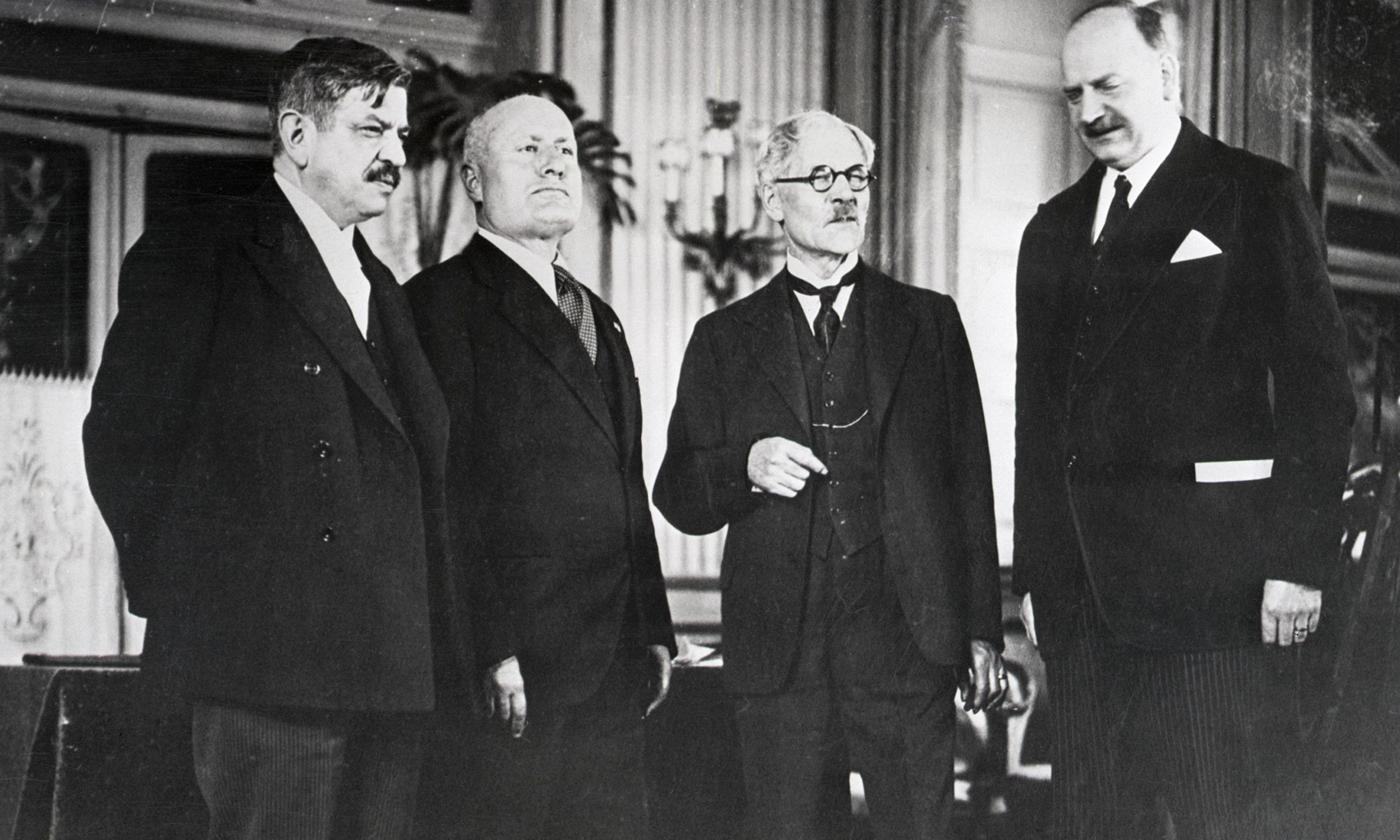
Stresa, Italy — “The United States had washed their hands of all concern in Europe, apart from wishing well to everybody, and were sure they would never have to be bothered with it again.” Such was the rough verdict of Winston Churchill as he reflected on the American mood in 1935, when European leaders were faced with Nazi Germany’s first open violation of the Treaty of Versailles.
Leaders from Great Britain, France, and Italy met in this elegant resort town on Lake Maggiore to devise a strategy for confronting Adolf Hitler’s military ambitions. No American officials were present at Stresa. Franklin Roosevelt, having promised to keep America unentangled from European affairs — “the United States should have no part” in Europe’s “national difficulties” — had little interest in the negotiations. In the end, the Stresa conference launched a cynical and disastrous policy of appeasement, culminating in the Second World War.



Comments