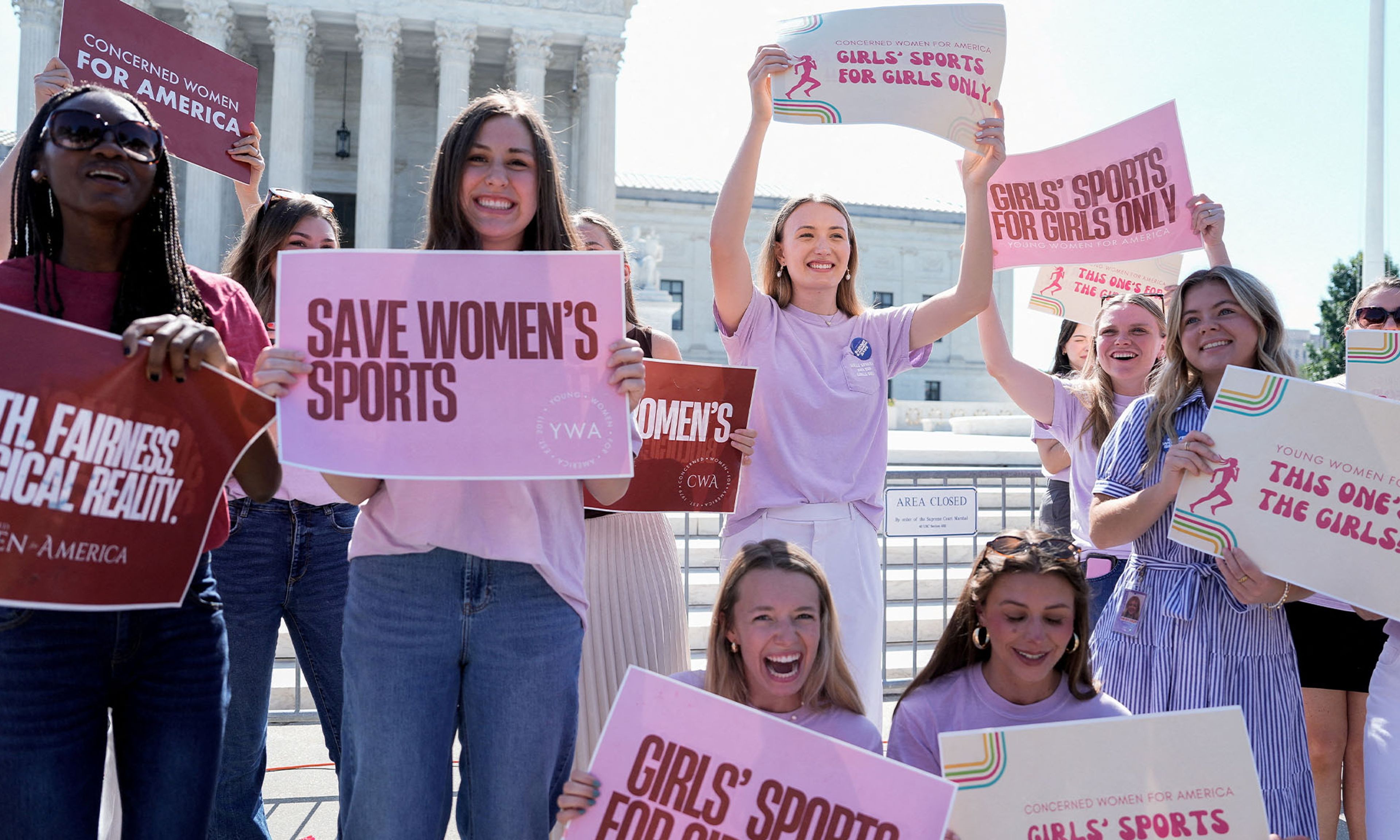
The Supreme Court this morning ruled that neither the 14th Amendment nor Title IX requires states to let boys into girls’ sports even if the male athletes identify as female. The issue came to the Court in two cases: West Virginia v. B.P.J. challenged West Virginia’s ban on boys in girls’ sports under both Title IX of the Education Amendments of 1972 and the equal protection clause of the 14th Amendment, while Little v. Hecox challenged Idaho’s ban only under the 14th Amendment.
The decision was technically unanimous in part (more on that below), but effectively 6–3, at least on the constitutional issue. The opinion by Justice Brett Kavanaugh emphasized that, if female athletes do not have their own, separate sports teams and leagues, this “would deny equal opportunity to female athletes because, as all agree, females and males have inherent physical differences relevant to athletic performance.” The Court refused to pretend away that reality, ruling that schools may “determine eligibility for women’s and girls’ sports based on biological sex.” Of course, that entails concluding that biological sex is a real thing that is unchangeable — exactly what transgender ideology denies.





Comments