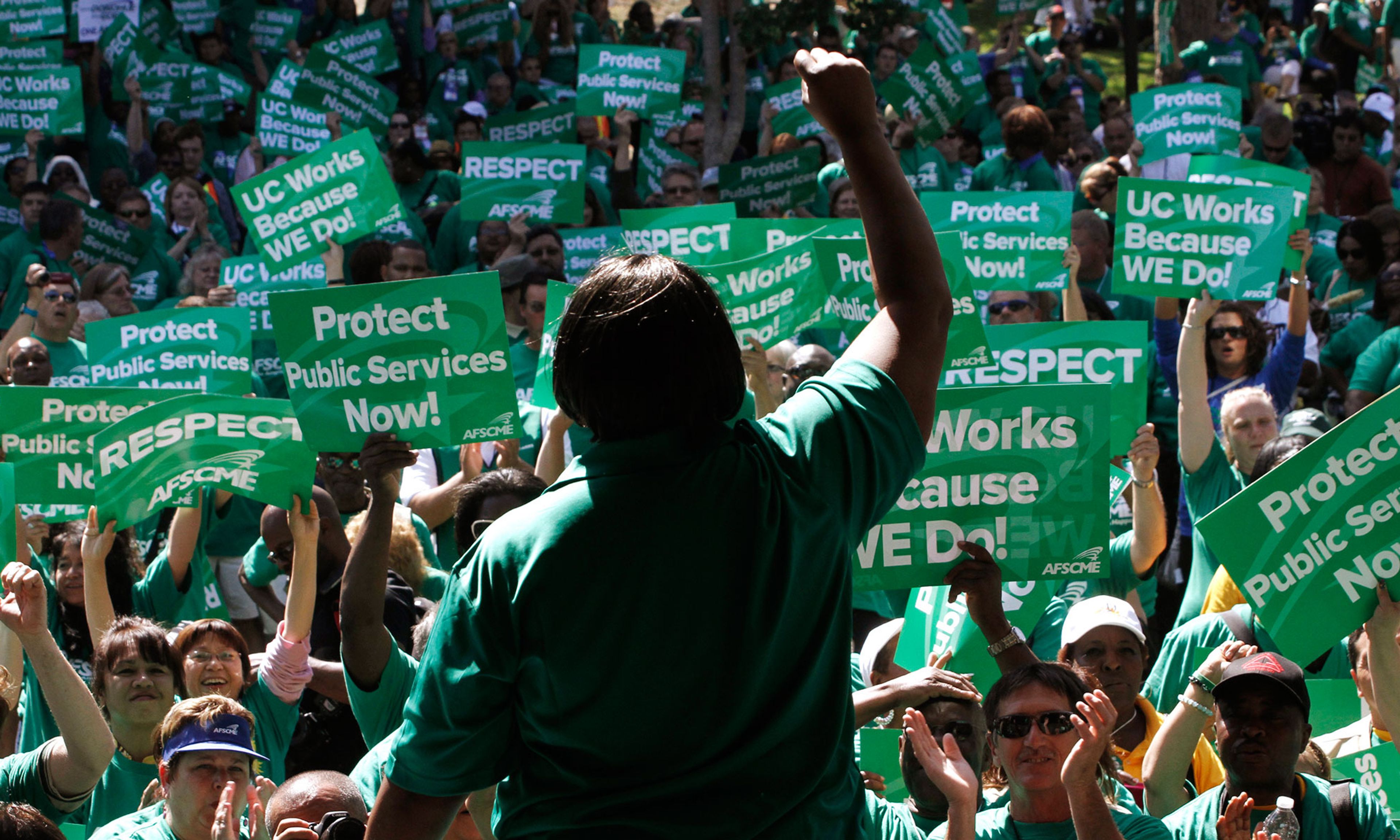
The Supreme Court is especially admirable when correcting especially deplorable prior decisions, as with the 1954 school-desegregation decision rejecting a 1896 decision’s “separate but equal” doctrine. It did so again last Wednesday, overturning a 41-year-old precedent inimical to the First Amendment.
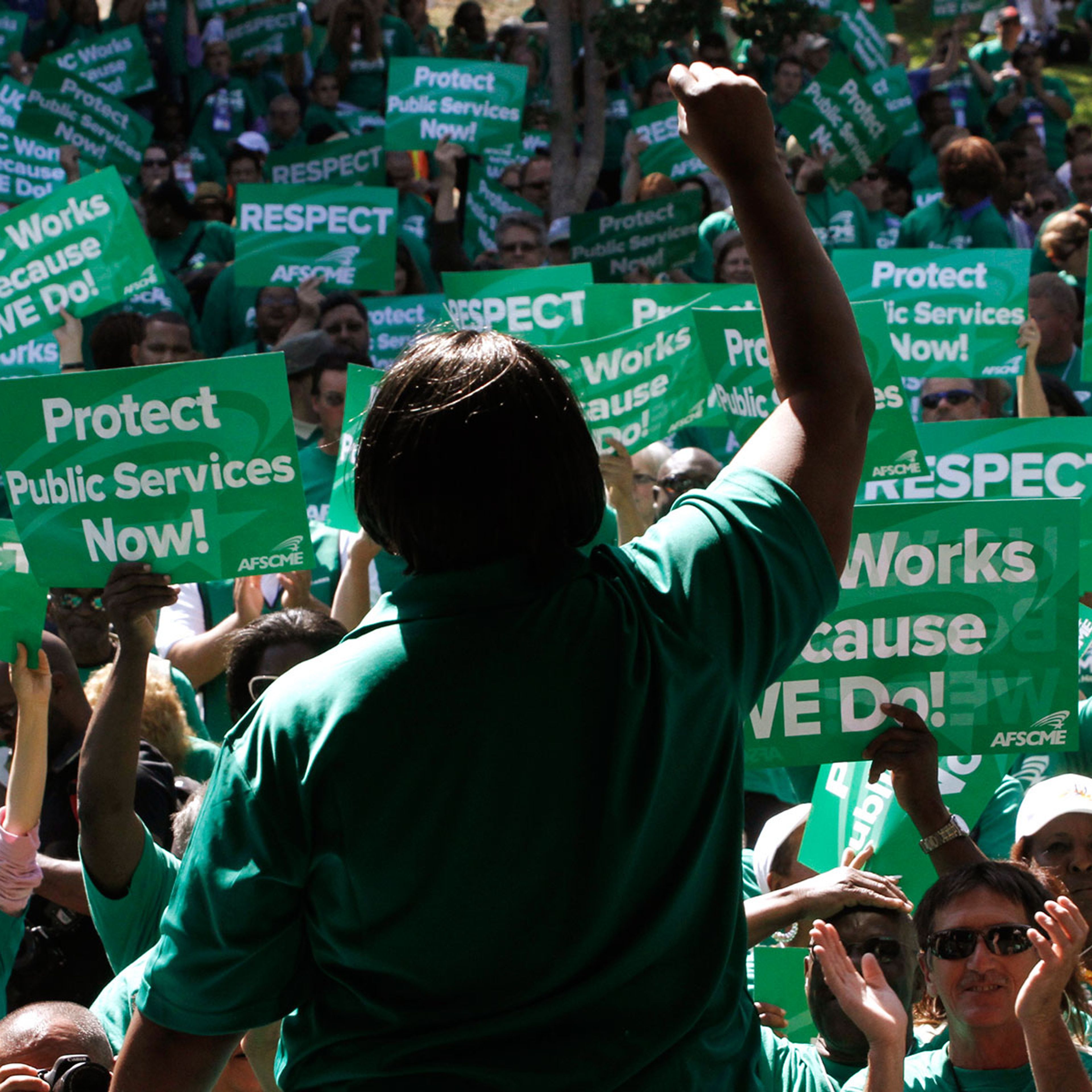
Shortly before the Court made this predictable ruling, a Wall Street Journal headline revealed why it was necessary. The headline said: “Unions Court Own Members Ahead of Ruling.” Anticipating defeat, government-employee unions had begun resorting to persuasion — imagine that — in the hope of retaining members and convincing nonmembers to continue making payments to the unions that the Court says can no longer be obligatory.
In 1977, the Court upheld, 6–3, the constitutionality of compelling government employees who exercise their right not to join a union to pay “fair share” or “agency” fees. These, which the union determines, supposedly cover only the costs of collective bargaining from which nonmembers benefit. But the payments usually are much more than half of, and sometimes equal to, dues that members pay.
The majority opinion in 1977 admitted something that was too obvious to deny and so constitutionality problematic that a future challenge was inevitable. That majority said: “There can be no quarrel with the truism that, because public employee unions attempt to influence government policymaking, their activities…may be properly termed political.” And one justice, concurring with the majority, said “the ultimate objective of a union in the public sector, like that of a political party, is to influence public decision-making.” (Emphasis added.)
Actually, everything public-sector unions do is political. Therefore, the 1977 decision made compulsory political contributions constitutional. Which made the Court queasy.
By 2014, it was affirming the principle that doomed the 1977 decision and foretold Wednesday’s: It is a “bedrock principle that, except perhaps in the rarest of circumstances, no person in this country may be compelled to subsidize speech by a third party that he or she does not wish to support.” Which is what the Court now says regarding compulsory financial support of government-employee unions. Yet Justice Elena Kagan, in her uncharacteristically strident dissent, said:
There is no sugarcoating today’s opinion. The majority overthrows a decision entrenched in this nation’s law — and in its economic life — for over 40 years. As a result, it prevents the American people, acting through their state and local officials, from making important choices about workplace governance. And it does so by weaponizing the First Amendment, in a way that unleashes judges, now and in the future, to intervene in economic and regulatory policy.
How does Kagan err? Let us count the ways.
The 1977 decision was no more entrenched than the 1896 “separate but equal” decision was for 58 years. The First Amendment exists to prevent the people’s representatives from making certain kinds of choices (“Congress shall make no law…”). Wednesday’s decision was not about “workplace governance” or “economic and regulatory policy.” It was about coerced speech. And about denial of another First Amendment guarantee, freedom of association, which includes the freedom not to associate, through coerced financial support, with uncongenial political organizations. And judges are supposed to be unleashed to wield the First Amendment as a weapon against officials perpetrating such abuses.
Wednesday’s 5–4 decision accords with President Franklin Roosevelt’s judgment that “the process of collective bargaining, as usually understood, cannot be transplanted into the public service.” In private-sector bargaining, unions contest management concerning the distribution of companies’ profits. In the public sector, government gets its revenues from a third party — taxpayers. Because a majority of organized labor’s members are government employees, the labor movement is mostly not horny-handed sons of toil. It increasingly is government organized as an interest group that pressures government to do what it has a metabolic urge to do anyway: grow.
The deadliest dagger in Wednesday’s decision was the stipulation that nonmembers’ fees cannot be automatically deducted from their wages — nonmembers must affirmatively consent to deductions. So, public-sector unions must persuade people. No wonder they are panicking.
There is no sugarcoating today’s reality. Public-sector unions are conveyor belts that move a portion of government employees’ salaries — some of the amount paid in union dues — into political campaigns, almost always Democrats’, to elect the people with whom the unions “negotiate” for taxpayers’ money. Progressives who are theatrically distraught about there being “too much money in politics” are now theatrically distraught that the court has ended coercing contributions that have flowed to progressive candidates.
© 2018, Washington Post Writers Group



Comments