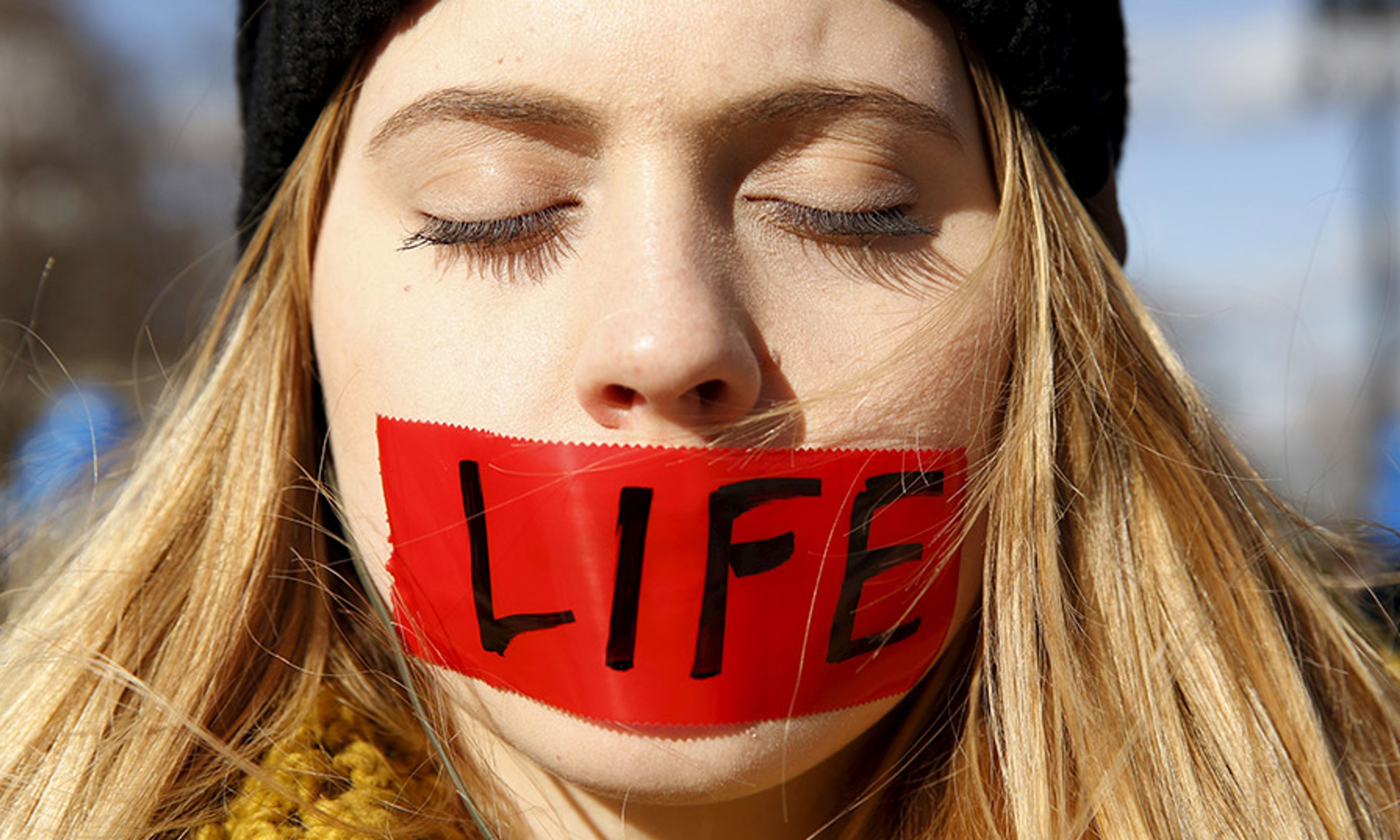
Chuck Donovan is president of the Charlotte Lozier Institute and lifelong pro-life activist. In an interview with National Review Online, he reacts to Monday’s Supreme Court Ruling in Whole Woman’s Health v. Hellerstedt. – KJL
KATHRYN JEAN LOPEZ: Were you surprised by today’s Court decision on the Texas law?
CHUCK DONOVAN: Having watched the court for 40 years on its supra-legal abortion project, no, I cannot say this outcome was truly surprising. But from the standpoint of watching the country genuinely move in a more pro-life direction over the past few decades, and given the reasonableness of the Texas health standards, it is very surprising. What’s more, if Justice Thomas’s assessment is correct — and we would do well not to ignore what the dissents in these cases foretell – the Court has taken a step backward from the jurisprudence of Roe v. Wade and away from the undue burden standard Justice Kennedy advanced in Casey in 1992. It’s especially disappointing that the latter justice chose silence in this case, especially where the state interest in the health of women is implicated. The majority’s dismissal of the ability of laws to prevent more predators like Kermit Gosnell is shocking — what is the law for?
LOPEZ: How big of a blow is it to the pro-life movement?
DONOVAN: The details of the ruling remain to be sorted out, and perhaps in this instance Justice Kennedy’s silence isn’t full assent on the Roe standard. Justice Alito in his dissent points out that the five-judge majority struck down the entire statute as challenged (the 20-week limit, thankfully, was not challenged) and this means even its fire-safety regulations are gone. Can the Court conceivably have meant that abortion clinics are exempt from even this basic kind of safety rule? The attorneys will need to pick their way through this and see what can be salvaged from the debris. But we should make no mistake — the Court is wielding a scythe here, not a scalpel.
LOPEZ: What does it mean for the upcoming election?
DONOVAN: To paraphrase A Man for all Seasons, it “shows us the times.” Liberty and common sense are imperiled in new ways by where we stand. I do not believe that all things that should be done — improving clinic-inspection laws, standardizing the collection of abortion data, 20-week laws and the like — are doomed. But this does highlight that the Court thinks of abortion as a super-right, whose existence leads to the rewriting of common legal concepts on unrelated issues such as severability and res judicata. Abortion clinics were given two bites at this law. The Court basically acted as a national medical board, as leading attorney Clarke Forsythe describes it, and they adopted the abortion industry’s “medical understanding” whole cloth. Things can still get much more extreme, so more appointments to the Court could be devastating to laws both already passed and waiting to be written. No voter can ignore this impact when they go to the polls, particularly when choosing U.S. senators as well as the president.
LOPEZ: Where does this leave the pro-life movement?
DONOVAN: Our movement has resiliency. Pregnancy centers save hundreds of thousands of lives a year. The abortion rate in the U.S. has already dropped to the level it was in 1973. But we still fail to reach a million mothers a year. Half of them are on their second trip to the abortion clinic. That is clearly not the answer. So we have vastly more to do on that front, and states where it is possible should be encouraged to help the centers reach more women. Georgia’s recent appropriation of $2 million to pregnancy centers is potentially a very good thing if done right — but this will remain, as it should, a predominantly private movement under a hostile public regime.
LOPEZ: Are there things more important than law on this front?
DONOVAN: Right now, yes. But we can never tolerate the injustice of laws that withdraw all recognition of the humanity of the unborn child from conception to birth. These are our brothers and sisters. I have always viewed the “life issue” not as a single issue, but as a transcendent issue. Putting aside partisan politics, it should be clear that our society – in social relations, political discourse, and just plain daily life – is submerged in a simmering atmosphere of violence. The idea that we can unleash just a bit of violence, or use it against a limited class of people, and not have blood spill over everywhere is fantastical. I pray that I am wrong, but we are being pulled back and forth by volcanic forces. Awash in “rights,” we are cruel to the innocent and the weak. There is no higher duty than to care for “little ones.” It cannot end well when we consign that duty to the dustbin of history.





Comments