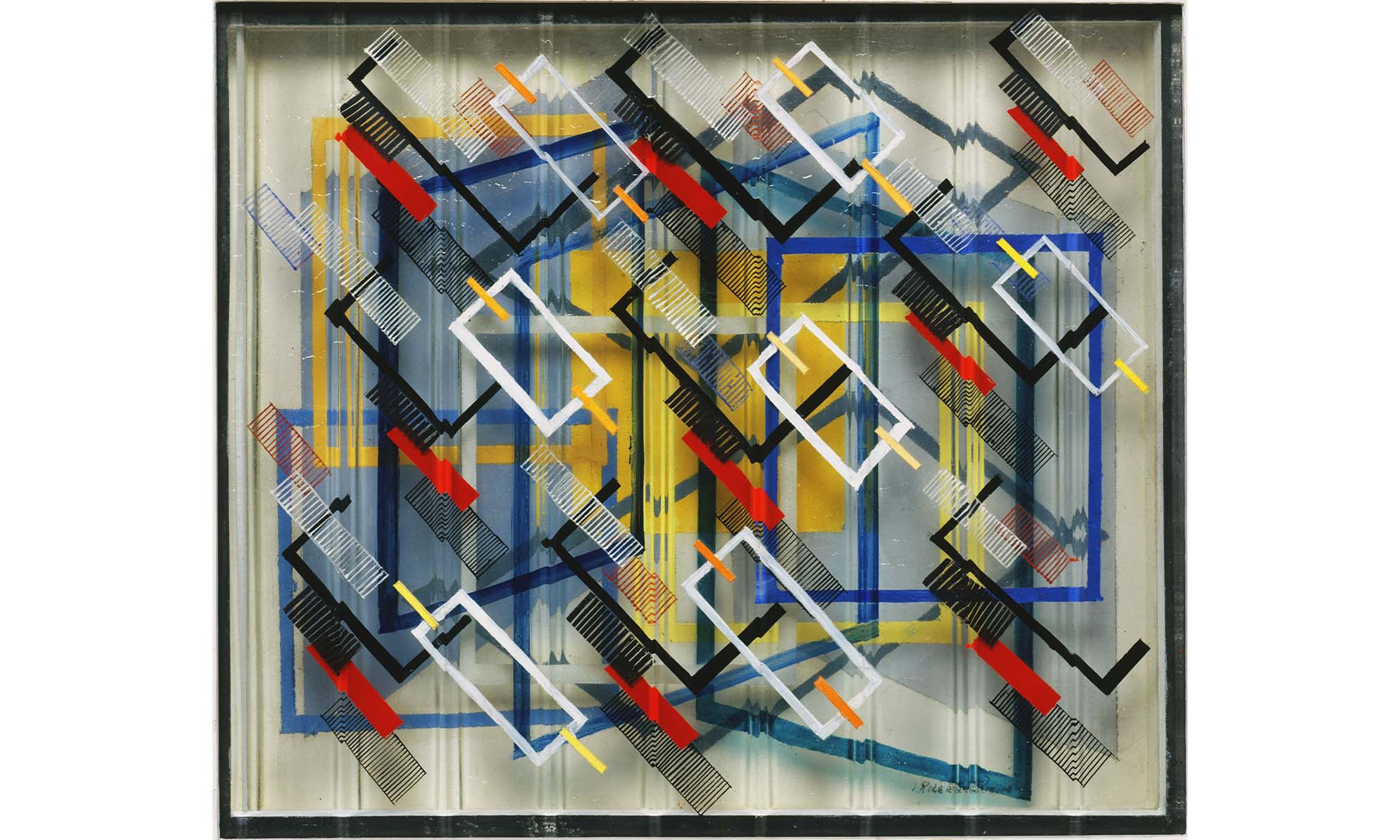
Pour, Tear, Carve: Material Possibilities is the new exhibition at the Phillips Collection in Washington, D.C. Using about 65 works from the permanent collection, it looks at how artists use unorthodox materials such as plastic, wood, scraps of paper, bones, dirt, glass, cloth, and sand to convey meaning. Art’s sometimes more than paint-on-canvas or ink-on-paper. “The medium’s the message” is Marshall McLuhan’s old saw. It means that the materials an artist uses aren’t neutral. They are part of the story, sometimes a nuance, sometimes a punch in the gut. Pour, Tear, Carve seemed promising to me, but it works in a haphazard way at best.
It’s what I call a shoehorn show. Some objects have a remote, even inscrutable link to the main theme of the exhibition. They’ve come from a recent donor, for instance, and they’ve got to be seen — or worn — whether or not they fit. Others are indeed poured, torn, or carved, but, as works of art, they’re not in the show because of quality or because they’re poured, torn, or carved with distinction. Rather, they’re on the walls because de rigueur PC thinking requires it, which means the subject’s hot but the art’s tepid.


Comments