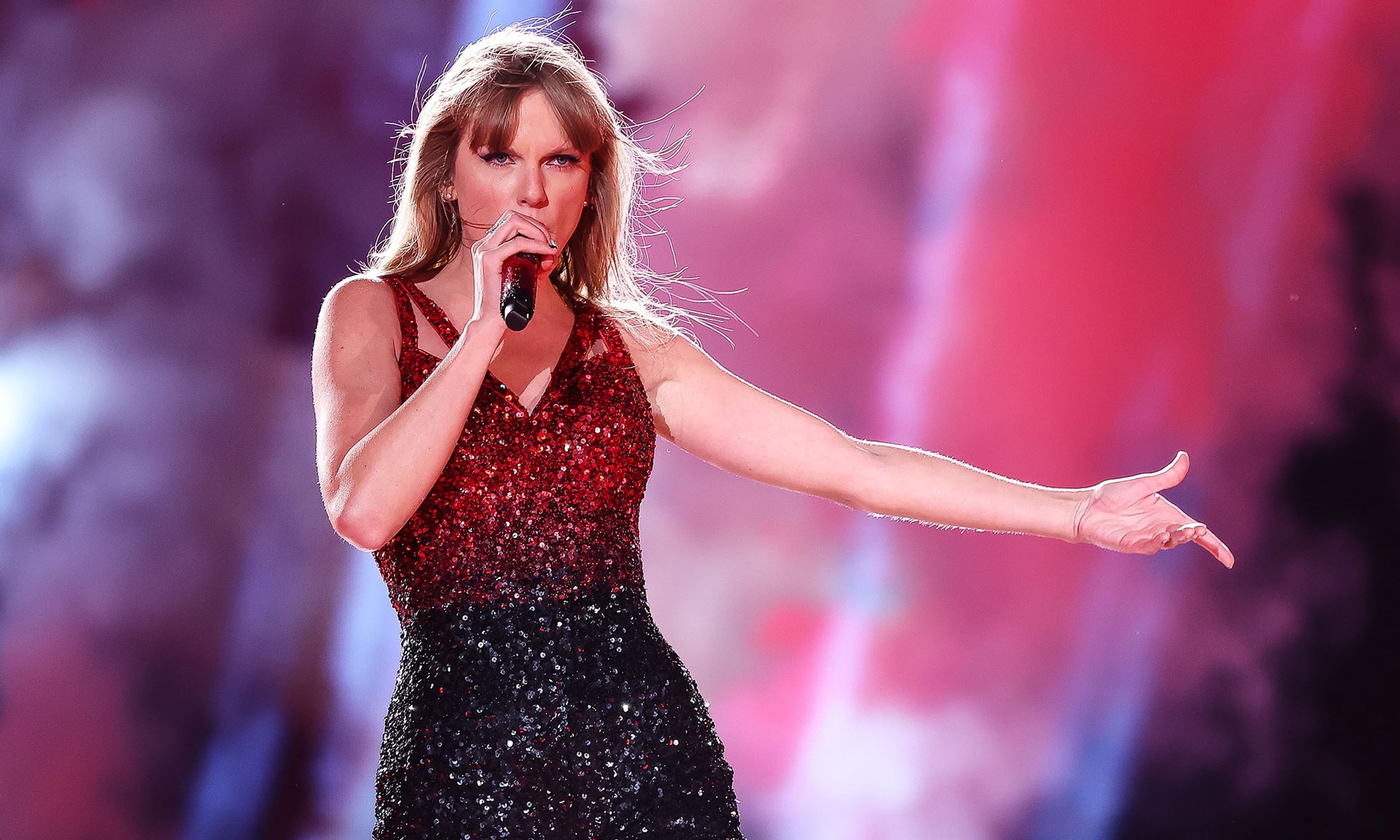
Taylor Swift is a philosopher. Her meteoric rise to pop superstardom is no accident — it stems from her unmatched ability to capture (and even craft) the essence of the modern woman. Swift has no interest in crafting Shakespearean turns of phrase or Miltonian epics. She seeks to put to words the experience of the average woman qua average woman, as my colleague Abigail Anthony observes (critically). But it is no small feat that Swift has pulled off the Eras Tour at the young age of 33. Count me as an admirer. (Confession: I attended her rain show in Foxborough, Mass., in May. It was inspirational.) This kind of setlist — a prospectus of the artist’s work that spans their career — is typically reserved for silver-haired icons. (See: Bruce Springsteen’s current tour, sans peptic ulcer.) Herein lies the great genius of Taylor Swift: Because she started making music so young, releasing her first album at 16, her biggest fans grew up alongside her. Women everywhere, particularly between the ages of 16 and 35, have used Taylor Swift as a primary hermeneutic with which to process their own existence as they go from girlhood to womanhood.
During the process of entering adulthood — coming into the full capacity of one’s own mind — there is a constant reanalysis of the world and of what constitutes reality. For a quick example: Think of the difference between a daughter’s relationship with her parents when she is a child, then a teenager, and then an adult. The daughter grows to view her parents — who remain the same — as wise friends rather than infallible sources of authority. Reality does not change, but the daughter’s perception of it does. Or, for another example: Think of the way that a girl’s understanding of love changes from that first, gangly profession of a mutual crush on the high-school bleachers to the profession of vows at the altar. This is the kind of world-reckoning that Swift undergoes each time she comes out with a new album, i.e., a new version of herself. She takes stock of everything she has learned and experienced up to that point in her life and re-evaluates it (and then shares her newly gained worldview with the masses, set to catchy tunes).





Comments