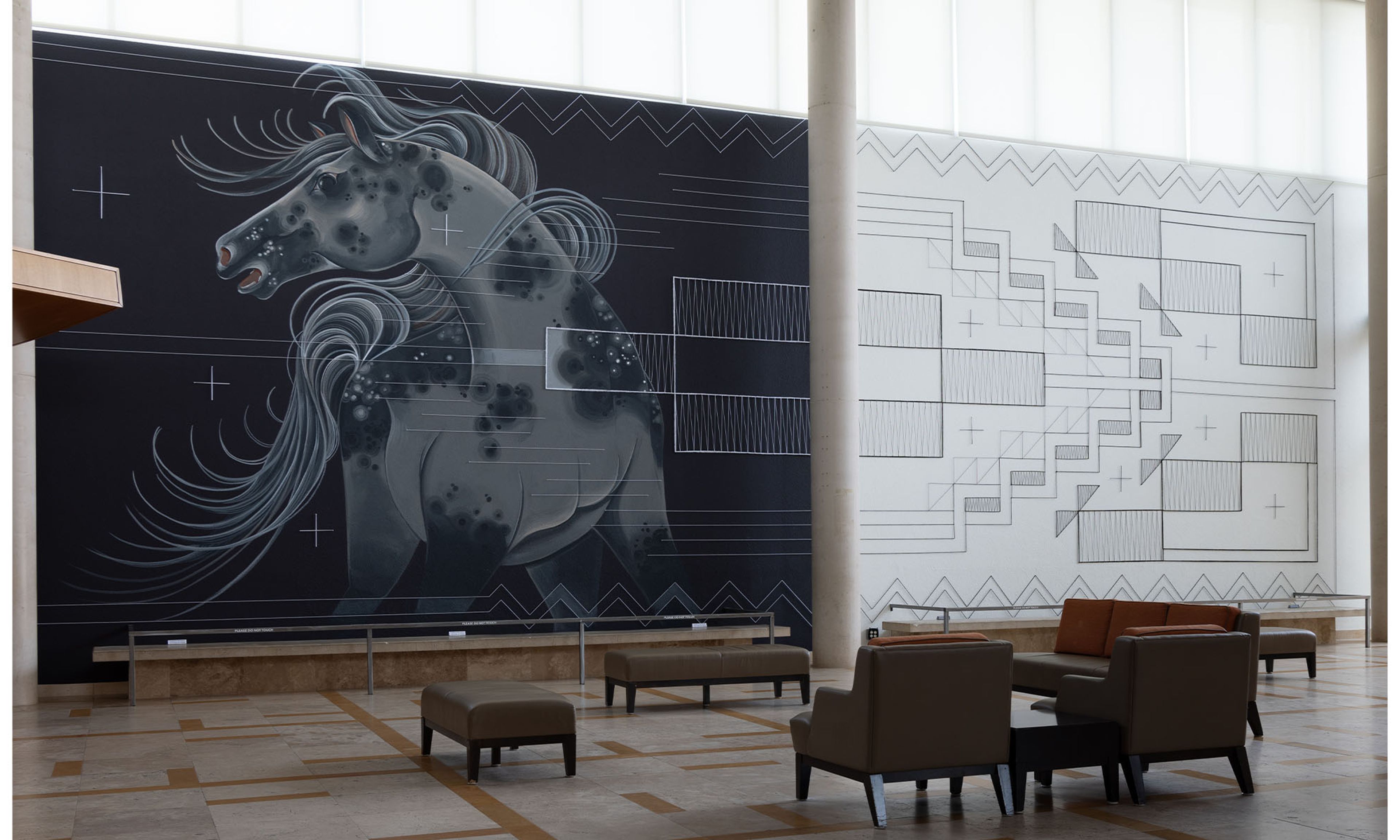
Greetings from Albuquerque. I was here once, in the mid-’80s, when I worked for the General Assembly in Connecticut. I managed to snag a junket visiting Albuquerque and Santa Fe, and why not go? New Mexico, called the Land of Enchantment, was known then to this Connecticut Yankee as one of a kind for its sublime, otherworldly landscape — rose-colored mesas, white-gypsum sand dunes, luminous, baroque limestone caverns, the Turquoise Trail, salt beds, tent rocks, and alpine meadows. I knew, as abstractions, about New Mexico’s unusual Spanish, Anglo, and Native triple culture, sometimes a melting pot, sometimes a salad bowl, sometimes stoutly separate, sometimes at loggerheads. Then there’s Billy the Kid, notorious massacres of Franciscan missionaries, Kit Carson, Willa Cather’s Death Comes for the Archbishop, precious-metals mischief, and, though I couldn’t have predicted it, Albuquerque’s “Breaking Bad” subculture. Today I’ll write about the splendid Albuquerque Museum, the city’s temple to art and history.
The first-rate museum treats both art and history for this handsome city and its region, together having about a million people. The city was founded in 1706 and named after the duke of Alburquerque, New Spain’s viceroy. Very early, it was a cathedral town and on Camino Real, which linked Mexico City with the boonies. The Rio Grande runs through town. Petroglyphs, old Native towns and the early missions, Route 66, and the Atomic Age figure as well. New Mexico might be off the beaten track for Acela Corridor types, but it’s a fascinating, unique place. Newer license plates tout New Mexico as “the chile capital of the world,” true but on the trite side. “Land of Enchantment” suits it well in its invitation to us to look and dream.



Comments