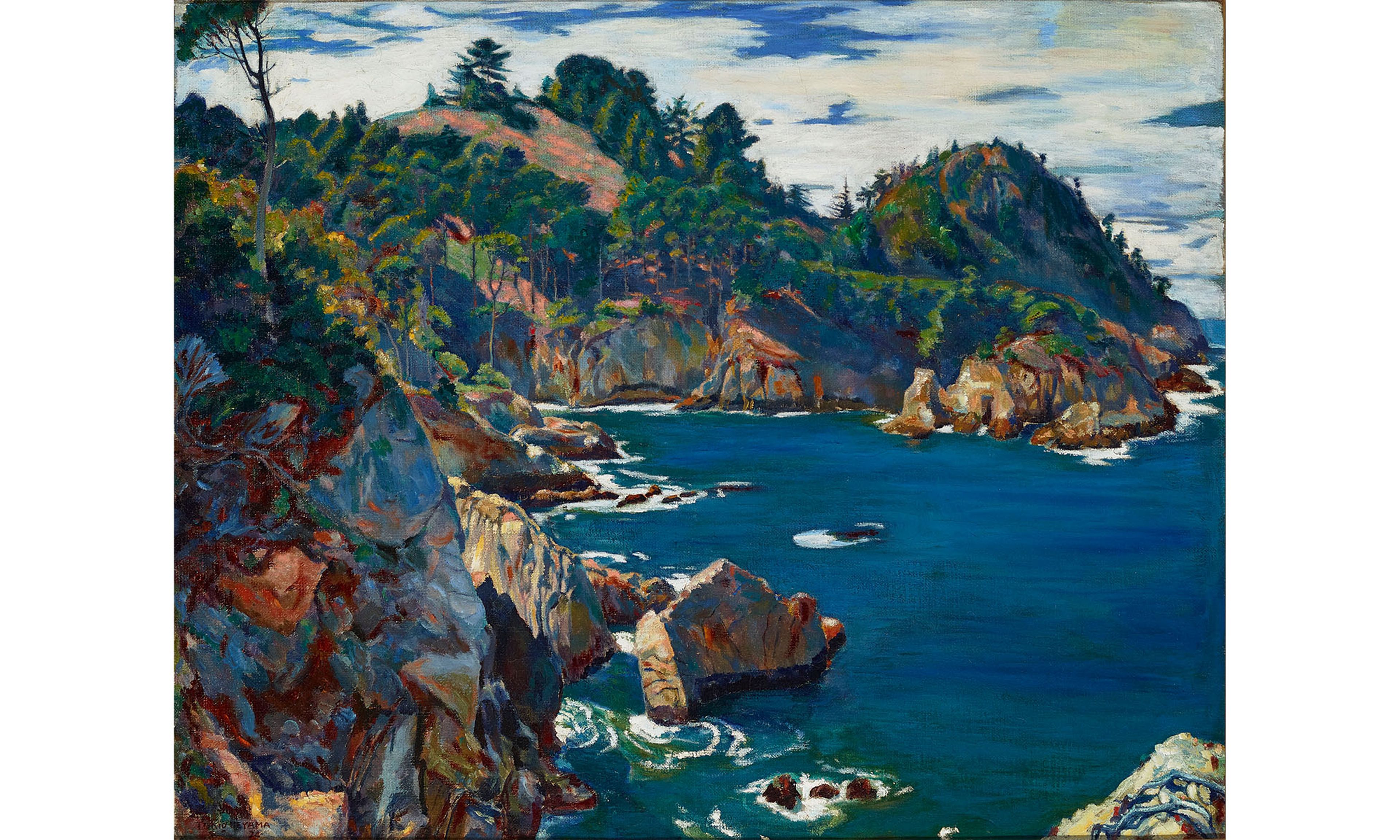
Greetings from the bighearted, high-spirited Lone Star State and especially from Fort Worth. I’m here to speak to the Federalist Society’s Texas A&M law school chapter about art restitution and to visit art hot spots in Fort Worth, Austin, and San Antonio. I wanted to see East of the Pacific: Making Histories of Asian American Art at the Amon Carter Museum in Fort Worth, since I didn’t know any of the artists and the exhibition was assembled by the very good Cantor Arts Center, Stanford University’s art museum.
East of the Pacific has potential — the 31 artists are little known — but it’s unsuccessful for a lack of curatorial discipline and focus. Too bad. Amon Carter, which collects and displays American art only, is a sentimental favorite of mine for the quality of its collection and because of my friendship with Ruth Carter Stevenson. Ruth didn’t establish the museum. Her father, Amon Carter, an entrepreneur and newspaper publisher, did via a bequest of pictures by Frederic Remington and Charles Russell. Ruth later busted from old Amon’s cowboy-heavy art corral — through brilliant acquisitions, a Philip Johnson–designed building, and a good, scholarly exhibition program. Today, the Amon Carter is an encyclopedic American art center.

Comments