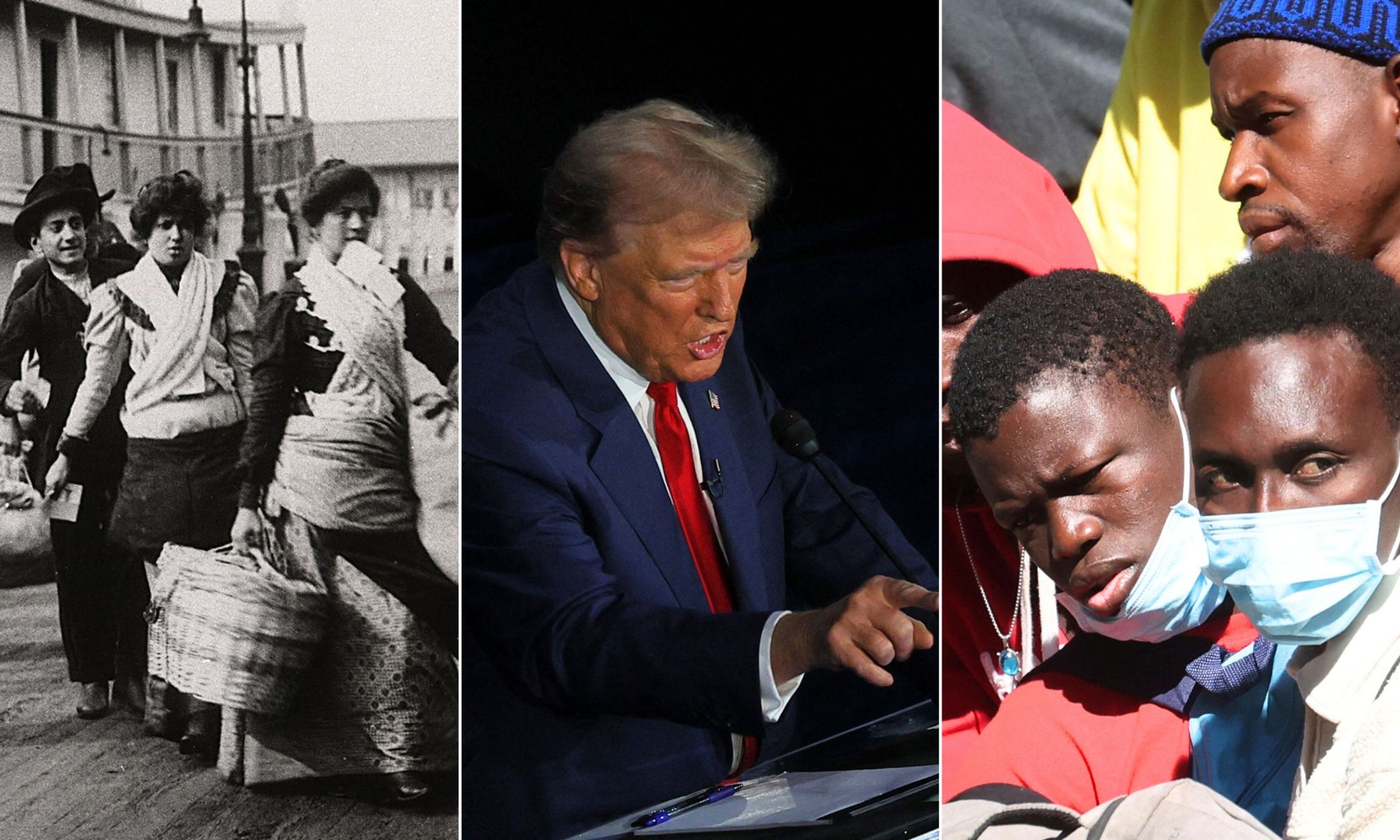
Donald Trump’s unverified claim that Haitian immigrants in Springfield, Ohio, have been eating local pets became instantly notorious, and rightly so. But it’s important to consider the reasons he’s drawn to tell the story — and a much more serious point about immigration that he and Kamala Harris ought to be making. Control of the southern border may be the most important current issue. But immigration at the scale the U.S. is currently experiencing requires something more than border control — specifically, what the country did in the middle of the last great wave of immigration in the early 20th century: assimilate the newcomers. This should mean at least two things: pushing and enabling them to learn English, and to pass the citizenship test.
The large numbers of foreign-born residents and the change they are bringing to the nation’s culture are not a figment of Trump partisan fever swamps. The Pew Research Center reports a record 46 million non-native residents — a number that almost certainly vastly undercounts those who have slipped in illegally. Whatever one’s view about the virtues of such an influx, they bring a sense of cultural dislocation for many of the natives. Consider that in Springfield, 15,000 Haitian immigrants arrived in a city of some 58,000. Or consider working-class Hazelton, Pa., where, in 2000, Hispanics made up less than 5 percent of the population and now account for more than 50 percent (mainly from the Dominican Republic).





Comments