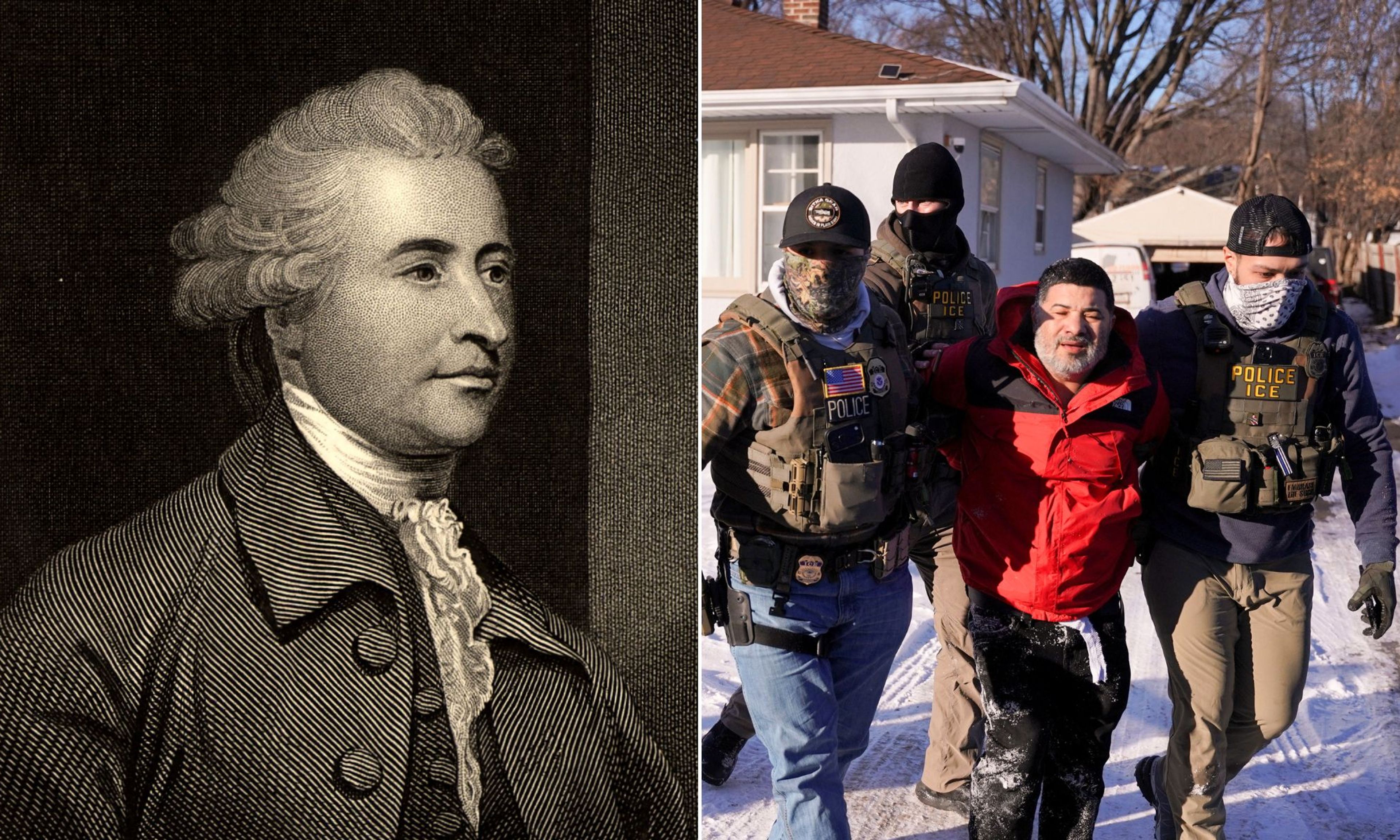
Few political fights are more impassioned than those over sovereignty. The authority to exercise power is every government’s most prized possession. It is always contentious, then, when two overlapping polities assert conflicting claims on a particular matter of law. Same as it ever was.
Almost no one living in the American colonies before 1765 denied the principle that Parliament held indivisible sovereignty, defined by William Blackstone as the absolute power to make law, across the British Empire. But when Parliament attempted to use that sovereignty to tax the colonists in service of war debts, Americans cried foul. They came to believe that only their local legislatures, not a distant body in which they had no representation, could legitimately bind them.





Comments