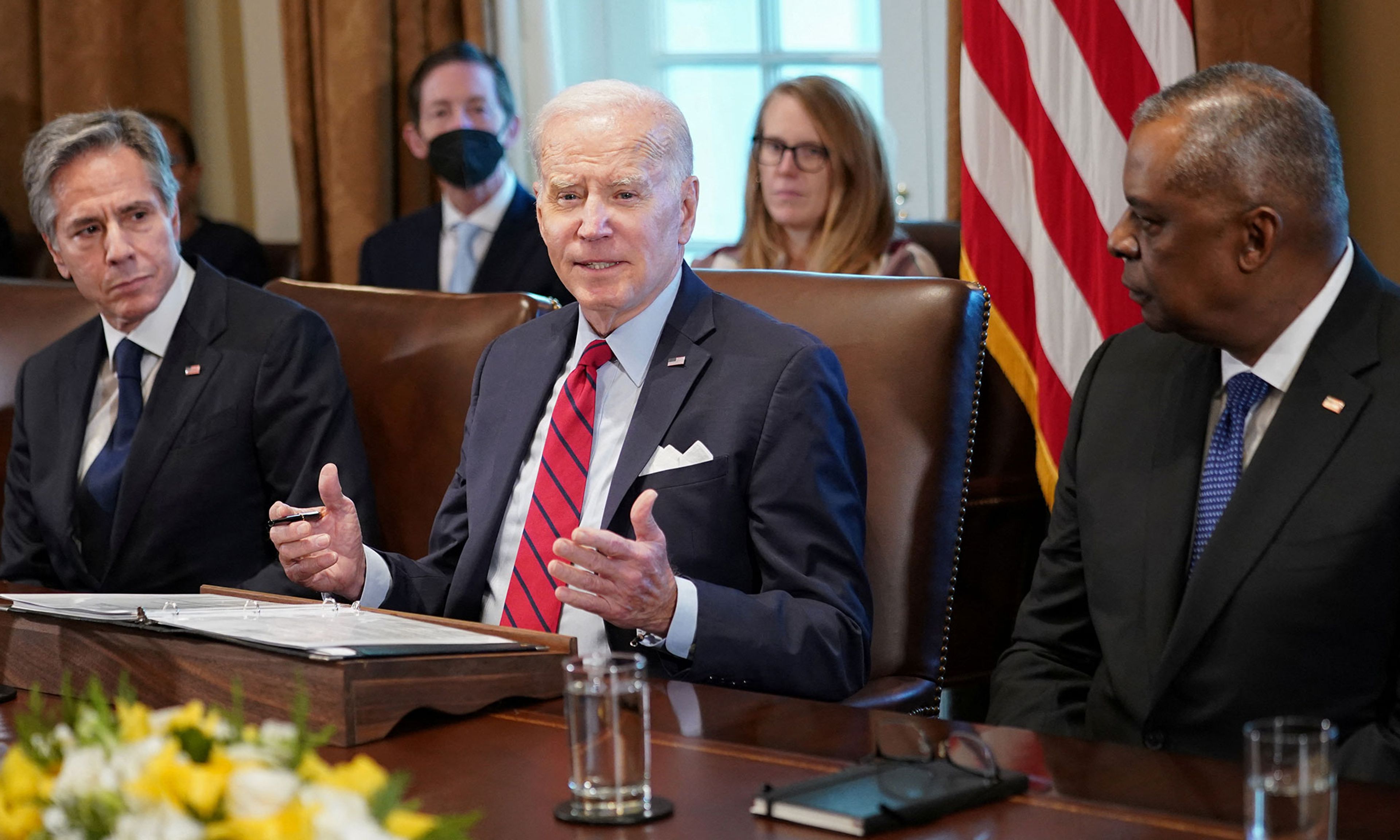
Two and a half years into the administration of President Joe Biden, there is enough evidence to discern a coherent pattern in its foreign policy. China, Russia, and Iran constitute the United States’ top three antagonists. In their own — and sometimes similar — ways, the three have challenged the world order, undermined U.S. interests, even killed Americans, and escalated conflicts they had previously started. The administration’s reactions to these events, while differing in their specifics, betray a common political objective: preventing escalation.
The earliest indicator of this inclination came in the spring of 2021. During a summit between the U.S. and the Russian presidents, the two sides committed to maintaining “strategic stability.” Unsurprisingly, Vladimir Putin didn’t keep his word. Since Putin’s escalation of his war on Ukraine, the administration has made Ukrainian victory secondary to avoiding an implausible war between Russia and NATO. “The calculus of wanting to contain the conflict inside Ukraine’s borders and avoid nuclear escalation,” as the Washington Post put it after the recent NATO summit, “imbues every action the administration takes.” It shows. Repeatedly, the administration has made it clear to the Ukrainians that it would not support attacks on Russian territory (Secretary of State Antony Blinken made a statement to the contrary before Congress, which he never repeated). It has refused to provide Kyiv with longer-range weapons and has remained hesitant to supply the Ukrainians with more powerful and advanced capabilities over vague fears of Russian escalation, despite ample evidence that such fears are unfounded.


Comments