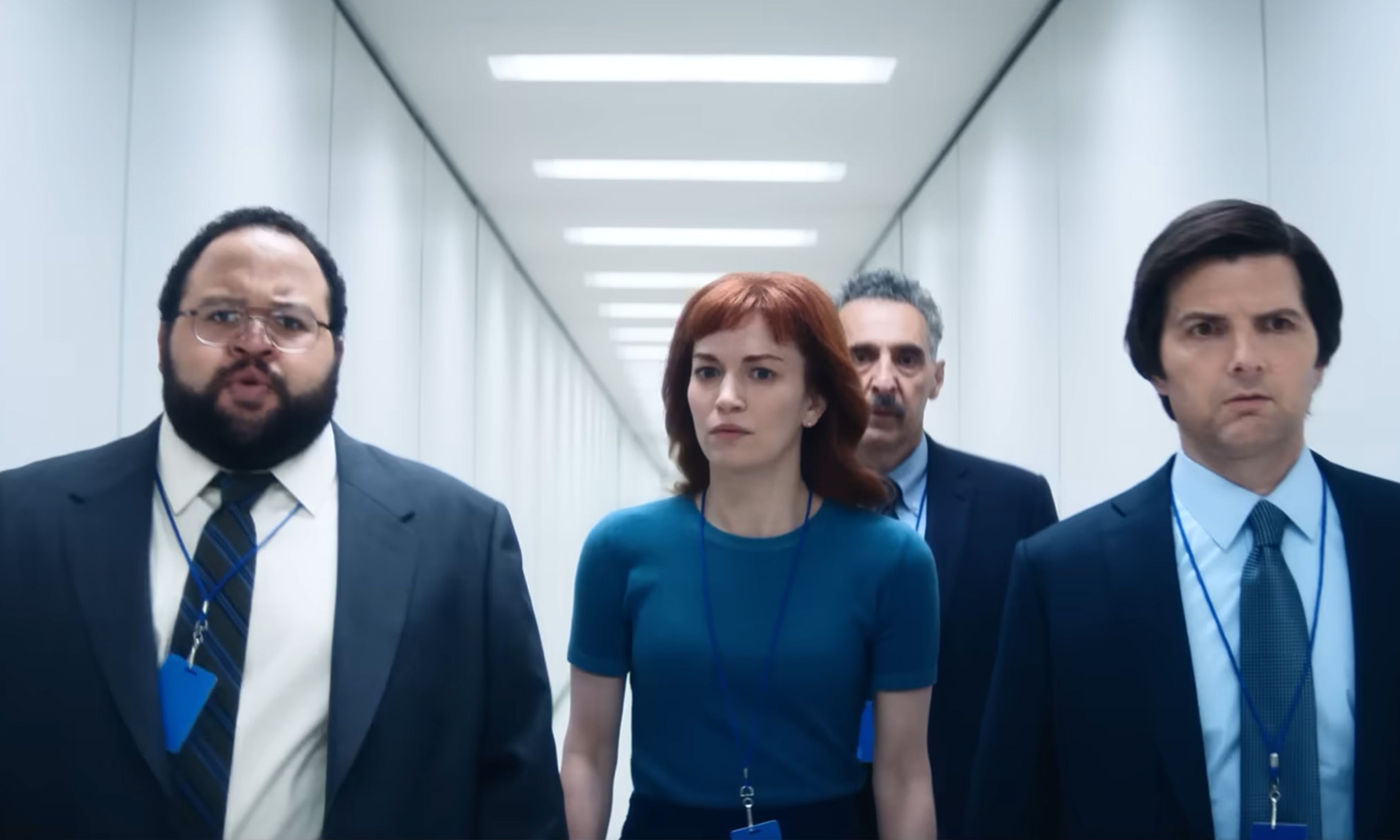
The AppleTV+ series Severance, which recently concluded its second season, is one of the most thought-provoking prestige dramas of the decade. In case your work/life balance has been too distorted to catch the show: Created by Dan Erickson, the series follows a group of employees at a mysterious company named Lumon Industries who volunteered to “sever” their workaday selves (called “innies”) from their out-of-office selves (“outies”). A chip implanted in their brains activates when they step in and out of the office elevator, segregating the memories of what goes on at work and what goes on outside. Adam Scott, starring in a very different role from the one he had on the sitcom Parks and Recreation, leads the outstanding cast as the innie Mark S., who falls in love with his colleague Helen R. (Britt Lower) — but whose outie, Mark Scout, took the job at Lumon out of grief for his dead wife (Gemma, played by Dichen Lachman).
The show’s depiction of corporate life is a rich vein to mine for larger meanings. One critic calls it “a tidy allegory for the misery of the modern office drone”; Michael M. Rosen and Danya Rosen argue that it “highlights the fundamental difficulty we encounter in truly understanding and empathizing with those who are different from us”; Ross Douthat suggests that it is “a dreamlike reckoning with WASP power and its disappearance.” Whichever of these, or other, intriguing interpretations you prefer, the show renders such modern-day concerns so effectively, and so hypnotically, by resurrecting conventions from the 18th-century genre of gothic fiction. Severance is developing a sub-genre you might call the corporate gothic.





Comments