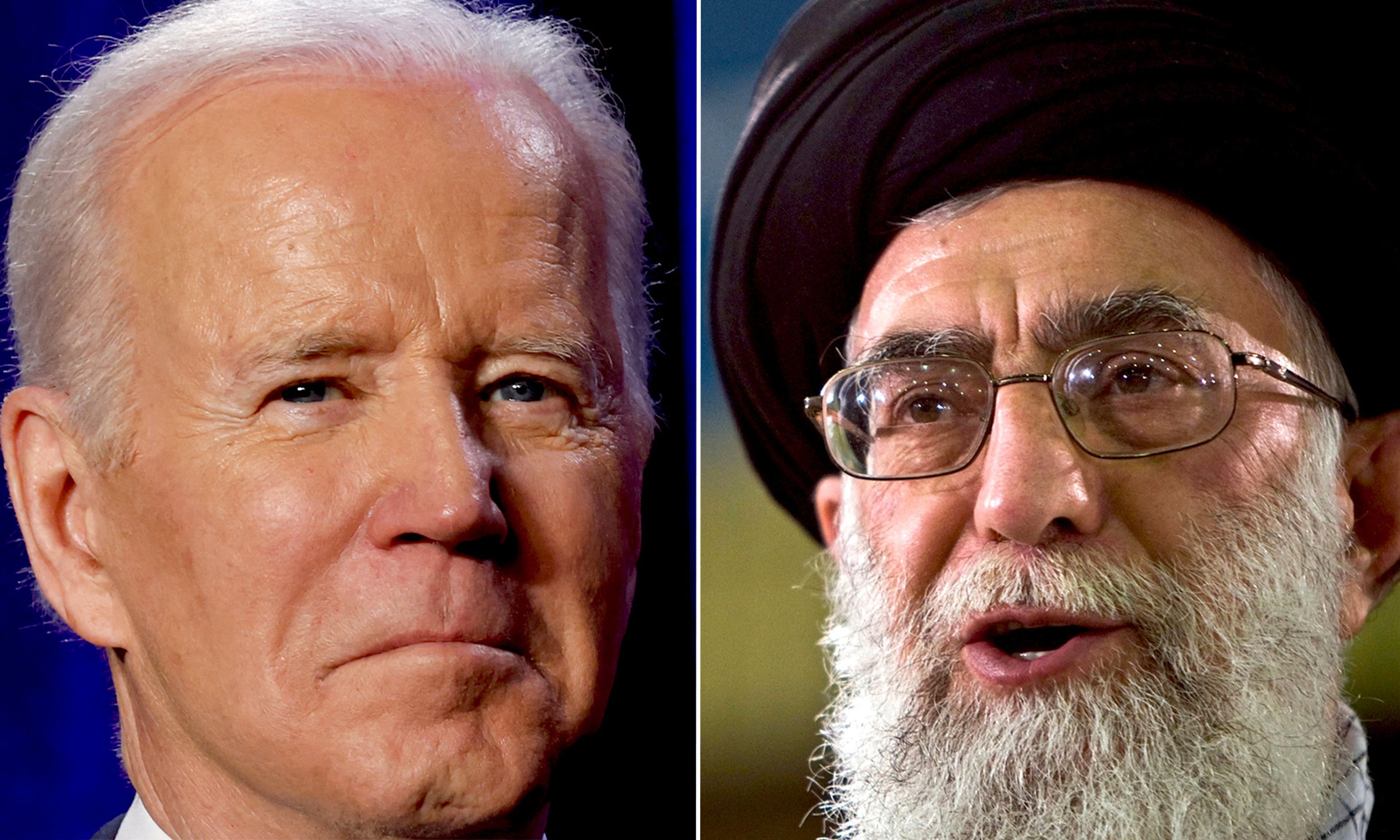
On Thursday, the New York Times reported that the administration of President Joe Biden is allowing the Islamic Republic of Iran access to $6 billion of its frozen assets and releasing a number of imprisoned Iranians in exchange for the release of five American hostages. In the battle between the government’s responsibility to national interest and individuals, individuals appear to have triumphed.
It is wrong to say that since assuming office, Biden has been seeking to reach a nuclear-arms-control agreement with the Islamic Republic. It is more accurate to say that he has been seeking an agreement, any agreement, with the Islamist regime. The objective at first was to return to a “longer and stronger” version of the comprehensive agreement reached when the same people were in charge during the administration of President Barack Obama. The original agreement banned the regime from exporting ballistic missiles, regulated the Islamic Republic’s use of centrifuges, and limited uranium enrichment at 3.67 percent, but all of these provisions had deadlines. (The arms-export restrictions are set to expire this October.) Biden first tried to modify the agreement in the U.S.’s favor by offering to unfreeze $17 billion in Iran’s assets and provide sanctions relief. After that fell through, by which point the Islamic Republic had acknowledged 60 percent uranium enrichment and reached 84 percent secretly, the objective became reaching a more modest agreement with the enemy. The regime would release hostages and freeze enrichment at 60 percent — a significant U.S. concession — and the United States would provide Tehran access to $24 billion in frozen assets and IMF withdrawal rights. When that deal came undone, the administration settled for an exchange of hostages facilitated by the release of $6 billion in Iranian money, on top of the $2.7 billion it had already released as a gesture of goodwill.




Comments