
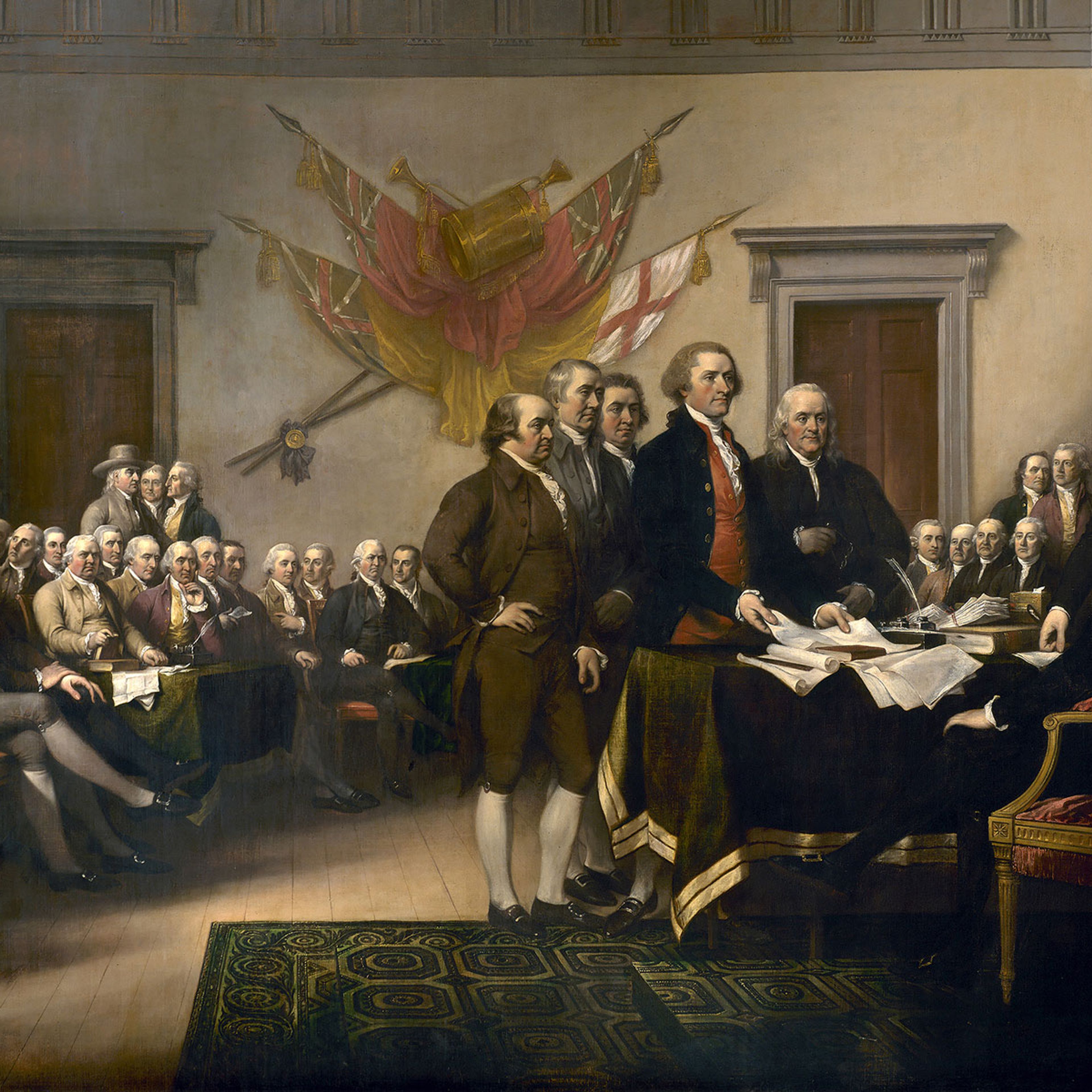
Today, we celebrate the 250th birthday of our nation, on the grounds that this is the 250th anniversary of the Declaration of Independence. It was enacted by the Second Continental Congress, which immediately thereupon changed its character as a body to become the United States Congress — as the document itself says, “the Representatives of the united States of America, in General Congress, Assembled.” So, let’s consider a question that sometimes arises: Is the Declaration law?
In one simple yet extraordinarily important way, the Declaration has enormous legal significance. It creates the United States of America as a sovereign nation, consisting of 13 states that previously were British colonies. In American courts and American law, this is immediately effective. It authorizes the states to reject all further royal authority and commence writing their own constitutions. It empowers Congress, even before the adoption of the Articles of Confederation a year later, to insist upon state contributions to the national army.




Comments