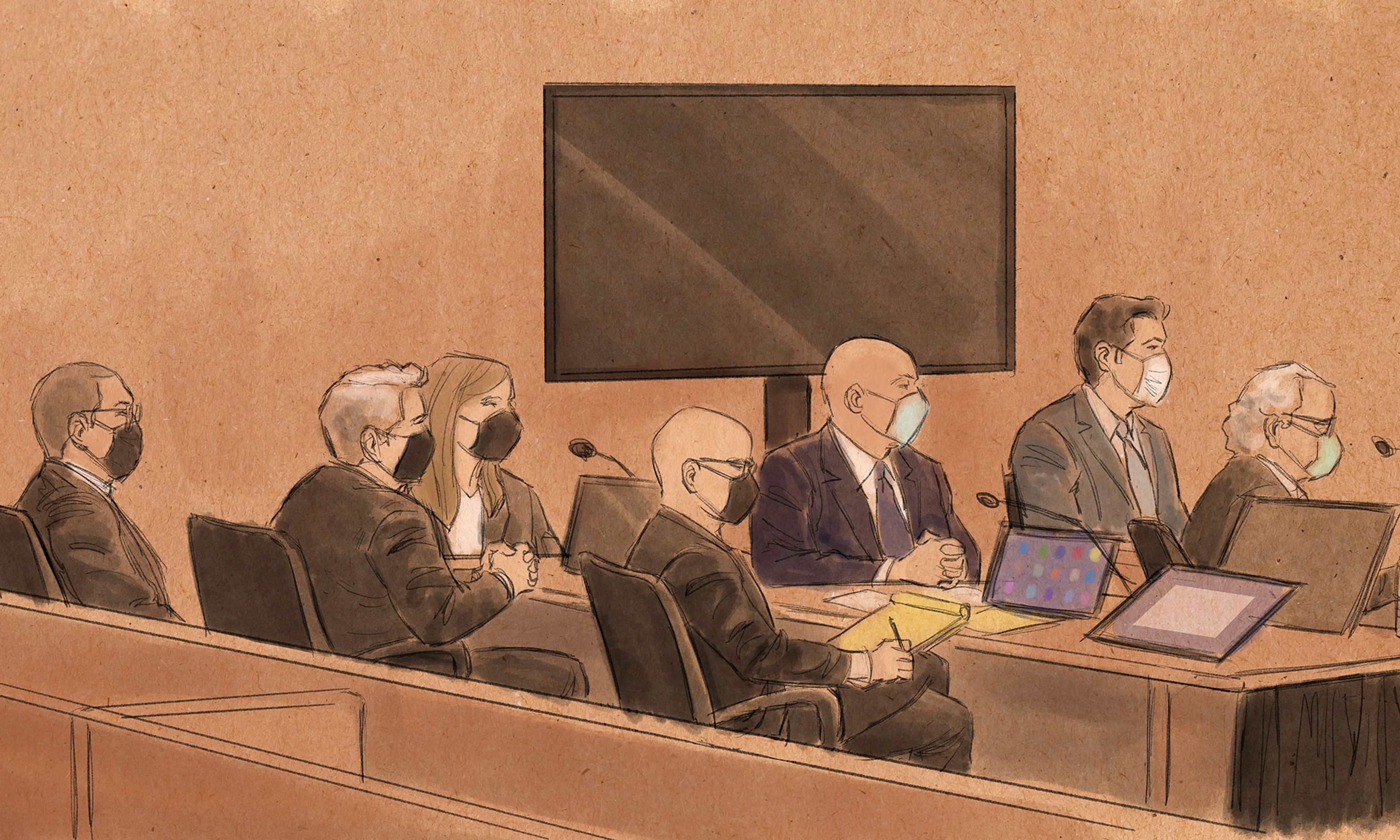
In federal court on Monday, a jury of Minnesotans heard opening statements in the civil-rights trial of three since-fired police officers who, along with convicted former officer Derek Chauvin, physically detained George Floyd on a Minneapolis street on Memorial Day 2020, allegedly causing his death.
Even though there’s no real doubt, in the sense of legal culpability, that the police detention caused Floyd’s death, “allegedly” is still the appropriate term in this context. That is because Chauvin’s convictions in state and, recently, federal court are not admissible evidence against his three fellow former police officers — Tou Thao, J. Alexander Kueng, and Thomas Lane (who, for simplicity’s sake, I will henceforth desist from referring to as “former” officers). Ergo, the federal prosecutors bear the burden of proving that the police detention caused Floyd’s death, just as the state prosecutors did in Chauvin’s trial last April.





Comments