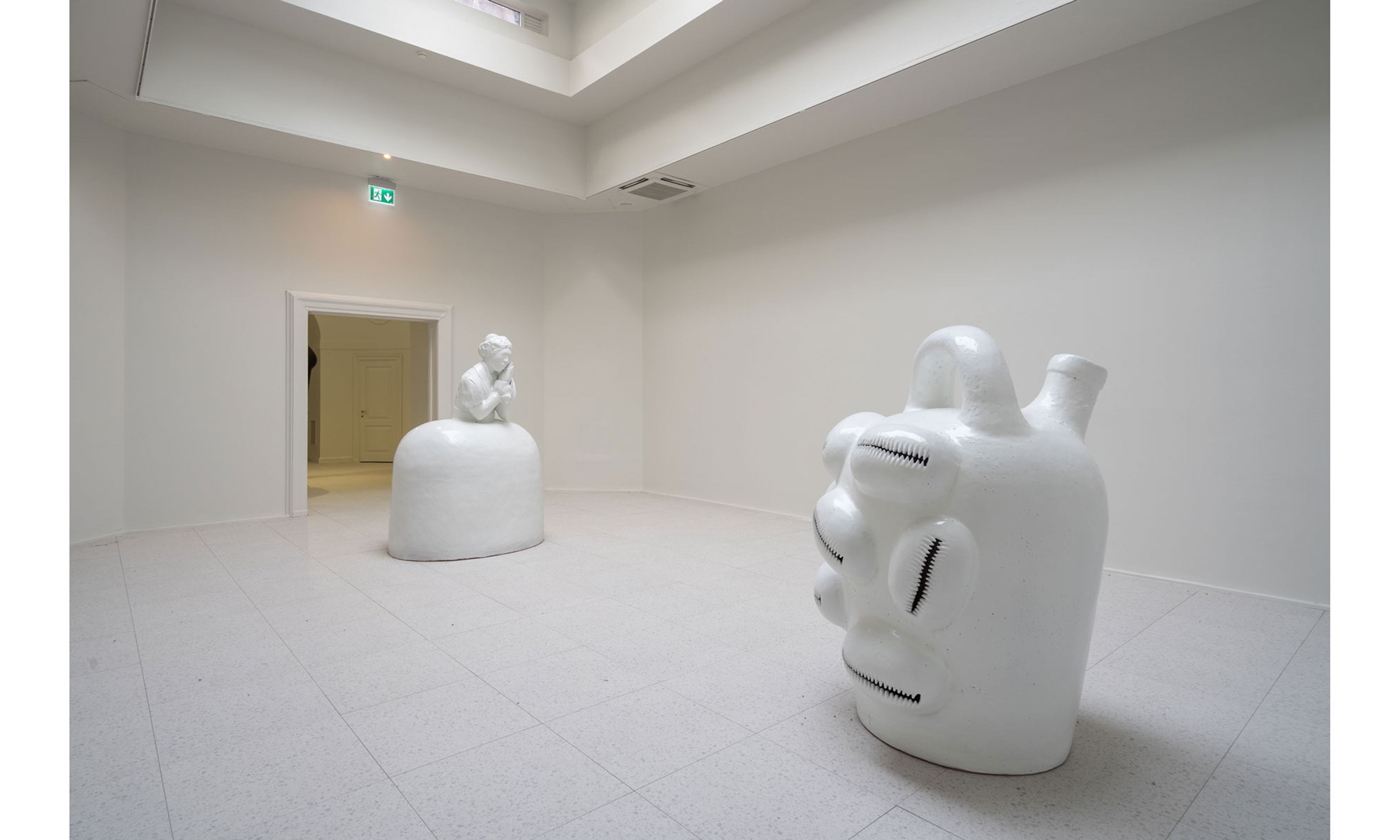
I spent two days at the Venice Biennale last week and, of course, went to the American pavilion first. Simone Leigh, born in 1967, represents the United States with her exhibition, Sovereignty. It’s a dud. Leigh’s a very good artist. I wrote about her work when I reviewed the Whitney Biennial in 2019. Hers was a strong spot in the Buzzkill Biennial during which whining Whitney staff sabotaged the show because they didn’t like the way a trustee made his money. The American pavilion? The Venice Biennale? She just doesn’t have the depth or originality to carry it.
The introduction panel tells us that Leigh’s work “parses the construction of Black femme subjectivity.” It draws from ritual performances of the Baga people in Guinea, early African-American material culture from “the Edgefield District” in South Carolina, and the 1931 Paris Colonial Exposition. Her subjects are “autonomous and self-sufficient,” conditions of sovereignty, though Leigh fudges the difference between the individual and the collective. Though her black women overcome oppressive circumstances, they still “indict the conditions” that force them to affirm their own humanity. “The Edgefield District” I assume, is Edgefield, where Strom Thurmond lived.


Comments