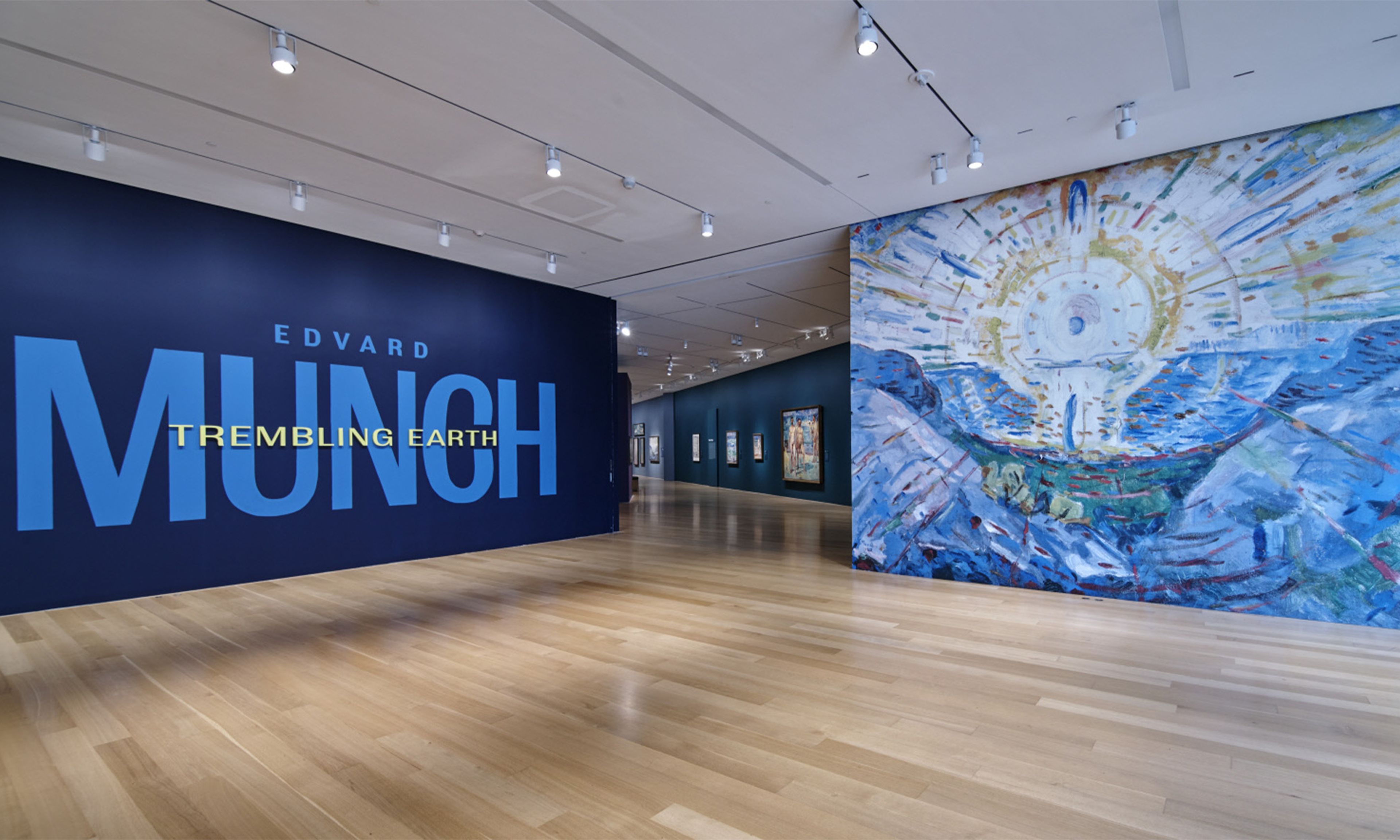
The Clark Art Institute’s gorgeous summer exhibition, Edvard Munch: Trembling Earth, is a revelation. The Norwegian Munch (1863–1944) is as universally known for one picture — The Scream, from 1893 — as Grant Wood is for American Gothic or Whistler for his portrait of his mother. Munch’s anxious, melancholic figures aren’t hard to spot. “Sickness, anxiety, and death,” he wrote, “were the black angels that guarded my cradle,” and he is seen to have expressed this curse in his art and through his life.
Trembling Earth confirms this, in part, but develops and presents another Munch. About half his prodigious production were landscapes and seascapes, or more precisely, shoreline scenes. Many have the human figure as well, but land, sea, and sky play marquee roles. Munch, gloom-and-doom artist as he was, worshipped nature and drew from it not only consolation but pleasure and a new view of life and afterlife.



Comments