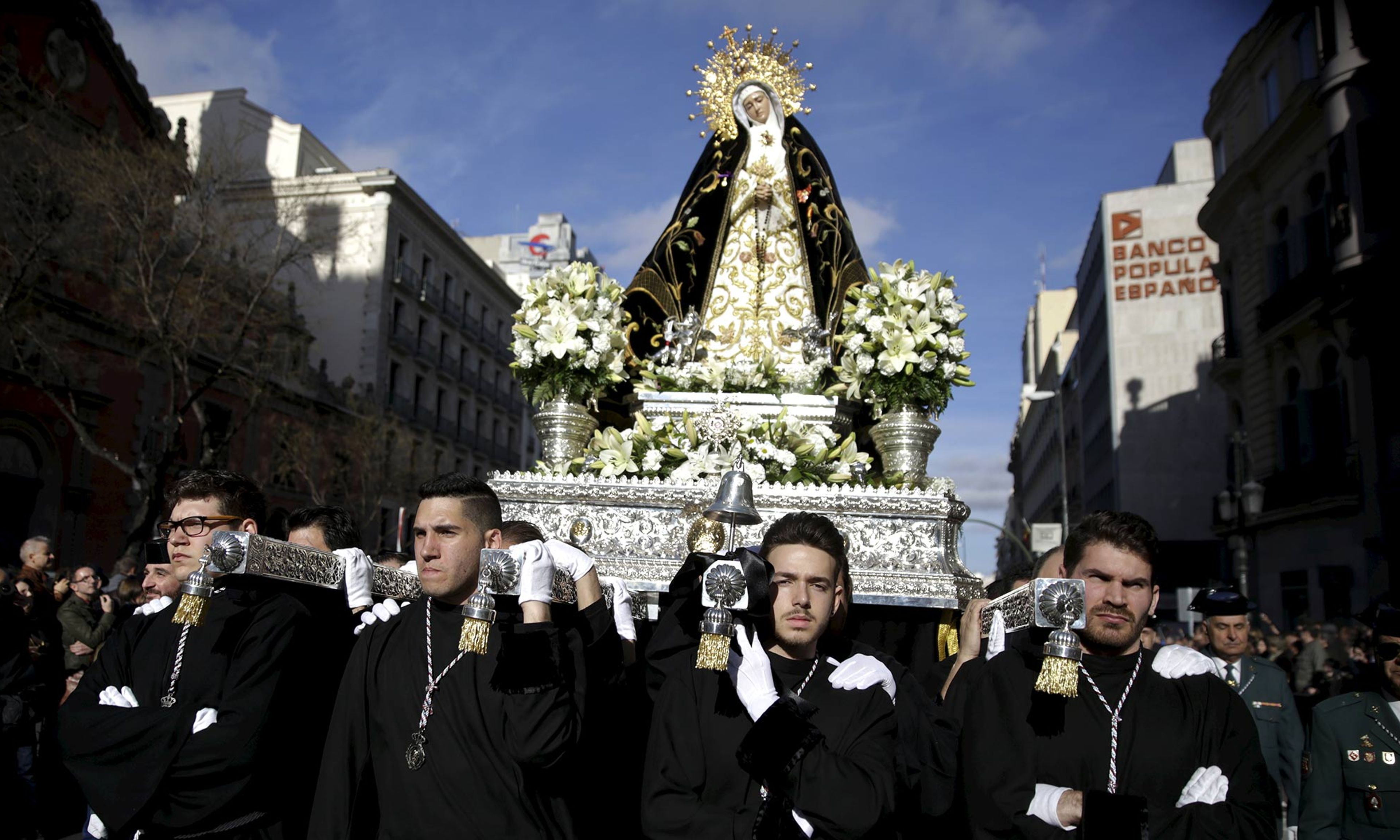
In the account of Saint Cyprian’s martyrdom, the Acta Prconsularia records how the first Christians carried in procession the bodies of those executed for defending the name of Christ. They did so with prayer, singing hymns of victory, “per noctem sublatum cum cereis et scolacibus” (“throughout the night, borne with candles and torches”) from the place of martyrdom to the tomb. Often they did it in secret.
To prevent those traditions from stoking a revival of Christianity, executioners often tried to find methods that would leave as few mortal remains of the martyrs as possible. Christians revered every last bone of every one of them. Today these remains are known as holy relics. Those prayer processions of the first Christians marked in some way the path of those that are conducted every Easter in Catholic communities worldwide, most notably in Italy, Spain, and some Latin-American countries.



Comments