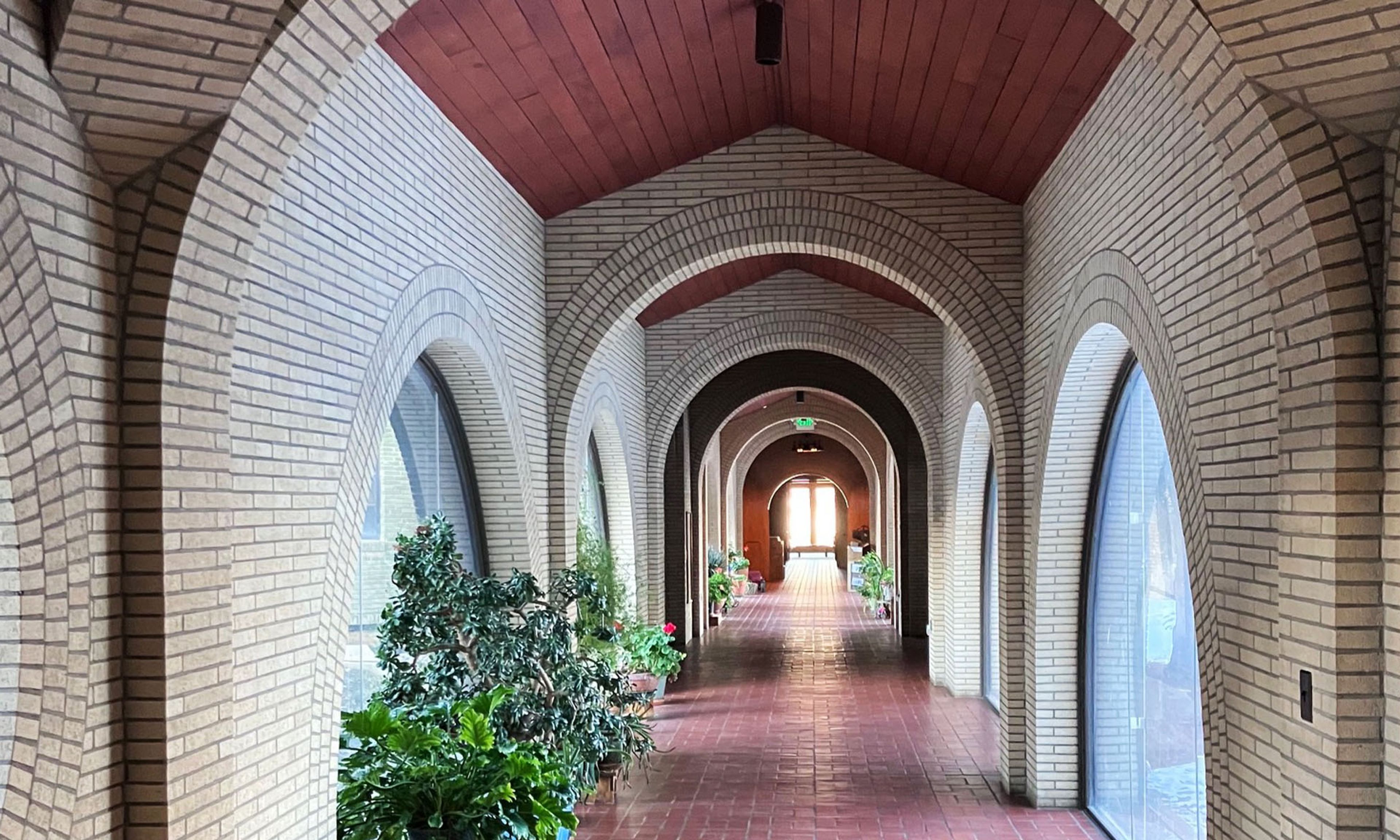
Tomorrow, St. Benedict’s Monastery, just outside Aspen in a beautiful mountain valley called Old Snowmass, will celebrate its last Sunday service as it prepares to move on from its home for the last 70 years. Soon, the new owner of the spiritual landmark, Palantir founder and German-trained intellectual Alex Karp, will make it his new home. The monastery is closing due to costs of maintaining the property and declining number of monks joining the Benedictine order. What Karp will do with what was long a center of spiritual life in the mountain valleys, and whose modern origins owe much to the Western religious and humanist tradition, is yet to be seen.
The post–World War II development of modern Aspen owes much to the vision of Chicago industrialist Walter Paepcke, a generous civic leader with a powerful vision for the decrepit mining town, which he saw as an attractive site for a European-style ski center. Along with and central to his ski resort project, Paepcke saw the possibilities of a humanistic center of revival in the wake of the despair of the Great Depression, war, and the rise of authoritarian, illiberal ideologies.





Comments