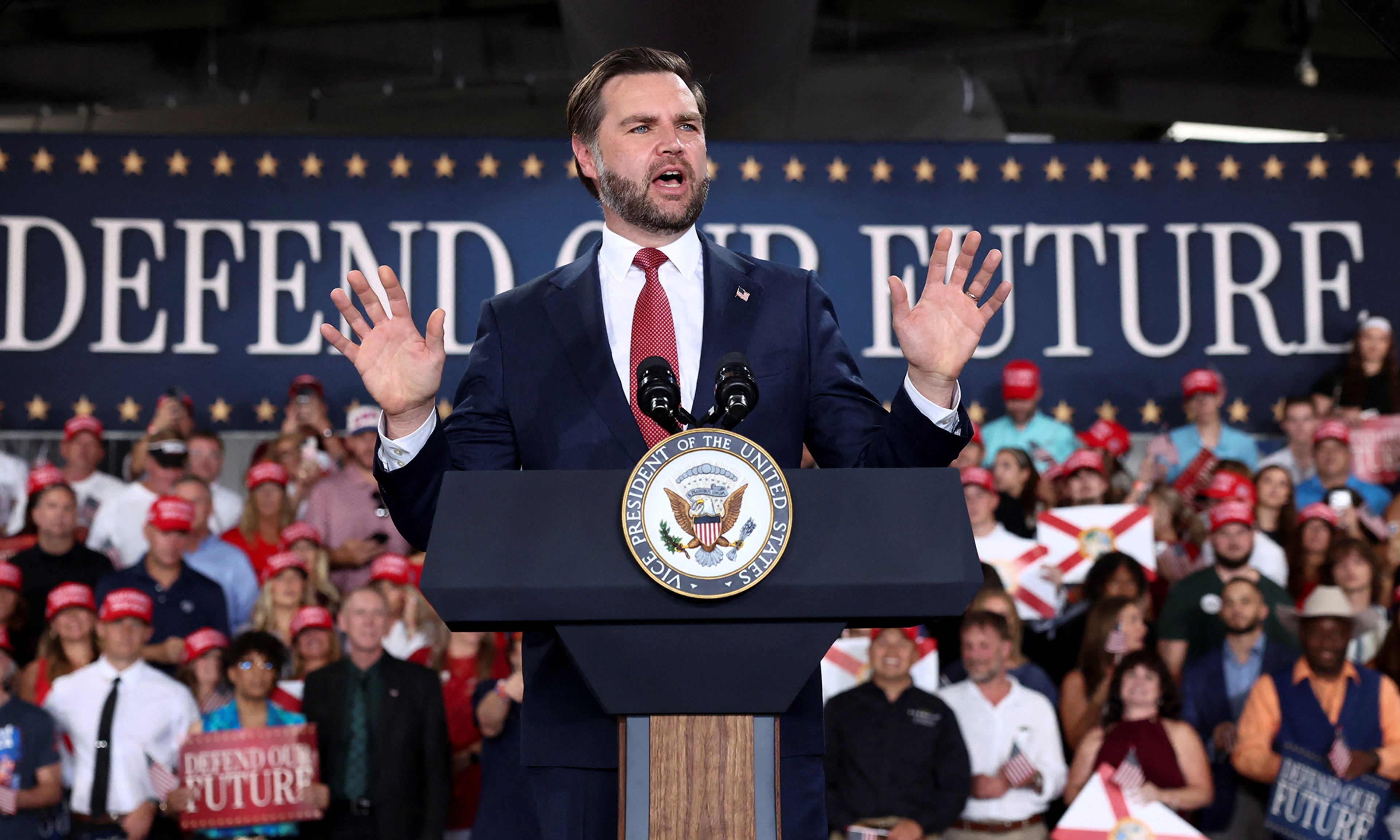
The moment is approaching when “Make America Great Again” will no longer be the prevalent strain of U.S. conservative politics. Since MAGA as a movement has never been defined by ideas nearly as much as by the personality of President Donald J. Trump, the latter’s impending departure from the presidency puts the future of the right once again up for grabs. The figure best positioned to take the reins is Vice President JD Vance, and his ideological replacement for MAGA has a name: post-liberalism.
While the term “post-liberalism” has its origins in Anglican theological debate, American Catholics have appropriated it for themselves. For them, post-liberalism refers to their vision of an executive-dominated state that would use power to impose a Catholic vision of “the common good.” Harvard Law professor Adrian Vermeule defines the common good as “justice, peace, and abundance” — and insists that liberty is secondary to this holy trinity. Vermeule “makes no fetish of Liberty” and argues that “the central aim of the constitutional order is to promote good rule, not to ‘protect liberty’ as an end in itself.”



Comments