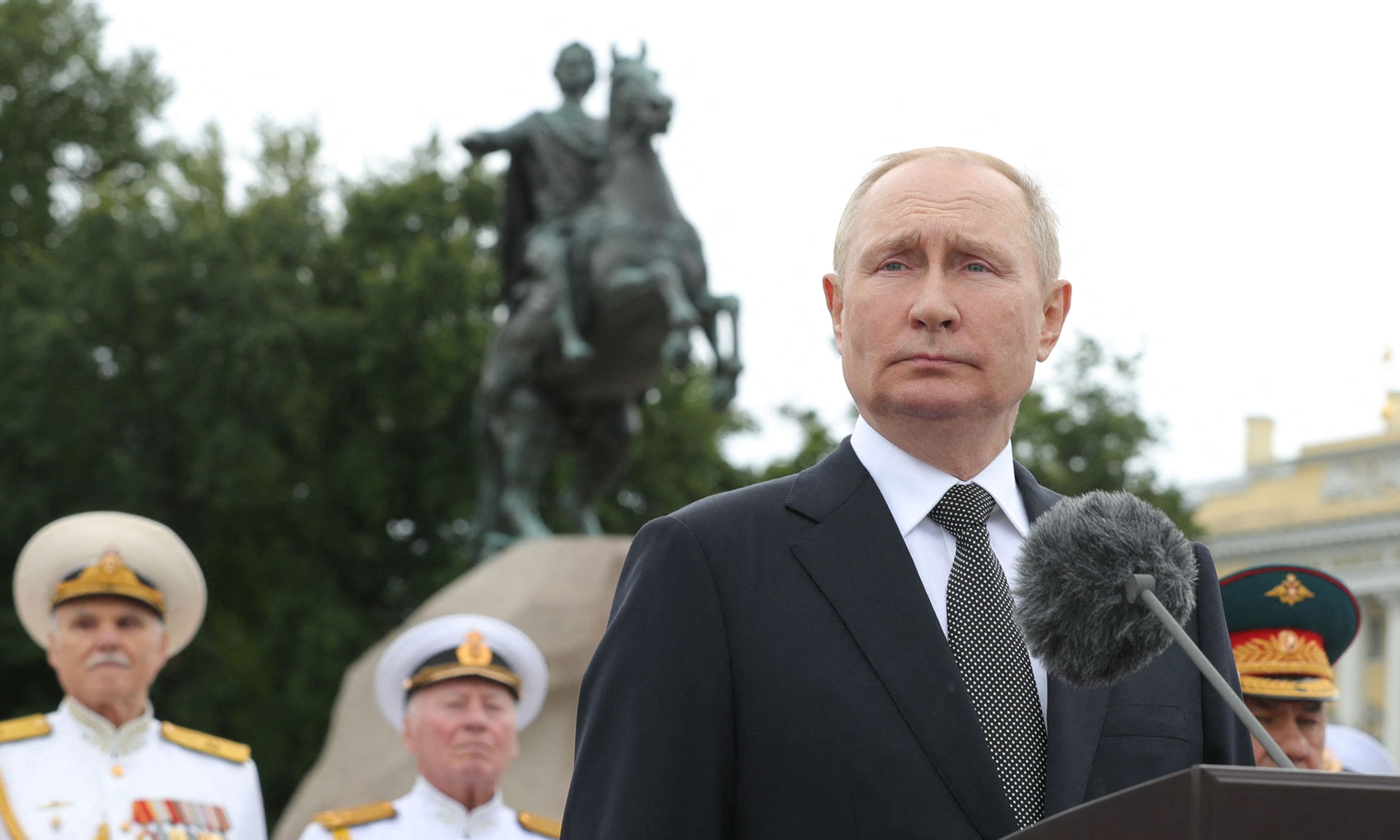
‘If there is Putin, there is Russia! No Putin, no Russia!” declared Vladimir Putin’s first deputy chief of staff, Vyacheslav Volodin. Crude flattery, of course — and quite profitable for Volodin, who two years later became the speaker of the Duma. But the truth is that much of today’s Russia is Putin. Ralph Waldo Emerson’s maxim that there is properly no history, only biography, encapsulates Russia’s history since 2000. Much of what has been written on the subject has focused narrowly on the Kremlin, with little, if any, attention to the underpinnings of the Putin regime. The resulting image is that of an autocracy supported solely by propaganda, bribery, political manipulation, and repression. This is a dangerous oversimplification because it vastly underestimates Putin’s ability to sway and mobilize his compatriots.
He has relentlessly molded national identity: how Russians see themselves, their country, and their history. He has refashioned and reawakened the country’s legitimizing mythology — and deployed it in ways that have proved gratifying to tens of millions of Russia’s citizens.


Comments