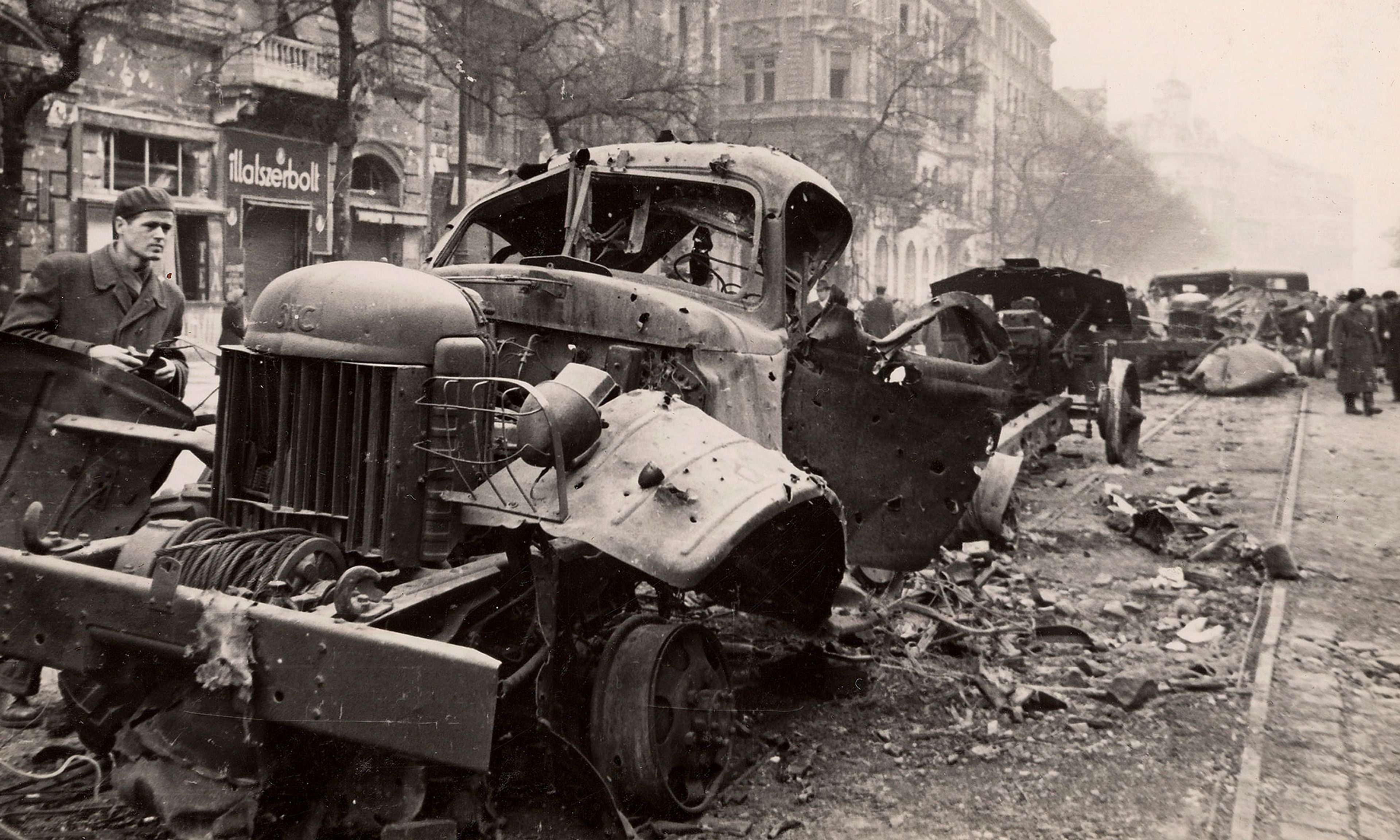
After World War II, Winston Churchill said that “an Iron Curtain has descended across the continent,” which marked the beginning of the Cold War between the Western democracies and the Soviet communist dictatorships. Seventy years ago, on October 23, 1956, Hungarians behind this Iron Curtain rose up in unison and revolted against the cruel communist dictatorship kept in power by the Soviet Union. The world watched in awe as the Hungarians took up arms and faced the Soviet tanks to win back their freedom and sovereignty. They exposed the lies and the failures of the communist system for the world to see.
During the revolution, I was 11 years old, and my family lived, not entirely of our own volition, in a village south of Budapest. We did not have running water, so I had to go with a bucket to get drinking water from a well. Russian planes flew over the village, and a Soviet tank came through to show that they were in control. After the revolution was crushed, we had to escape at night to Austria, as my father was on a list to be arrested and imprisoned, or worse, for his role in the uprising.




Comments