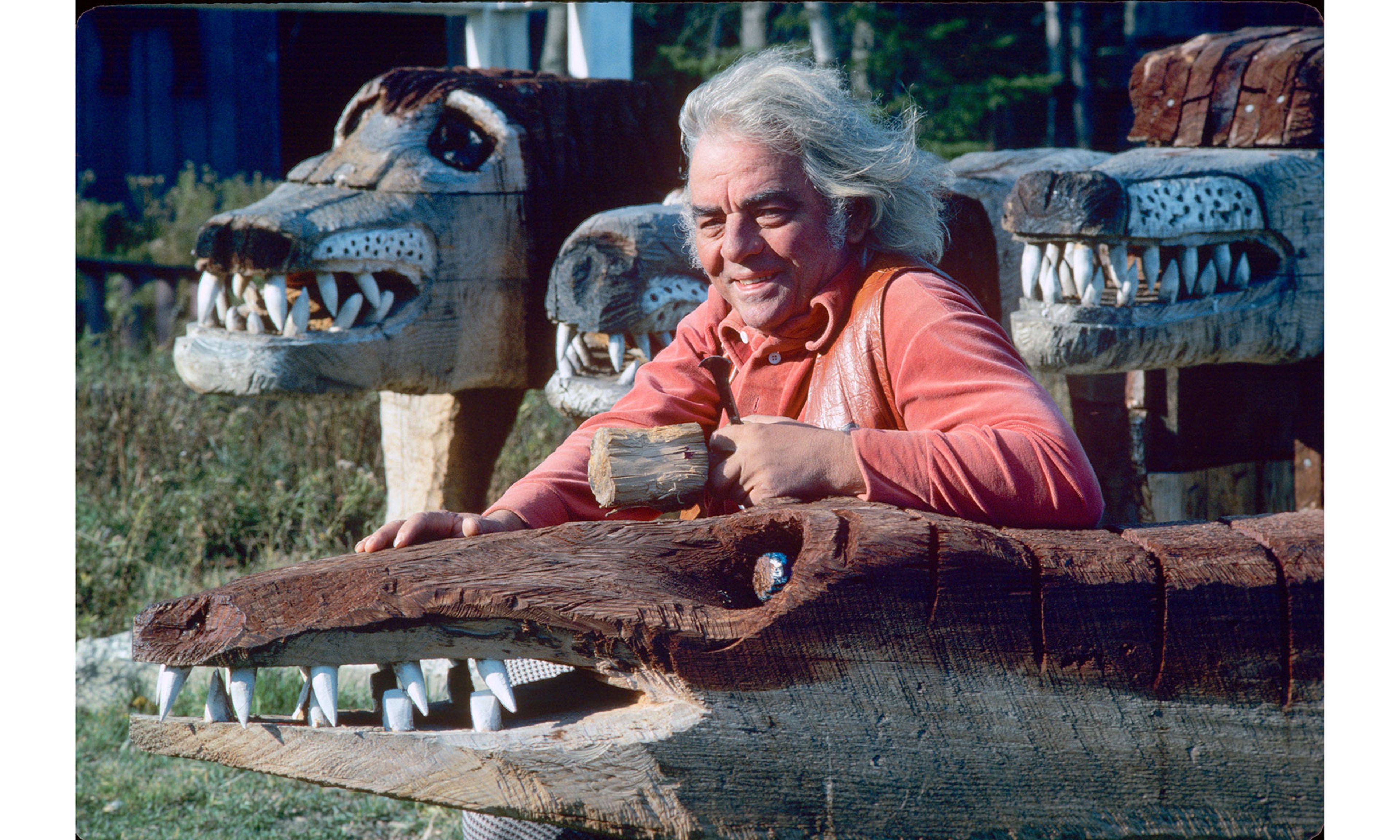
I’ve written off and on over the years about Maine’s unique aesthetic. Mainers have a reputation as a rough-hewn, sea-sprayed, hardscrabble sort. It’s not undeserved. Aside from a thin strip along the ocean from York to L.L. Bean, home to affluent retirees and tourist hubs, Maine can be vast, lonely, blunt, and poor.
Bernard, or “Blackie,” Langlais (pronounced long-lay) was a sculptor in wood, a Maine native, born in 1921 in central Maine’s Old Town, a working-class, logging town on the Penobscot River. One of ten children, his father was a carpenter. Both parents were Québécois Americans. Langlais is well known in Maine for his cryptic, rough-hewn sculptures of animals, birds, and Indians, most life-size, but one, the Skowhegan Indian, soaring 60 feet.





Comments