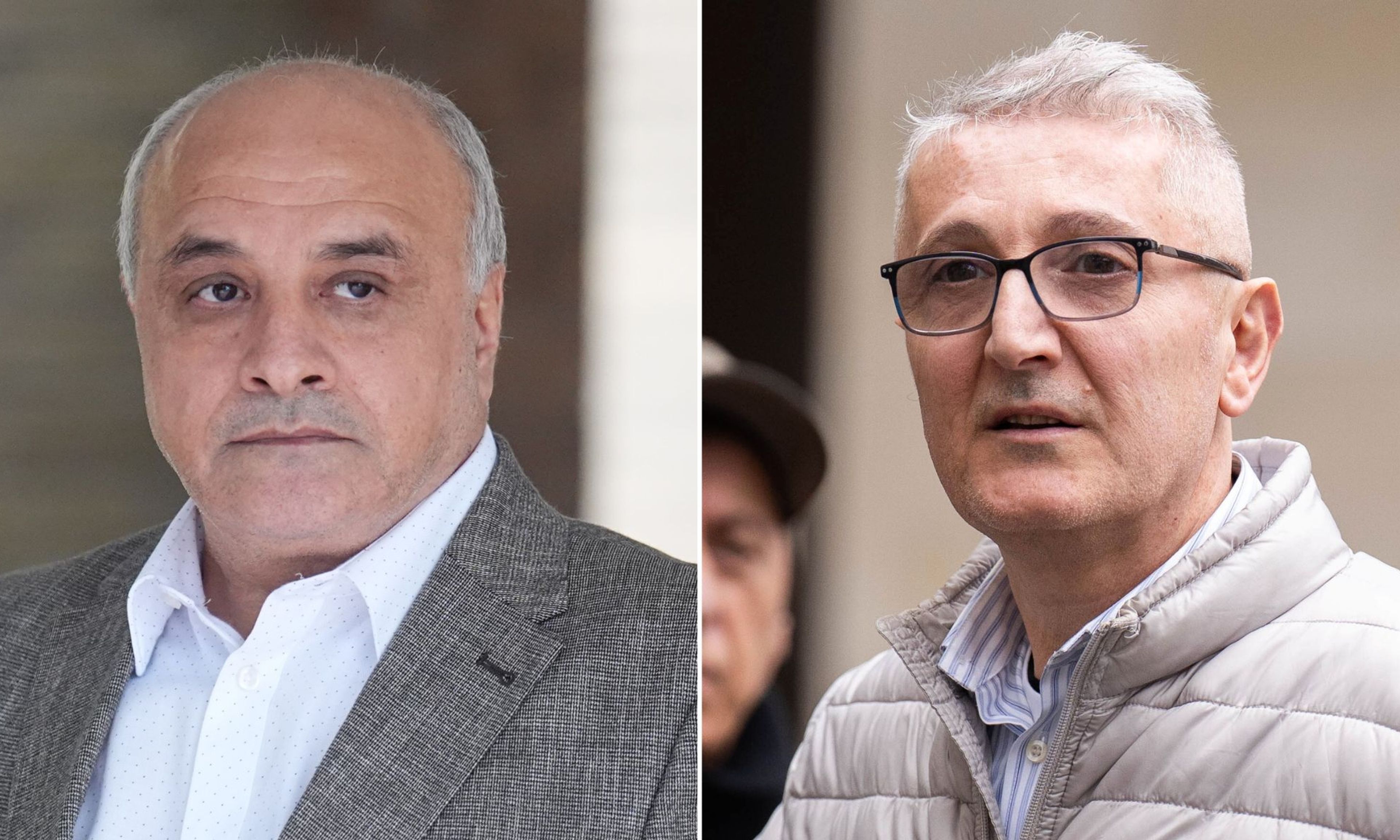
Hamit Coskun was sentenced and fined in England this year for burning a Koran outside the Turkish consulate in London while yelling profanity-laden religious condemnations like “f*** Islam” and “Islam is the religion of terrorism.” Coskun insisted that the protest signified opposition to the Turkish president, Islam itself, and terrorists — not Muslims. Nevertheless, Judge John McGarva determined that Coskun “has a deep-seated hatred of Islam and its followers.” McGarva found Coskun guilty of a religiously motivated public order offense under the Crime and Disorder Act 1998 and the Public Order Act 1986, partially because “the consequences of the defendant’s provocative behaviour were that serious public disorder did break out.” During Coskun’s protest, a deliveryman passing by on a bike kicked Coskun. A second man named Moussa Kadri called Coskun a “f***ing idiot,” said he was going to kill Coskun, went inside and retrieved a knife, then physically attacked Coskun. (Coskun went to the hospital, then was arrested; the severity of his injuries is somewhat unclear.) Curiously, the judge stated that “neither of [the two attackers] appear to have any justification for the nature of their response,” so somehow Coskun both provoked and didn’t provoke the disorder. The decision was widely condemned as an attempt to resuscitate blasphemy laws — specifically blasphemy against Islam.
Thankfully, Coskun recently won his appeal. In October, Justice Joel Bennathan ruled that there was insufficient evidence to maintain that Coskun’s conduct met the thresholds for “disorderly” and “likely to cause harassment, alarm or distress.” In arriving at this sound conclusion, Bennathan noted that Coskun’s demonstration was not directed at a particular person, he protested alone for only a few minutes outside a secure location in daylight, and that other witnesses seen on video were seemingly unalarmed by the demonstration (so much so that they didn’t feel the need to run away or cross the road). The judge further acknowledged that the knife-wielding Kadri appeared “angry,” which is not equivalent to being “harassed, alarmed or distressed.” In his sentencing remarks, Bennathan acknowledged that “burning a Koran may be an act that many Muslims find desperately upsetting and offensive,” but the law does not exist to prevent people from experiencing those feelings, and “the right to freedom of expression, if it is a right worth having, must include the right to express views that offend, shock or disturb.”





Comments