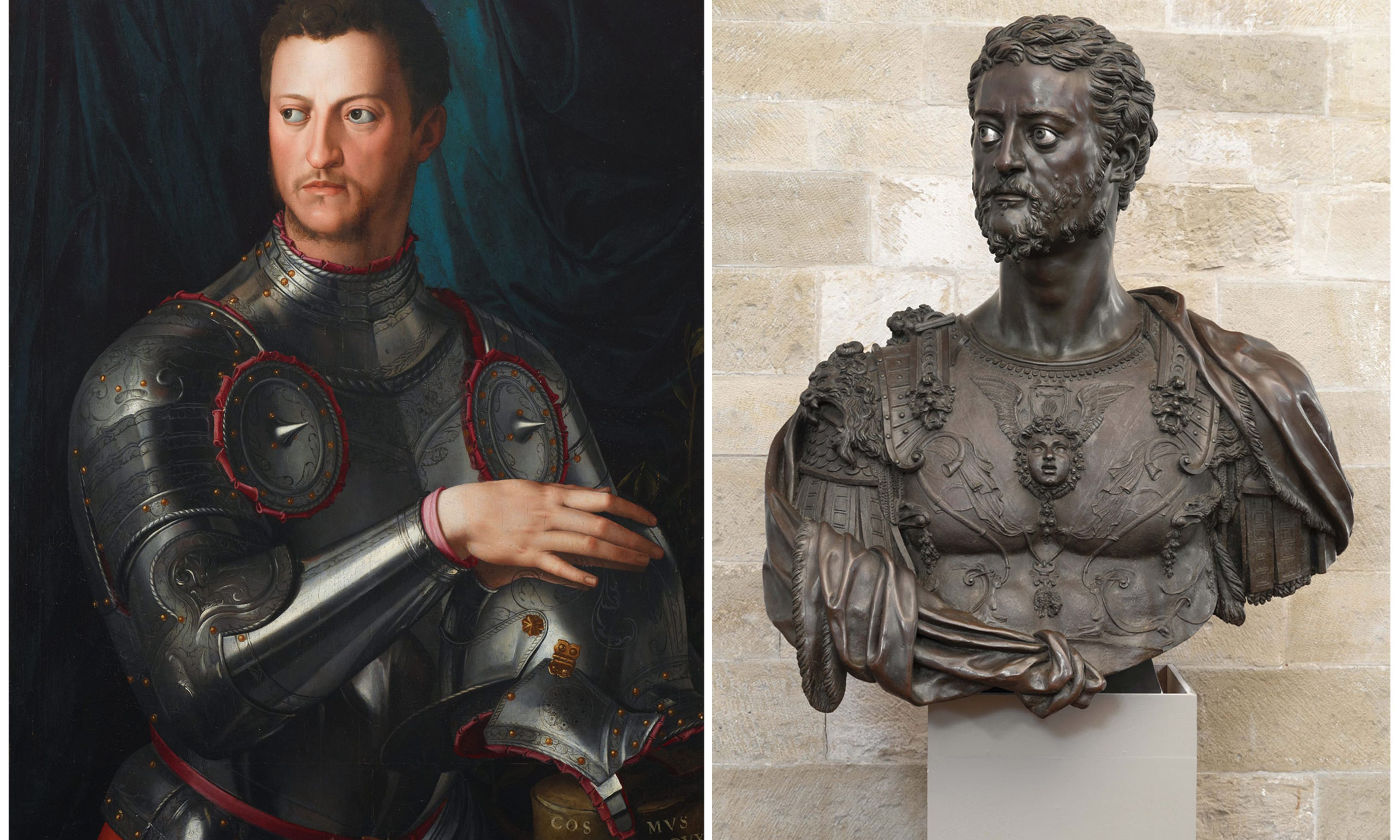
Last week, I saw The Medici: Portraits and Politics, 1512–1570 at the Met, in New York City. I think there’s a big communication problem there, and it’s only partly lackluster leadership at the top. I’m told most of the program staff — the curators and designers, especially — are still working from home. I’m not sure everyone’s on the same page. Did they ever get together to swap ideas, thrash and hash things, do maquettes and models, forge stories that make sense, you know, the things we dinosaurs did when we organized shows?
It’s not a bad show. I recommend it for its 25 portraits by Bronzino (1503–1572), which makes it a Cosimo and Bronzino show, except it’s really not. It’s not a Cosimo show, either. Cosimo I de’ Medici (1519–1574), Florence’s first grand duke, salvaged Florence from chaos in the late 1530s and ruled as an enlightened despot for nearly 40 years. Cosimo is the anchor Medici in the exhibition, with others putting in cameo appearances, but, midway through, he disappears.





Comments