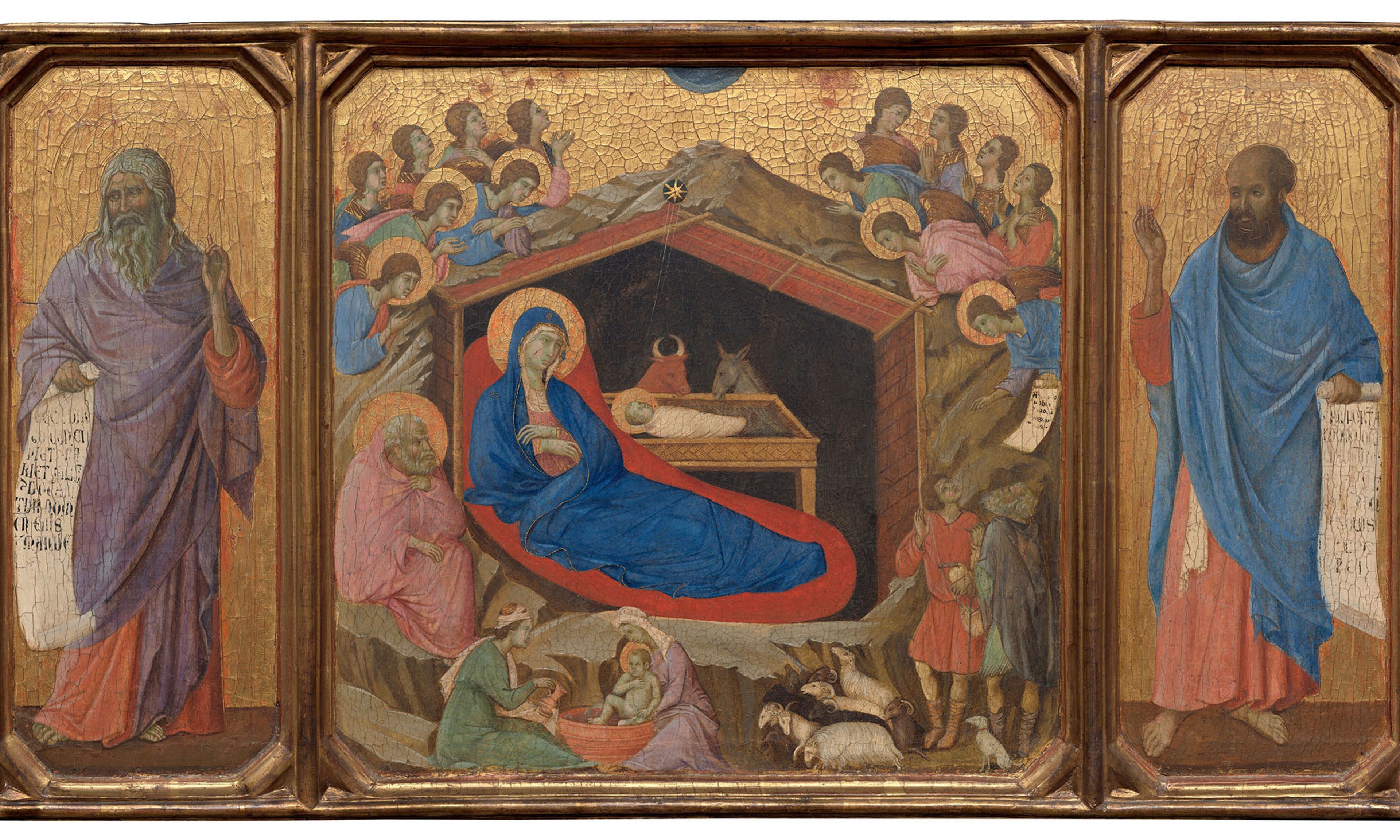
Siena: the Rise of Painting, 1300–1350 is the Met’s new exhibition and a perfect, grounding Christmas experience. No Rudolph, no jingling bells, and no mistletoe here. Instead, Baby Jesus, Mary, and solid art history rule the galleries along with Siena, the Tuscan city whose art revolution around 1300 was so silken, so subtle that we need to study it to believe it. The art on view, in its day, was cutting-edge but infused with Gothic mystery, much as the best Christmases are about busy people, living in the present, gathering to reflect, reminisce, and hope for a miracle or two.
The Met, collaborating with the National Gallery in London, got superb loans displayed not to dazzle but to evoke and enchant. Even the iciest of heathens will be moved to believe. The exhibition’s a rich, complex one with sections on painting, ivory sculpture, textiles, enamels, and gold, with lots of obscure though juicy stories. While Florence’s palette is austere and given to gray and white marble, Siena’s is stippled gold, tactile and reflective, and luscious ultramarine, crimson, cinnabar, and coral. The show focuses on only five artists — Duccio, the bothers Pietro and Ambrogio Lorenzetti, the sculptor Tino di Camaino, and Simone Martini — but each is a heavy hitter.


Comments