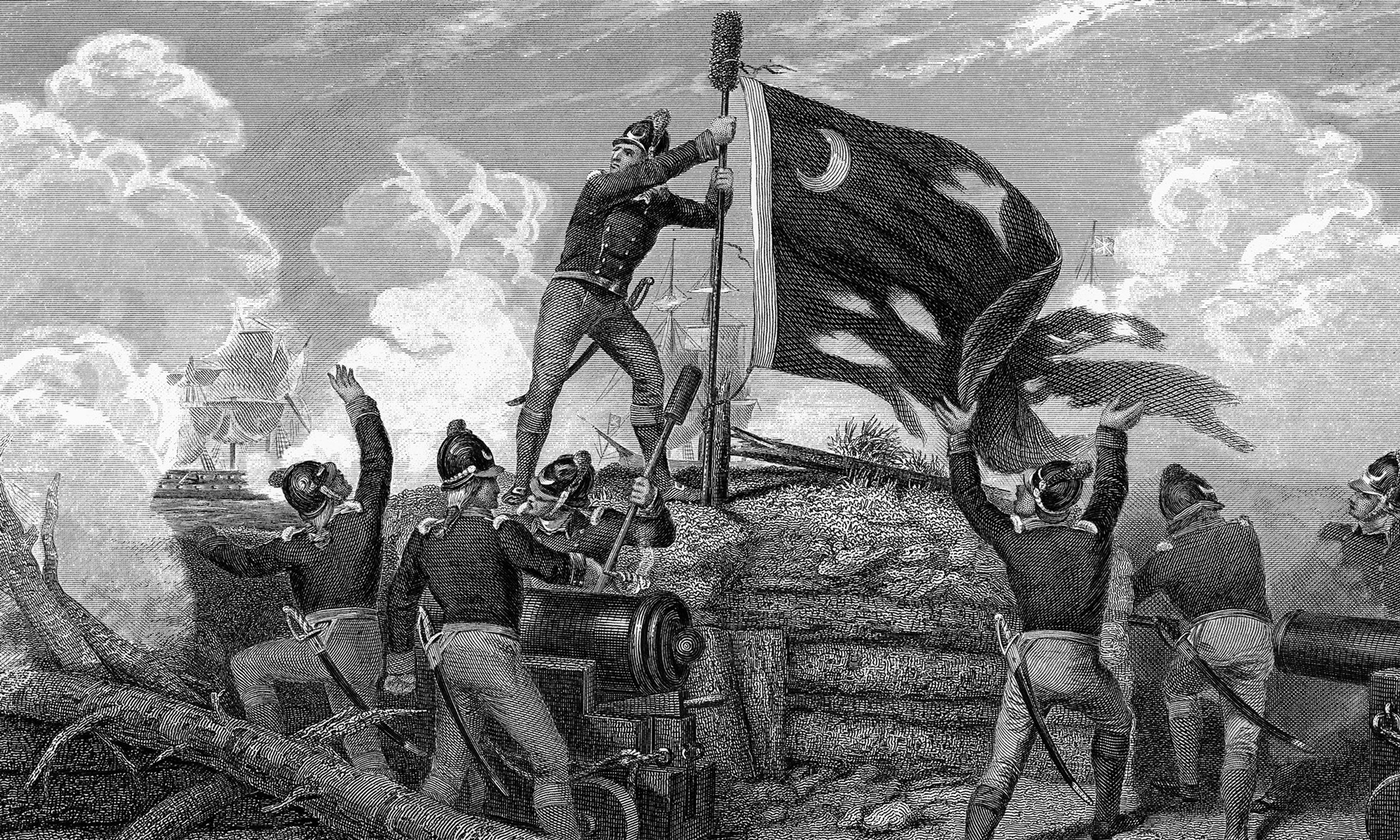
On June 28, 1776, the South got its first major taste of the Revolutionary War. It liked the flavor. Two hundred and fifty years later, the Battle of Sullivan’s Island, whose outcome stunned the British, is commemorated in a state holiday, on the state flag, and in the nickname of South Carolina as the Palmetto State. It was the last major battle between the colonists and the British for control of territory before the colonies declared independence six days later, on July 4.
In 1776, Charleston — known until the end of the Revolution as Charles Town, as it was founded in honor of King Charles II — was the wealthiest city in British America, its fourth-largest port, and by far the largest port south of Baltimore. Its upper crust was inclined to side with the Crown, not least out of fear of British-induced slave insurrections. That made it a logical target for the British in aiming to subdue the rebellion. The British, with far too few troops to control the American interior and with supply lines stretched across the Atlantic, fell back on their traditional strategy of keeping the army within sight of the Royal Navy’s guns.


Comments