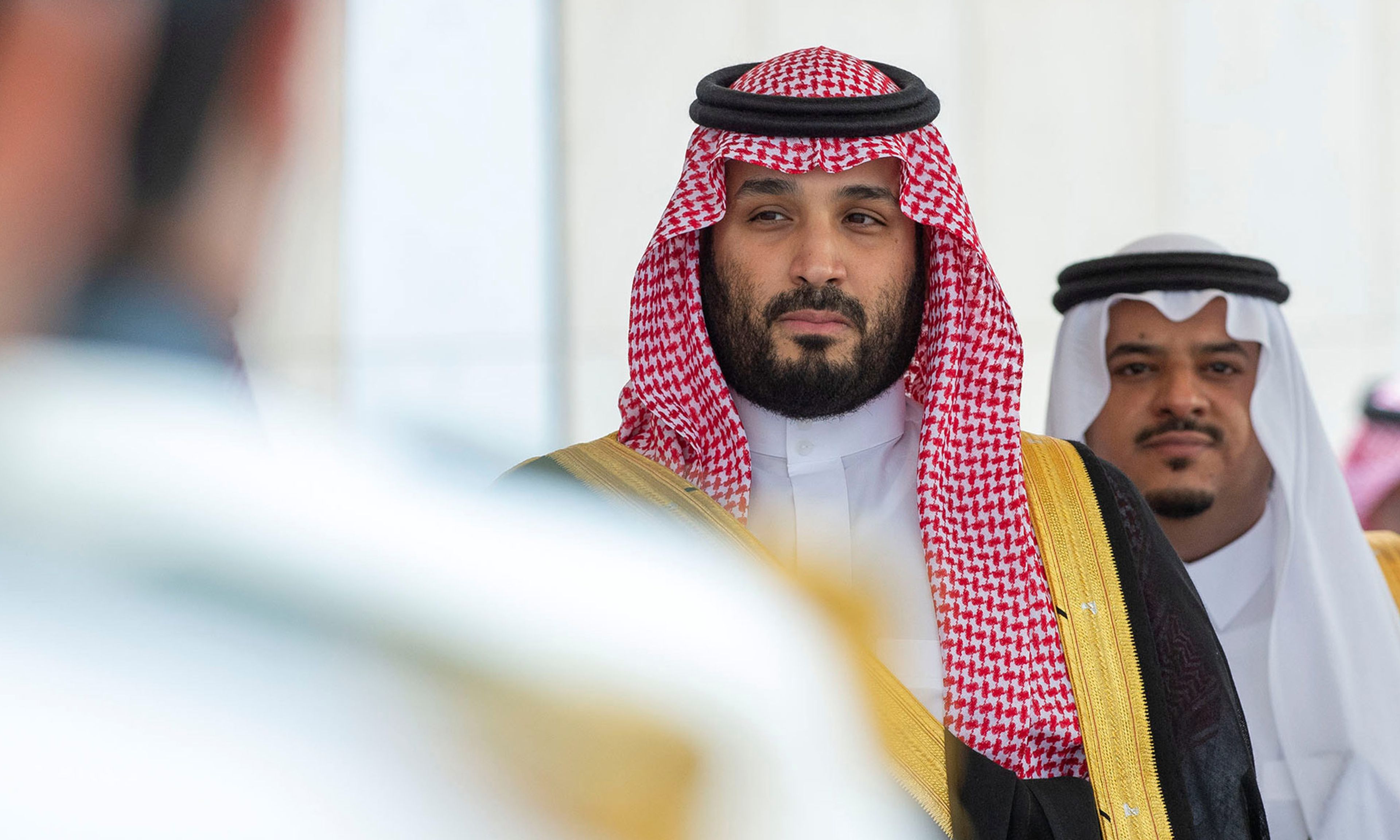
If you didn’t know any better, you might think the U.S.–Saudi relationship, consummated during a brief meeting between U.S. president Franklin D. Roosevelt and Saudi king Abdulaziz Ibn Saud aboard the U.S.S. Quincy in February 1945, was at risk of totally rupturing. According to an April 19 report in the Wall Street Journal, ties have gotten so tense that Saudi crown prince Mohammed Bin Salman (MBS) screamed at Jake Sullivan, President Biden’s national-security adviser, during a trip to the kingdom last fall. “The relationship between the U.S. and Saudi Arabia has hit its lowest point in decades,” the paper intones, weighed down by disagreements over everything from energy policy and Iran to Russia’s invasion of Ukraine.
This isn’t hyperbole. If President Trump’s four-year tenure was celebrated in the kingdom as a golden era of relations, complete with shiny orbs, excessive praise, and declarations of Saudi Arabia as an “important ally and partner,” the bilateral relationship during Biden’s first year and a half can be charitably described as icy or indifferent. There is no love lost in the Biden administration to Saudi sensitivities, particularly from the man at the top. Let’s not forget that Biden pledged to turn Saudi Arabia into a “pariah state” during the presidential campaign, ordered the declassification of a U.S. intelligence-community assessment faulting MBS for the murder of journalist Jamal Khashoggi, and has insisted that the aging King Salman (MBS’s father) be his main point of contact. There are real, concrete differences on key issues, the most notable being the Biden administration’s decision (the correct decision, in my view) to withdraw offensive U.S. military support to Riyadh’s military campaign in Yemen, a seven-year quagmire that severely dented the kingdom’s reputation in Western capitals. Saudi diplomats are also concerned about U.S. attempts to renegotiate a return to the 2015 Iran nuclear deal.





Comments