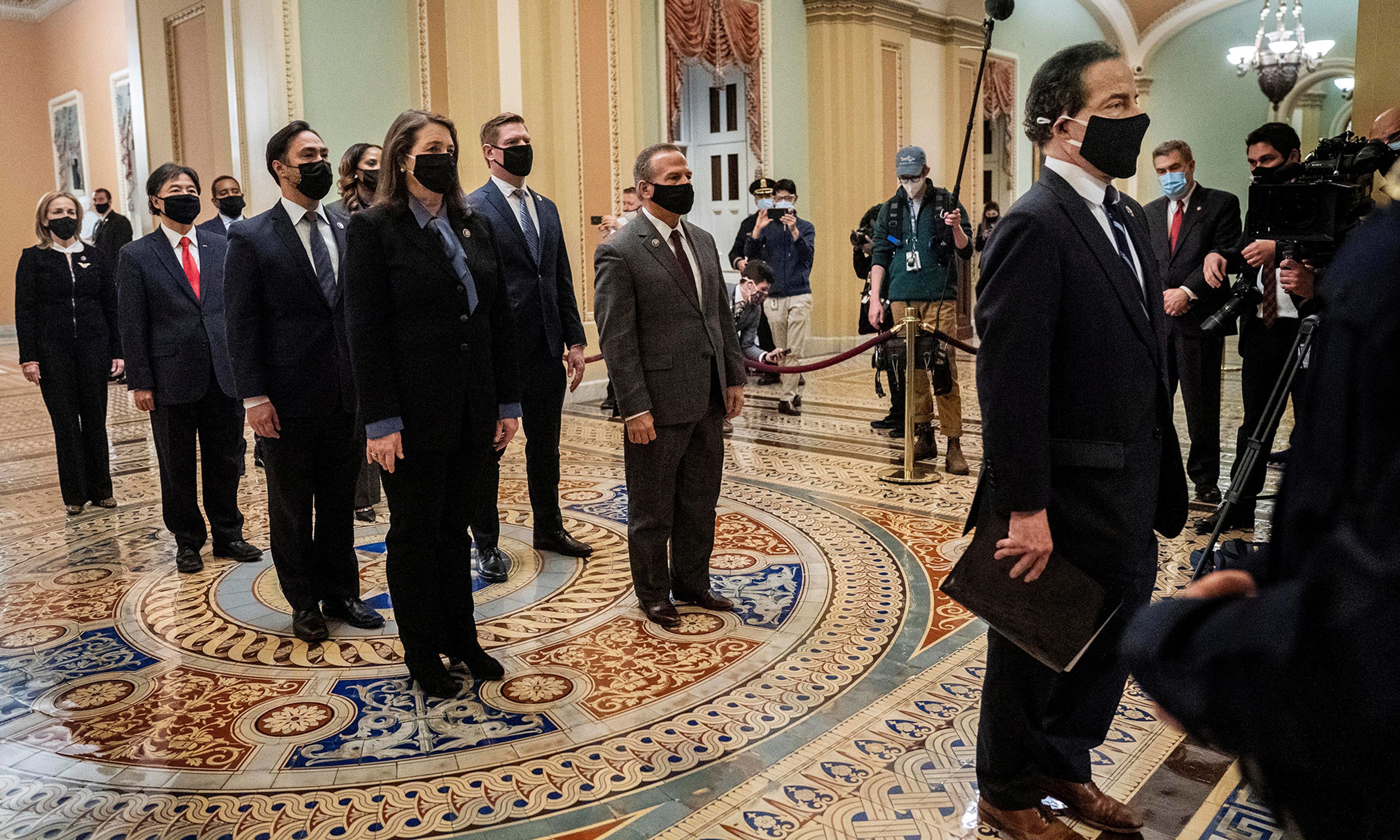
Now that it has received the articles of impeachment and designated Patrick Leahy as the presiding judge, the Senate will have to officially decide whether it has the jurisdiction to try Donald Trump. A court — even a court of impeachment — first must ask if it has the constitutional authority to hear a case. Only after it has found jurisdiction can a court turn to the merits of the claim. When Congress’s power over ex-officials is so doubtful, the Senate’s most prudent course would be to dismiss the case — regardless of whether it believes Trump committed “incitement of insurrection” — and allow the Justice Department and the courts to apply federal criminal law.
In this piece, we give a more complete argument against the impeachment of ex-officials. The question whether the Senate has jurisdiction to try the former president divides conservative legal scholars into two opposing camps. The Constitution’s plain text refutes the view that the Senate can try a private citizen, even an ex-president accused of inciting an insurrection. Conservative advocates of a Senate trial, however, rest on the claim that the Framers originally understood a broad impeachment power not fully established in the text. But in our view, the historical evidence provides weak reasons at best to reject the Constitution’s plain meaning. Faced with such evidence, the Senate should not take the unprecedented step of trying an ex-president for impeachment because of the harm to the executive branch’s independence and the Constitution’s separation of powers.




Comments