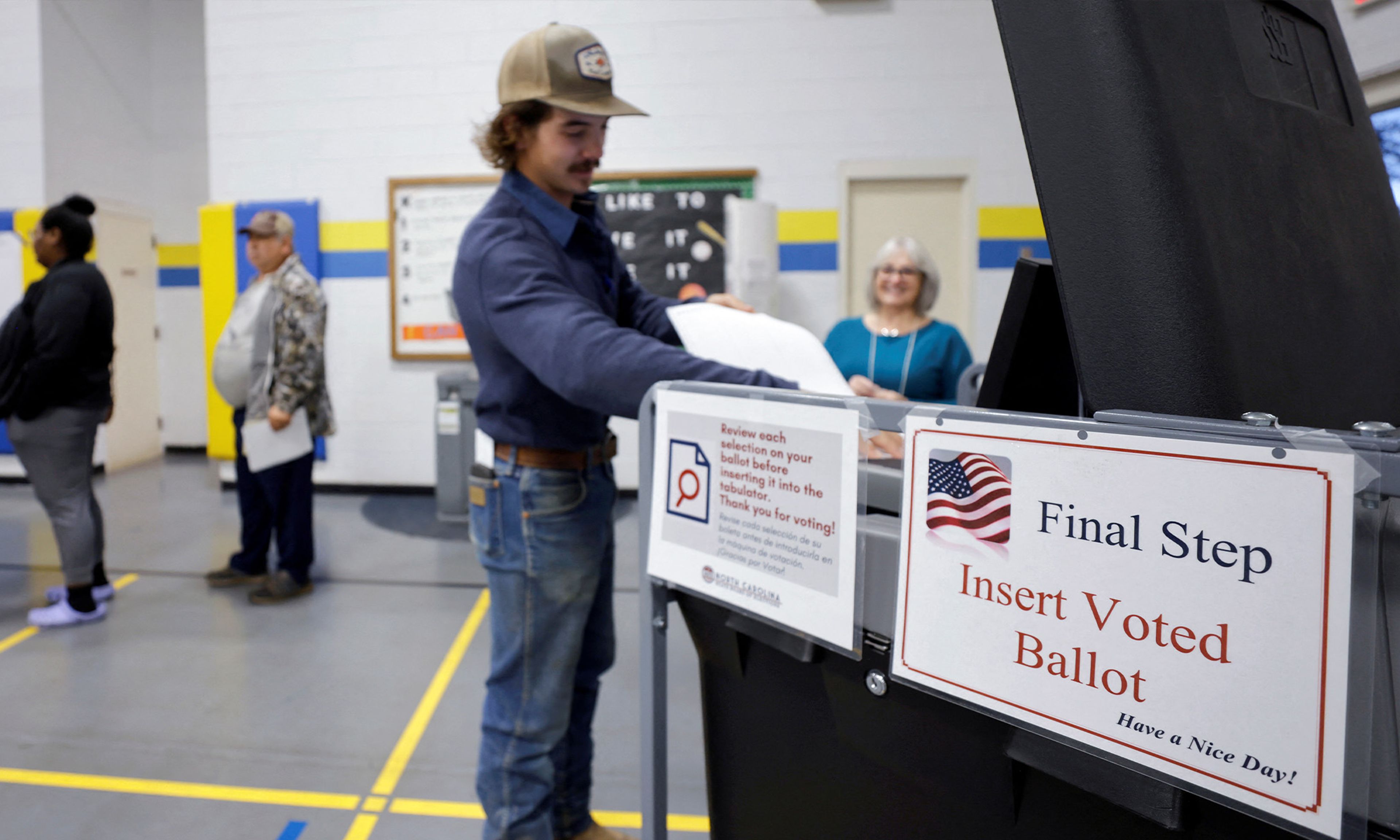
In North Carolina, as in Minnesota, the balance of power still hasn’t settled following the 2024 election. In a series of court cases, Republicans are challenging the legitimacy of the ballots that carried incumbent Democratic state supreme court Justice Allison Riggs over Republican Jefferson Griffin by 734 votes out of more than 5.5 million ballots cast. The North Carolina supreme court — which was 6–1 Democrat heading into 2020 — will remain 5–2 Republican if Riggs holds on, but would shift to 6–1 Republican if Griffin is declared the winner.
Press coverage of Griffin’s challenge has been so uniformly negative, it was impossible for me to get the Republicans’ side of the story without going directly to the court filings and speaking to the North Carolina GOP. There’s more to the story. The legal positions taken by Griffin’s campaign may be polarizing, but this isn’t a stolen-election conspiracy theory or a case about voter fraud; it’s a more prosaic election-law dispute over which ballots should be legally counted. There’s also a longer history here of a power struggle between North Carolina’s Republican legislature, which writes its election laws, and its Democrat-controlled State Board of Elections (appointed by the governor), which decides which laws it feels like enforcing.




Comments