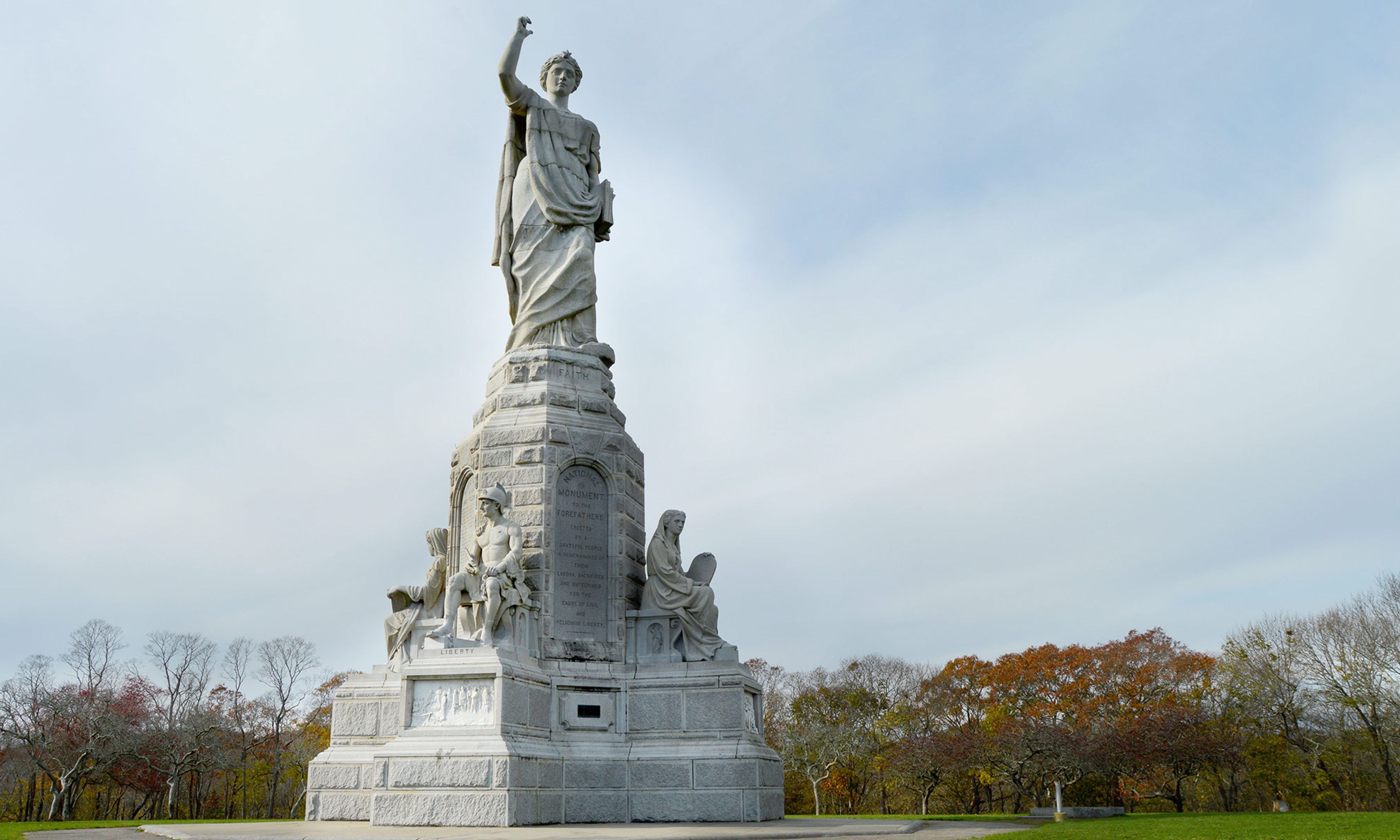
An 81-foot-tall granite colossus, the National Monument to the Forefathers, sits on an ordinary side street in Plymouth, Mass. If not for a few faded signs, you wouldn’t even be aware you were approaching it. Then, suddenly, it springs into view: A giant statue of a woman, “Faith,” standing atop a pedestal made of four smaller statues with marble reliefs at their feet. The monument looks toward England and the Plymouth affordable-housing offices. Built in the 19th century to commemorate the arrival of the Pilgrims to America, it is a disorienting paradox: It has the trappings of an almost-ostentatious grandeur, from its name to its colossal size, yet obscurity rings it. Plymouth Rock, on the waterfront, gets the crowds and the commemorations; the National Monument to the Forefathers gets the occasional tourist group or lonely visitor. But, then, the colossus among the ordinary is a persistent theme within the American story.
The monument lists the names of Mayflower passengers and includes a quotation from Plymouth governor William Bradford, but the granite figures overshadow the text. Faith stands atop the monument pointing to the sky. The four figures at its base represent other virtues of the Pilgrim enterprise — Liberty, Morality, Law, and Education — and each bears allegorical emblems. Liberty carries a sword in one hand and a broken chain in the other, while on Morality’s lap sits a tablet inscribed with “God.” The marble reliefs underneath the figures highlight four pivotal scenes from the Pilgrims’ voyage. The two under Morality and Liberty portray the departure from Europe and the arrival in the New World, respectively. Beneath Law, Pilgrims and Native Americans sign a treaty. Beneath Education, the signing of the Mayflower Compact is represented. All four are images of transition — from one continent to the next, from one political and legal condition to another.



Comments