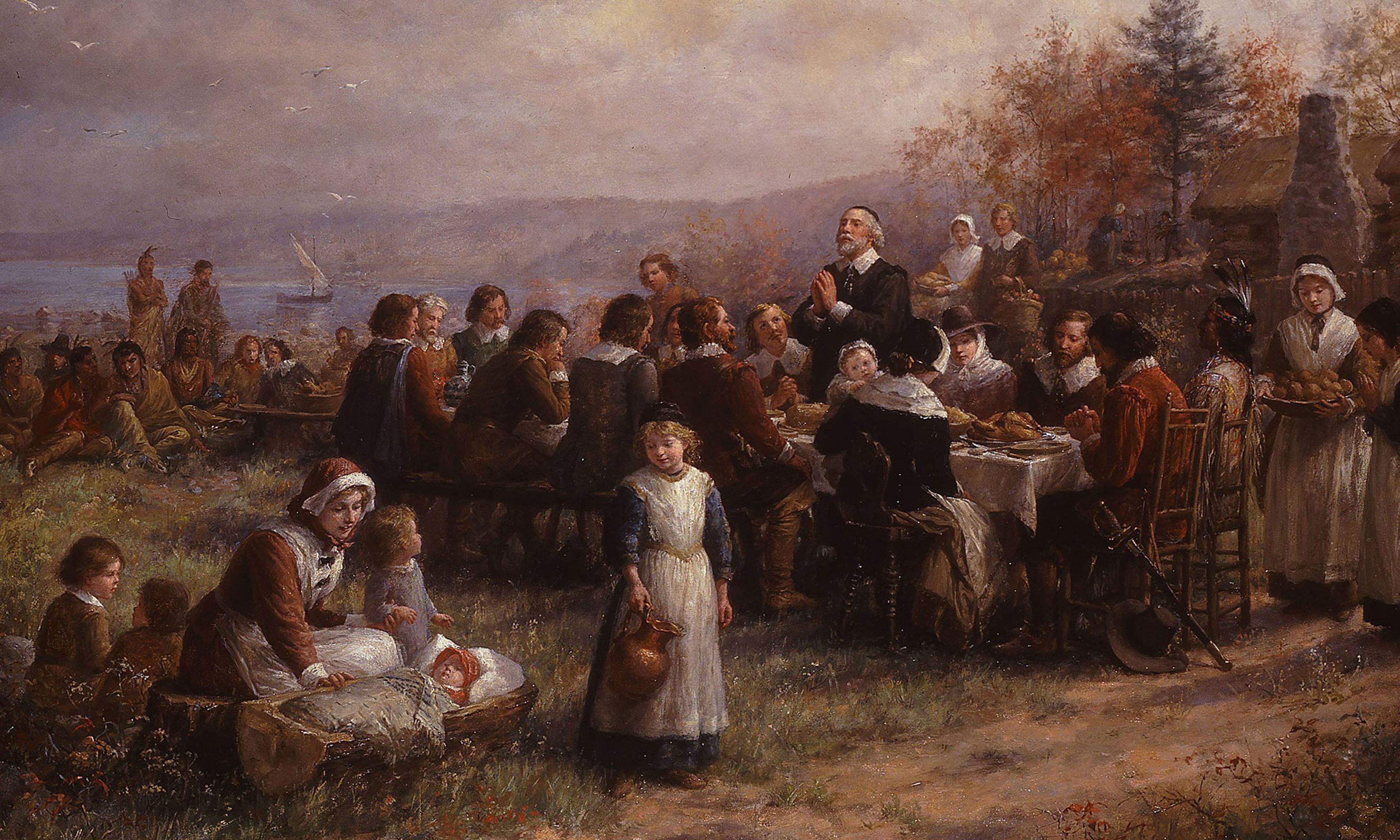
While most Americans, in their antiquated parochialism, still gather to celebrate Thanksgiving with beloved friends and family, the progressive climate activists over at the Sunrise Movement are of a considerably more enlightened disposition. They know better: The fourth Thursday of November isn’t a moment to embark on a brisk Turkey Day trot, convene in the living room for football, or eat a couple of belt notches’ worth of gravy and stuffing. It’s the Indigenous Day of Mourning.
The push to establish an “Indigenous Day of Mourning” in place of the traditional American Thanksgiving is of a piece with a broader, coordinated cultural project, which had begun decades ago in universities, later spilling out into our mainstream institutions, and accelerating on the heels of the Black Lives Matter protests of summer 2020. It is the same project that has successfully replaced Columbus Day with “Indigenous People’s Day” across the country, with at least 100 American cities and numerous states discarding the Italian explorer for a celebration of “Indigenous contributions” in his stead. The toppling of statues of American heroes, the flying of Black Lives Matter and LGBT-themed flags from the U.S. embassies, “inclusive curricula” that teach Aztec worship and indigenous chants in place of the Constitution and The Federalist Papers, and the attempt to substitute 1619 for 1776 as the date of the nation’s founding, are all fruits of the same effort to turn American identity on its head.




Comments