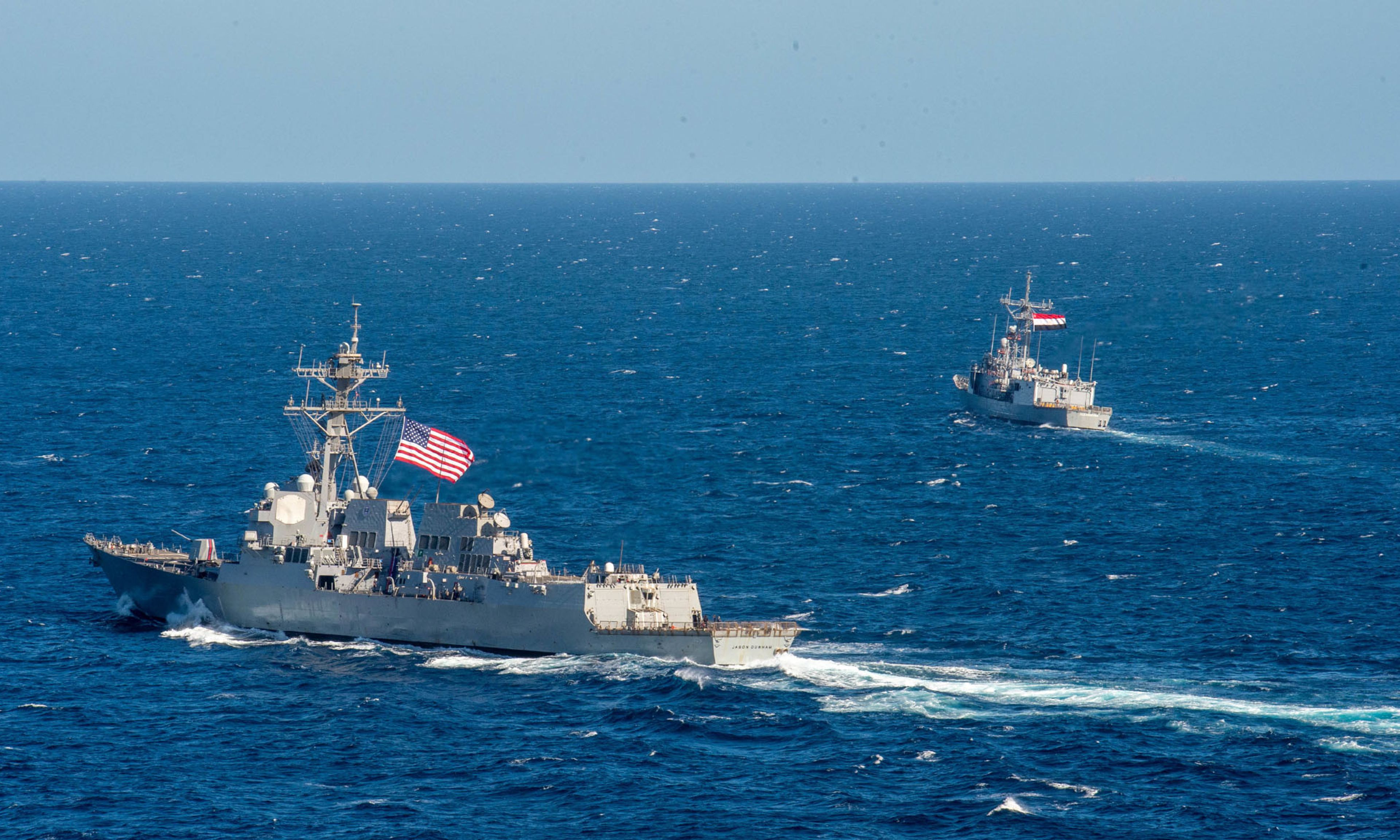
Eighty years ago this month, the Allies launched the liberation of the Philippines and fought history’s largest naval battle, Leyte Gulf. Today, as U.S. forces face mounting challenges in the Red Sea against Iran-backed Houthi rebels, the lessons from that pivotal battle are more relevant than ever. Just as in 1944, the U.S. Navy now confronts strategic maritime threats, but the difference lies in the hesitance of the United States to employ the overwhelming force and comprehensive strategy that once secured American dominance on the seas. As history shows, only decisive action can turn the tide.
In 1944, the ability of the U.S. Navy to achieve dominance rested on the foresight and decisiveness of its leaders. As General Douglas Macarthur landed American Army forces on the island of Leyte, Admiral William Halsey’s Third Fleet introduced a strategy, the “Big Blue Blanket,” that provided a powerful template for maritime dominance, particularly in the face of the threat of the Japanese kamikaze. This strategy involved overwhelming the enemy with air cover, surface ships, and submarines, creating a protective barrier for amphibious landings and protecting the critical sea lanes in the Pacific. It demonstrated how, when applied decisively and comprehensively, American naval power could turn the tide of a conflict.



Comments