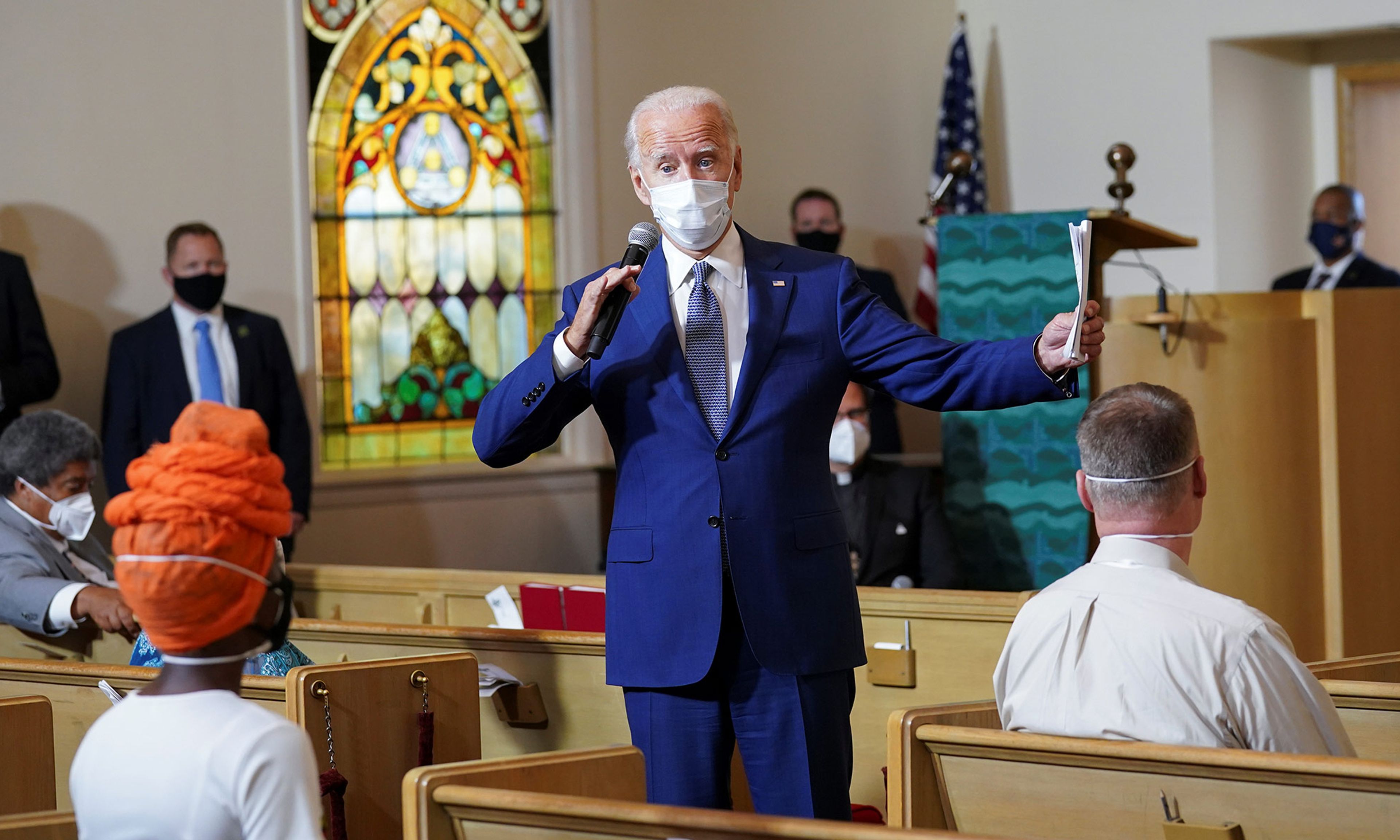
American Christianity is and has always been a broad church. The same week that a band of Christian nationalists knelt and prayed before storming the Capitol building — shouting, too, at journalists (with unintended irony) “get the hell out of my way!” — a black Baptist preacher was elected on a left-wing platform to the U.S. Senate. And the same year that Democrats treated a Supreme Court nominee as a danger to democracy on account of her Catholic faith, they elected the second Catholic president in U.S. history.
In Europe, unlike in the U.S., the separation of church and state has emerged post-Enlightenment as a cultural preference but not as a constitutional guarantee. That’s why, in modern day secular Europe, an openly Christian politician is almost always seen as threatening, but in the U.S., where religious values are still expected to influence public life (albeit indirectly), it depends on what type of Christian he or she is. Since polarization has given rise to two competing visions of American values, it is hardly surprising that the same should happen with Christianity.





Comments